Holguin/The shortage of essential medicines in Cuban hospitals has reached a critical point in Holguinwhere the lack of vitamin K and tranexamic acid – essential to stop bleeding – has caused serious emergencies among patients with dengue and kidney diseases. At the Lucía Íñiguez Landín Clinical Surgical Hospital, family members must resort to the black market to obtain drugs.
“I went through a personal experience on Wednesday with my brother’s father and the man almost bled to death due to lack of vitamin K in ampules and tranexamic acid,” he tells 14ymedio Patricio, a 52-year-old man from Holguín. “They gave him emergency hemodialysis because he had dengue and was already suffering from chronic kidney failure. When the catheter was inserted, he began to bleed from Wednesday afternoon until Thursday when they took him urgently to the living room.”
The man details that in the entire hospital there was neither of the two medicines necessary to control the bleeding. “The patient also needed a platelet transfusion, but when the doctor went to the blood bank there were no employees. He also required an urgent analysis, but there was not a single worker in the laboratory either,” he adds. “Hemodialysis doctors are very good, but they work without medication and many times even without food, because the food they are given is terrible.”
“Hemodialysis doctors are very good, but they work without medications”
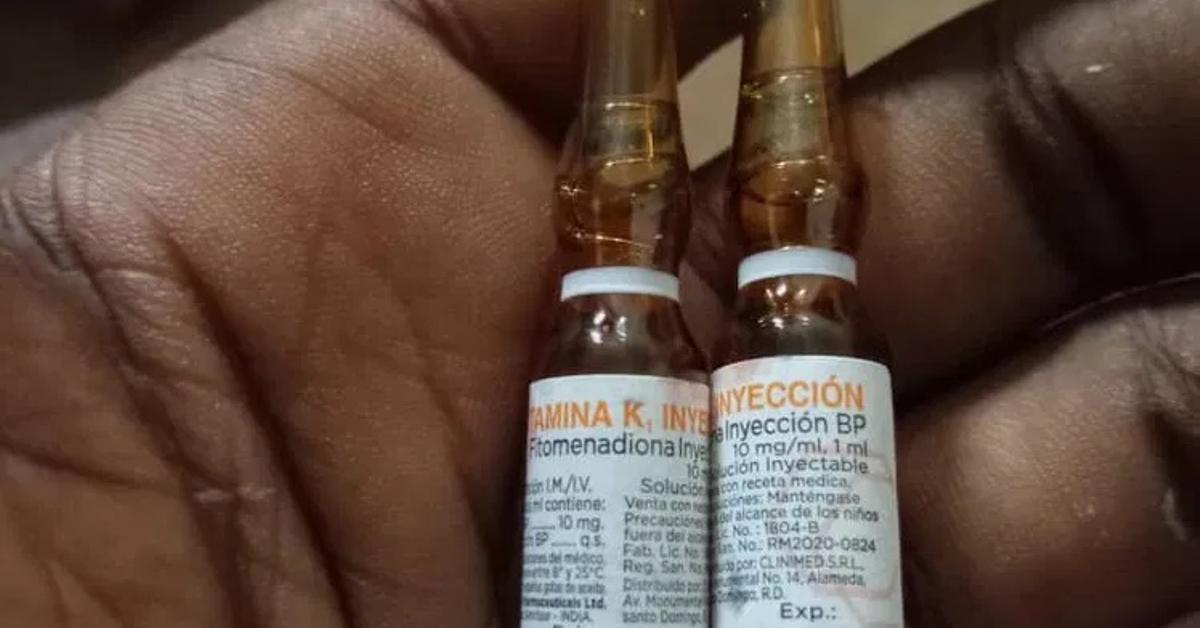
Vitamin K is an essential compound for blood clotting. It is used in emergency treatments to stop internal or external bleeding and is vital for patients who, such as those undergoing hemodialysis, have capillary fragility or coagulation disorders. It is also applied to counteract the effects of anticoagulants or complications associated with dengue, where bleeding can be fatal.
In the informal market of Holguín, each ampoule costs between 850 and 1,000 pesos, a prohibitive figure for retirees or low-income families. In state pharmacies, when they appear, their official price is around 5 pesos, but they have not been distributed for months.
Another patient at Lucía Iñiguez Landín also nearly died last week due to a similar clinical picture. “My grandmother had intense rectal bleeding, we believe it was associated with dengue but they have not yet given us the results of the tests,” a young woman who requests anonymity explains to this newspaper. “She was admitted and she got very bad, she didn’t react and her skin looked like paper, so pale. The doctor told us that we had to get her, between heaven and earth, vitamin K to try to stop the bleeding.”
The family had to buy a box with ten vials on the black market, “because the person who had them did not sell them separately, and it was 10,000 pesos, three times her monthly pension,” says the young woman. Although the patient’s health has managed to stabilize, the relatives keep the leftover vials “in case they are needed again or for anyone else who catches dengue.”
The lack of medicines is not new. For more than five years, the Ministry of Public Health has recognized that more than 40% of the national basic drug list has “affects.” The situation has worsened since 2022, when the lack of foreign currency and raw materials reduced the production of BioCubaFarma, the state conglomerate that controls the manufacturing and distribution of medicines.
Relatives of patients report that essential drugs such as heparin, insulin or anesthetics are also in short supply.
According to the official press, the difficulties include the deficit of packaging, reagents, fuel and financing to import active ingredients. In September, the Minister of Public Health himself, José Ángel Portal Miranda, acknowledged that the supply “will not stabilize in the short term.”
Holguín, one of the most populated provinces in the country, is also facing a resurgence of arboviruses, with overflowing hospitals and a lack of antibiotics, saline solutions and painkillers. Last August, 14ymedio documented collapses in the emergency rooms of the Vladimir Ilich Lenin Hospital and Lucía Iñiguez itself, where patients must carry everything from syringes to cotton.
The testimonies about the lack of vitamin K add to an increasingly critical health panorama. On social networks, relatives of patients report that essential drugs such as heparin, erythropoietin, insulin, anesthetics and cardiovascular medications are also in short supply. In the east of the country, doctors resort to “inventing” combinations or postponing treatments due to lack of resources.
“Every time you enter a hospital, it’s Russian roulette,” Patricio summarizes. “Doctors do what they can, but without medicine and hunger there are no miracles.”
The shortage of vitamin K, a basic and cheap medicine in any country in the world, has thus become a sentence for the most fragile: dengue patients, kidney patients, elderly people with hemorrhages. In Holguín, every blister that appears outside the health system is a small hope that is paid for in gold.