The only vote against was cast by Senator Antonio Taveras Guzmán, who denounced the lack of transparency in the process. You will receive the law to promulgate.
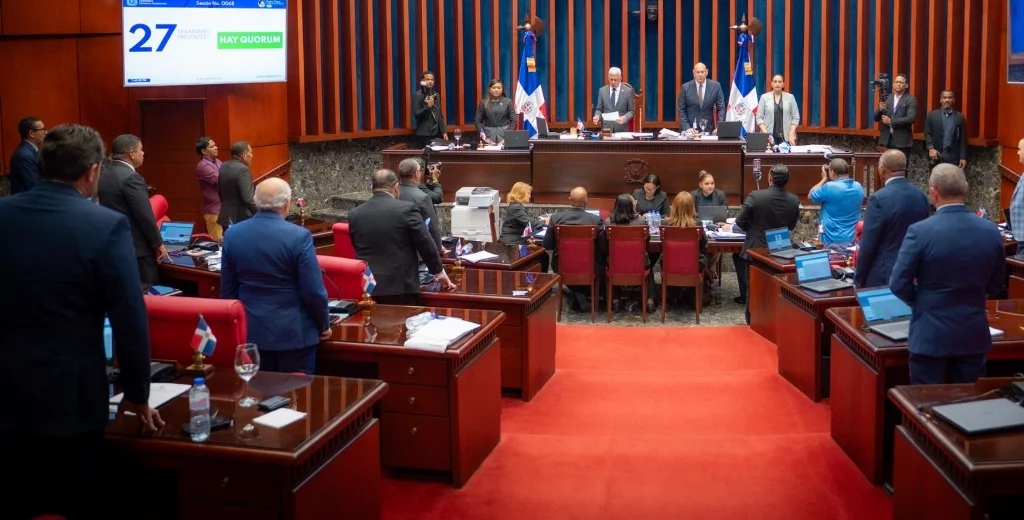
Santo Domingo.-The Senate of the Republic approved last night the new Dominican Criminal Code, during an extraordinary legislature convened by President Luis Abinader.
The project, composed of 401 articles, was known in ordinary session number 68 of the Senate, held in the afternoon, after being approved in the second reading by the Chamber of Deputies at 3:00 am that same day.
Just 18 minutes later, he was deposited in the Senate Secretariat, which allowed his reading in the senatorial hemicycle.
During the session, the 162 modifications introduced to the text were read, the result of the works of a bicameral commission that met 25 times and was composed of 11 senators and 21 deputies.
One finds
The final vote culminated with 26 votes in favor and one against, corresponding to Senator Antonio Taveras Guzmán, of the Santo Domingo province. After approval, the project will be sent to the Executive Power, where President Abinader may promulgate and turn it into law, or return it to Congress with observations.
The president of the Senate, Ricardo de los Santos, highlighted the importance of the legislative moment, recalling that the current Criminal Code was promulgated in 1884 and retains a legal structure derived from 1811.
“We are talking about a code with more than 200 years. It is fair that the Dominican Republic has a new criminal framework that responds to current times, new social, technological and legal realities,” he emphasized from the saints, underlining the collective effort behind the project.
One of the main challenges was to harmonize the articles of the new code with special laws already in force, such as Law 137-03 on Trafficking in Persons, Law 53-07 on Crimes and Crimes of High Technology, Law 448-06 on bribery, and Law 631-16 on weapons.
“That is why so many modifications. Because this project was not updated at the time with all those special laws that are already in force,” said the legislator.
The dissident vote
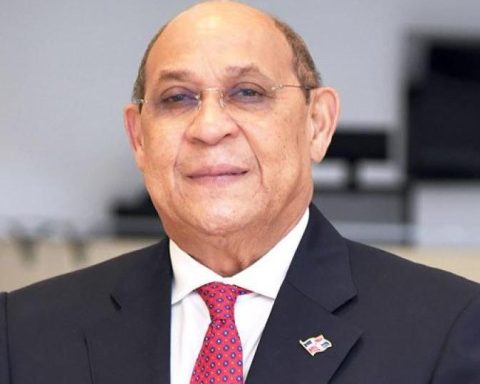
During the session, the only vote against was cast by Senator Antonio Taveras Guzmán, who denounced the way in which the latest modifications to the text were managed.
Despite recognizing the advances of the new code, he strongly criticized the lack of transparency in the process.
“For five years, we have been working hard in the different versions of the Code. But part of the misfortune of our country is that we always skip the rules,” said Taveras, questioning the exclusion of the Senate in the final agreements between the Public Ministry and the Chamber of Deputies.
The legislator of the official Modern Revolutionary Party (PRM) claimed that a “strength shirt” was imposed on the senators, by voting a text that they could not modify.
“I do not accept blackmail. I do not have double morals. I am clear, I am in front and I propose my positions with responsibility,” he said, by describing his vote as an act of “historical responsibility.” This reform of the Criminal Code was under discussion for almost three decades.
Executive power
– Next step
The Criminal Code exceeds one of its most significant obstacles after almost 30 years of failed attempts. The fate of the new legal framework now rests in the hands of the President of the Republic, who could observe or approve it for its promulgation.