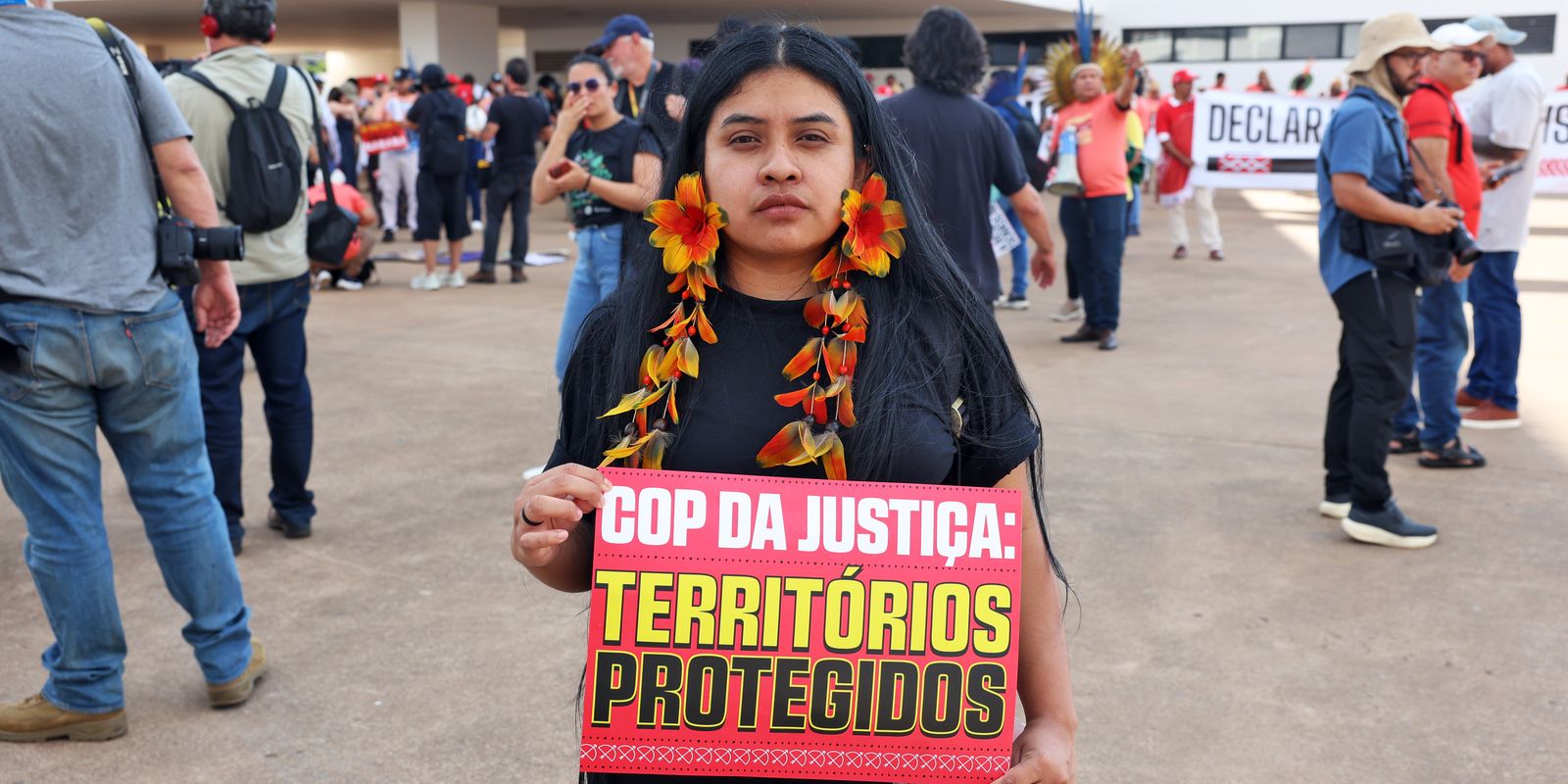
Artisan Luana Kaingang, 34, uses pieces on her body produced by people from her community, in a demarcated territory in Porto Alegre (RS). The problem is that the climate change has shaken the income of its people. 
“Criciúma, taquara and komag don’t grow like they used to,” he says.
It is with these plants that handicrafts are produced in the community of 58 families. “We went through periods of long drought and storms. This really harms our land”, he lamented.
Facing climate change is even more difficult when there is no security in the place where you live. She was among the around 200 representatives of indigenous peoples from across the country held an event this Monday (13), in Brasília, calling for the regularization of lands.
They walked to the lawn in front of the Ministry of Justice, on the Esplanada dos Ministérios, and made speeches demanding.
“Shield against deforestation”
According to Apib’s executive director, Kleber Karipuna, each demarcated indigenous land is a “shield” against deforestation.
“Science proves what we already know: demarcated land is a standing and living forest. Our territories in the Amazon alone generate 80% of the rain that irrigates agribusiness in Brazil.”
The event, promoted by the Articulation of Indigenous Peoples of Brazil (Apib) with support from Avaaz, is part of the Indigenous Pre-COP program, which takes place in Brasília, also on Tuesday (14), in parallel with the Pre-COP of the States;
According to Apib, the demarcation of 104 Indigenous Lands is only awaiting the final stages of the Federal Executive.
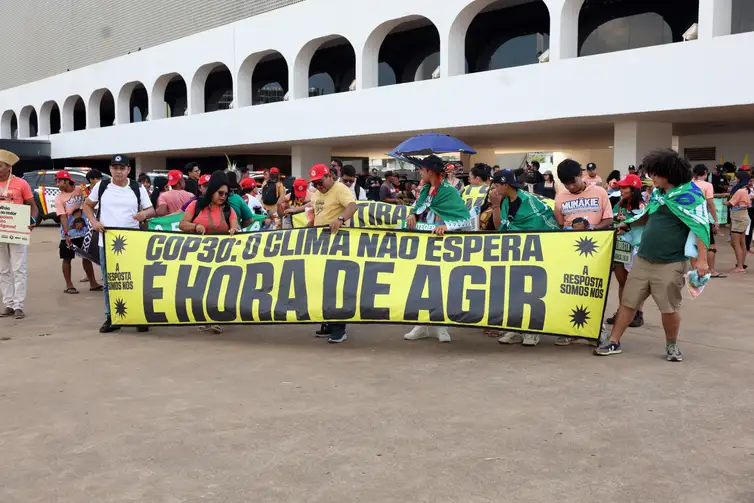
Brasília (DF), 10/13/2025 – Indigenous march in defense of land demarcation. Photo: Valter Campanato/Agência Brasil
Protection
He exemplified that, in the Amazon alone, between 2001 and 2021, these territories absorbed around 340 million tons of CO2 from the atmosphere, equivalent to the United Kingdom’s annual fossil fuel emissions.
An important argument that shows the role of these nature defenders is that the already demarcated Indigenous Lands in the Amazon have a very low deforestation rate, having historically lost only 1.74% of their original vegetation.
The act was part of Apib’s “The Answer is Us” campaign. In fact, this year the entity launched the Indigenous NDC (Nationally Determined Contributions), built by the people themselves, which proposes to include the protection of territories, knowledge and ways of life as part of Brazil’s official goals in the Paris Agreement.
Way of life
In the case of Luana Kaingang, from Rio Grande do Sul, the demarcation makes the agroecology way of life and the protection of native forests viable.
“In our region, our main demand is to maintain the park and not create buildings, condominiums, with real estate speculation.”
Also from the Southern Region and the Kaingang people, artisan Kauane Félix, aged 24, held her two-year-old son in her arms, wrapped in a Brazilian flag. She lives in a rural community in the city of Novas Laranjeiras. According to her, deforestation in the surrounding area, promoted by invaders, has been a problem for her people.
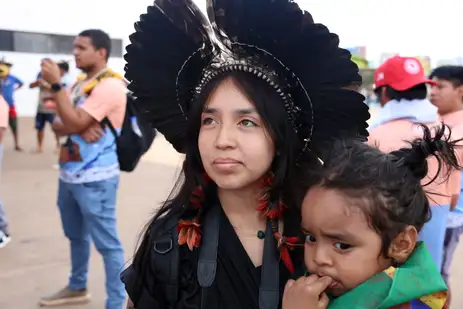
Brasília – 10/13/2025 – Kauane Félix talks about the impact of deforestation on his community – Photo: Valter Campanato/Agência Brasil
With more native Araucaria felled, the more vulnerable its people become. “It is impacting our diet. Impact on corn, beans, cassava and also on native fruits, such as pitanga.” The place is not the same as it was in your childhood. “When I was a child, it was very cold. Today, at the same time, it is hot.”
She is proud that the community has achieved reforestation work with support from the Federal Highway Police, which has dropped seeds by helicopter.
Tension at the border
Also present at the event, indigenous Sally Nhandeva (featured photo), 21 years old, who lives in Japurã, on the border between Mato Grosso do Sul and Paraguay, said that there are challenges in everyday life. One of the real problems they face is, according to her, threats from Brazilian and Paraguayan farmers.
“We want to live without our neighbors’ pesticides. And protect our forest. They come into our community wanting to evict us.” What has protected its people is that the demarcation has already arrived for them.
Even in the face of difficulties, she, who has a son, does not think about leaving the community. “If we run away, who will fight for us?” he asks.