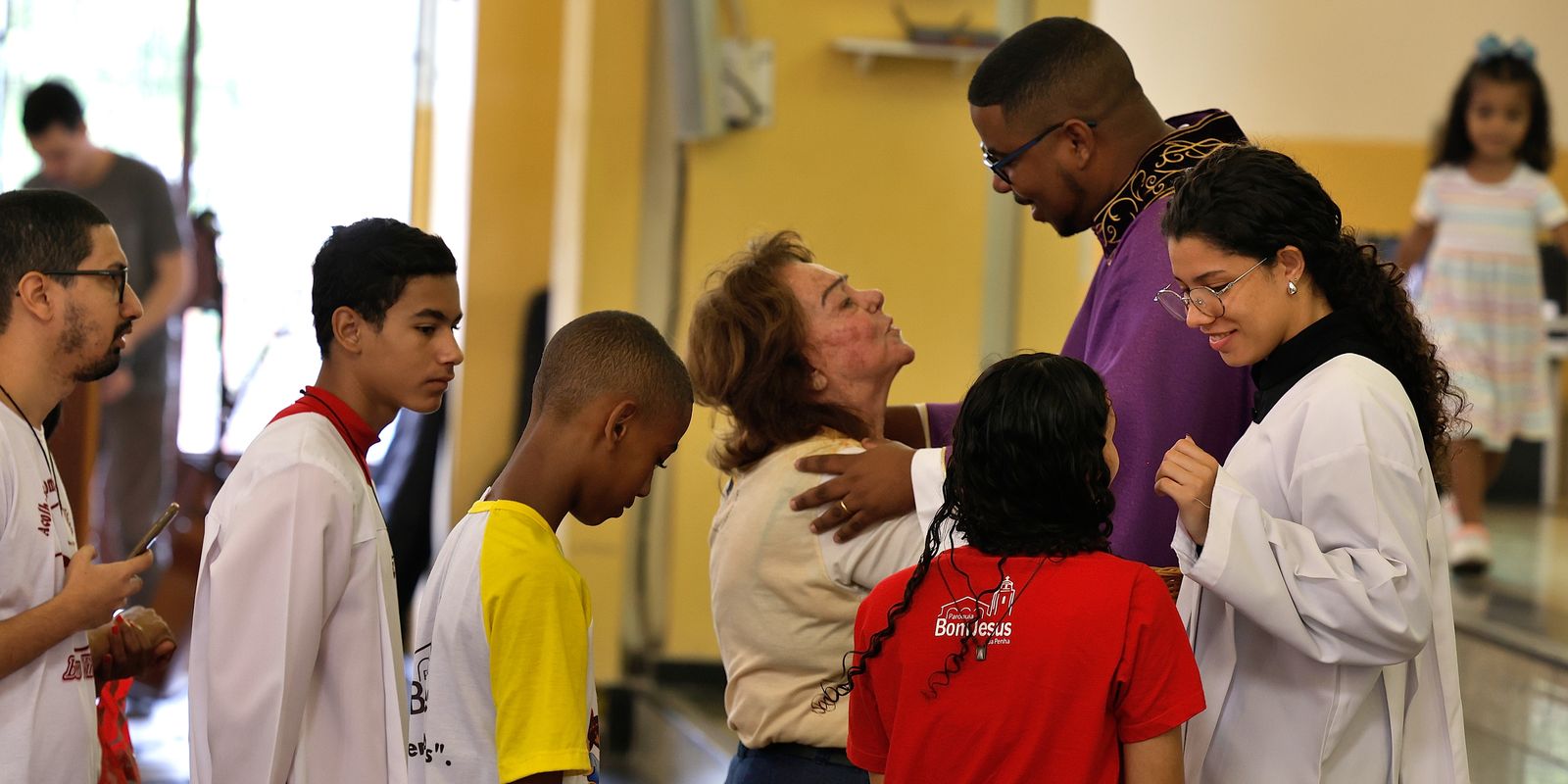
In the Penha neighborhood, in the north of Rio de Janeiro, faithful went to the Bom Jesus da Penha Parish to pray for loved ones on this All Souls’ Day. Prayers also extended to the families of the 121 killed in the Operation Containmentheld in neighboring favelas last Tuesday (28) and considered the largest and most lethal in Rio de Janeiro.
“Everyone who comes, whether mothers, family members, friends, in this moment of pain, we have welcomed, prayed and interceded for these people”, says Father Marcos Vinícius Aleixo, who celebrated mass this Sunday (2).
According to him, people are afraid and even mass attendance has decreased. “Insecurity reigns in the neighborhood because of this. Many people are afraid to leave their homes, afraid to come to mass”, he says.
“The gunshots, the noise, all of this brings trauma, it brings an anxiety crisis, it brings fear to the people who live inside, who are good people and who are there fighting to live, often because they have no other opportunity to get out, but they are good people, they are people who honestly work and have their daily lives”, adds the priest.
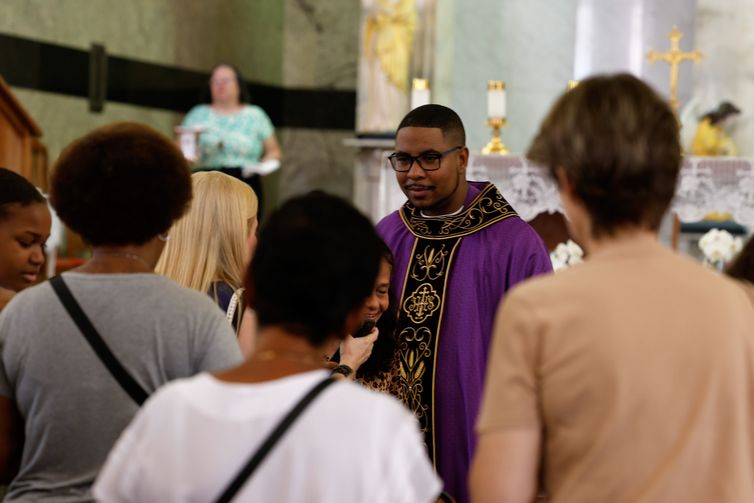
Father Marcos Vinícius Aleixo celebrates mass on his last day at the Bom Jesus da Penha Parish. Photo: Tânia Rêgo/Agência Brasil
The church is one kilometer (Km) from Praça São Lucas, where they were gathered bodies removed from a forested area between the Alemão and Penha complexes in the early hours of the morning after the police operation. According to the Public Secretariat of Rio de Janeiro, 121 people were killed, including four police officers and 117 civilians. The operation fulfilled 20 of the 100 arrest warrants issued by the courts and also included 180 search and seizure warrants. Another 93 people were arrested in the act. The target of the operation was the Red Command, which controls the territory.
Between organized crime and police operations, the population finds itself trapped, according to a resident of the neighborhood, who did not want to be identified. “We have no peace. [A operação] Affects. Of course it affects you, mainly because you’re trapped”, he says.
On a daily basis, she says she has difficulty coming and going because of organized crime. “It even interferes with the streets, people can’t pass. They even charge tolls. That doesn’t exist, people”, he says. “It’s peace of mind that I charge for. That’s my charge. Because we no longer have peace, we don’t have peace. You’re going to order an Uber, Uber doesn’t want to come here because it’s in Penha. Look how absurd.”
The operation suffered several criticisms, mainly due to signs of abuse of power by police officers, by national and international organizations, such as the United Nations (UN) Human Rights Council. Furthermore, Families say they found marks of torture on the bodies of their dead relatives and claim they have proof that they tried to turn themselves in. On the other hand, the state government claims that those who surrendered were arrestedand that the people who were killed clashed with the agents.
For another resident, who did not want to be identified, the operation gives a feeling that something is being done. “The whole of Rio de Janeiro is a little left out in terms of security. [a operação]in a way, it ends up giving a feeling that they are doing something, right? Because there are two sides. Nobody is nice”, he says.
A resident who was in the Penha complex during the operation says it was a day of horror. “It was very bad for us, because it impacted the lives of a lot of people, the residents, the children, there were a lot of shootings. And this is bad for those who are not involved in anything, for us who are residents, good people.”
Asked if she believes that anything changes with the police operation, she is adamant: “Nothing.”
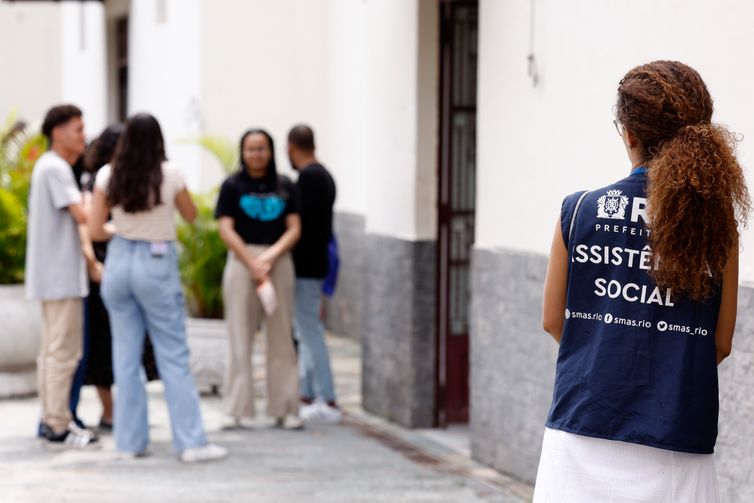
Municipal Department of Social Assistance provides assistance to families in Alemão and Vila Cruzeiro in the Bom Jesus da Penha Parish, in Penha, north of the city. Photo: Tânia Rêgo/Agência Brasil