While there are still voices in Congress seeking to extend the Reinfo program—which prolongs mining informality and acts as a shield for illegal mining and organized crime—, illegal economies In Peru they continue to expand with structural effects for the country.
A study prepared by the Universidad del Pacífico last year estimated that these activities move around 4% of GDP per year, which would be equivalent to US$13 billion. These economies include illegal gold mining, illicit drug trafficking, illegal logging and other forms of clandestine extraction or trade, which cause losses that go beyond the amount mobilized.
The crime of sexual and labor exploitation associated with human trafficking is closely linked to illegal economies. Furthermore, these activities require violent protection and fuel hitmen as a control mechanism.
According to the Crime and Violence Observatory of the Credicorp Ideas Bank, between 2022 and 2025 more than 7,325 cases of human trafficking have been registered, while in 2024 alone 2,809 victims were rescued. These numbers not only reflect an expanding criminal phenomenon, which affects thousands of people, but also the limited capacity of the state to respond to the severity of the problem.
With the price of gold at record levels, exceeding US$4,000 per ounce, exports of the precious metal have grown by more than 40% and with it, illegal production. According to Minem, of the total production shipped, only 53% is registered.
Other impacts
Another negative impact of illegal economies is that operating outside the tax framework, the State stops collecting taxes, fees or royalties that would have been obtained if they had been formal.
“Unfair competition with formal activities deteriorates the business environment, slows down investments and reduces sustainable employment opportunities,” warned Carlos Casas, professor at the Faculty of Economics at the Universidad del Pacífico.
Added to this are the effects on health, environment and well-being of the communities in which these economies operate.
An analysis by the Amazon Scientific Innovation Center (CINCIA) found that, in the Lower Putumayo basin, the average mercury in hair samples from 166 people from three communities reached a value of 15.67 mg/kg, exceeding those found in the Nanay-Pintuyacu basin, where the average reached 8.41 mg/kg from samples of 273 people in six communities.
Indigenous communities in the Amazon have reported that more than 80% of the population has mercury levels in their blood above the recommended limit.
“The most vulnerable groups, such as children and women of reproductive age, are those who face the greatest risks from the neurotoxic effects of methylmercury,” the report states.
Also, in the province of Pataz, in La Libertad, the death of 13 workers linked to an artisanal mine ambushed by illegal miners was reported, a clear index of the link between illegal economies, violence and state weakness in extractive areas.
Budget goes up, but is it adequate?
The State has set a budget for 2026 of more than S/177 million for the fight against illegal mining (this year it reached S/127 million) and more than S/289 million for the fight against drug trafficking (compared to S/274 million in 2025). However, several questions remain: What percentage of spending is actually carried out in the most affected areas and with proven operational quality? Do policy instruments contribute to real formalization or do they serve as a cover for illegality?
According to the Credicorp study, the public budget allocated to prevention, prosecution and care for victims of illegal economies is very limited compared to the amount they move (US$13 billion) and the impact they generate. Furthermore, the report warns that, in practice, the amounts executed by the State are insignificant compared to the magnitude of the phenomenon and its social impacts.
In that sense, although the budget increase is a favorable sign, without a robust structure for execution, monitoring and accountability, the risk is that the money does not transform the structural dynamics, but simply increases operational capacity without changing the root of the problem.
In areas dependent on informal or illegal mining, if local state capacity is not built, the benefits of the resource tend to be lost. A study by economists Dafne Murillo and Sebastián Sardón, published in 2024, shows that only districts with solid “state capacity” manage to transform extractive income into sustainable development. Where the State is weak, natural resources tend to fuel informality and corruption.
Thus, without an effective state presence, without policies that address the causes of illegality, the fight will continue to be a battle that is fought with more budget, but without results.
DATA
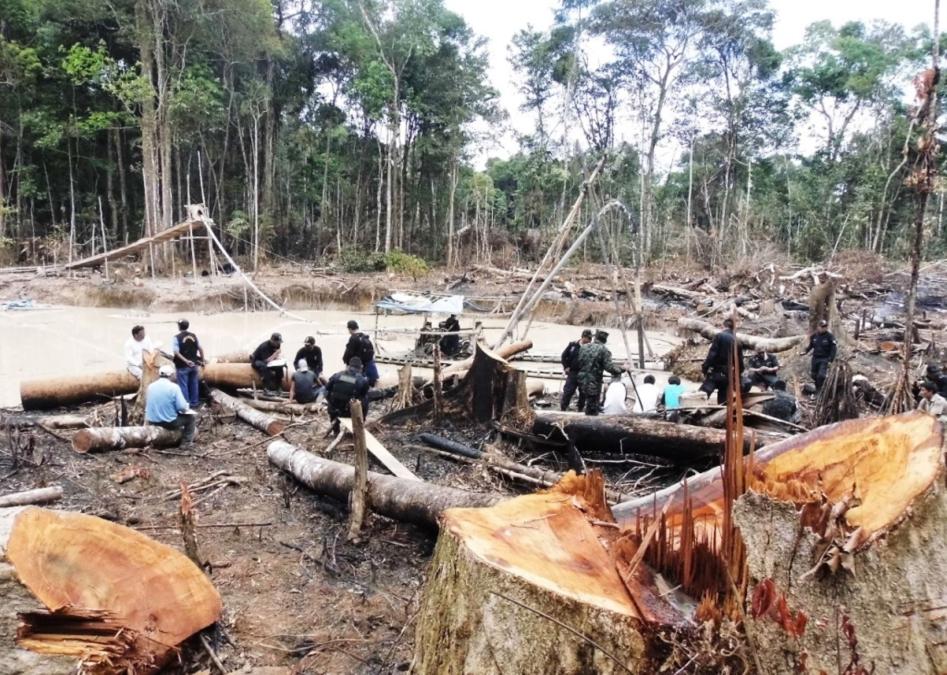
Illegal mining destroys more than 90,000 hectares of jungle in Madre de Dios.
drug trafficking It employs about 200,000 people throughout its chain.
Illegal logging It represents about 40% of the wood exported. These activities move more money than the formal fishing sector.
Receive your Perú21 by email or Whatsapp. Subscribe to our enriched digital newspaper. Take advantage of the discounts.
RECOMMENDED VIDEO