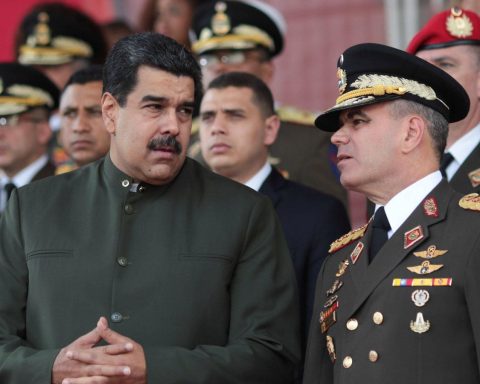
Nicolás Maduro assured on Wednesday that Venezuela has more than 5,000 Russian anti-aircraft missiles Igla-S deployed throughout the national territory as part of its defense system.
During a televised event with senior military commanders, Maduro noted that the missiles are located in key air defense positions – from mountains to urban centers. and its objective is “to guarantee peace, stability and tranquility.”
The announcement by the official leader comes after the decision of US President Donald Trump to authorize operations in Venezuelan territory, under the argument of combating drug trafficking.
What are Igla-S?
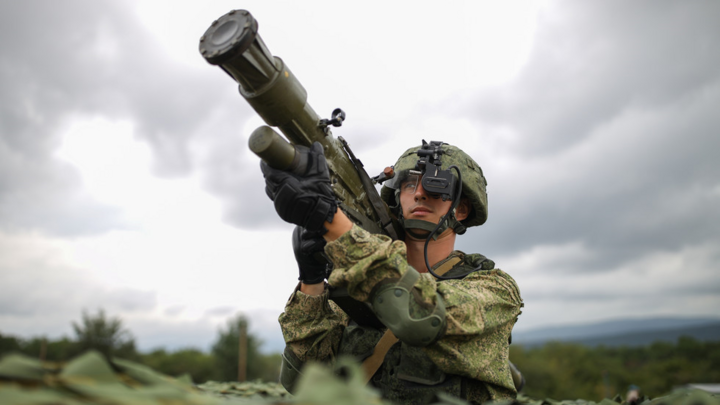
The Igla-S (designated by NATO as SA-24 Grinch) is a portable, infrared-guided surface-to-air missile system, designed to shoot down low-altitude aircraft, helicopters or drones.
Each unit can be operated by a single person, with a range of up to 6 kilometers and the ability to intercept targets at altitudes of up to 3,500 meters. Its weight is around 19 kilograms, and its fragmentation warhead is designed to maximize damage on small targets.
Officially introduced in Venezuela in 2009, the Igla‑S represent an important layer within the Venezuelan air defense, capable of deterring low-altitude air raids or reconnaissance flights close to national airspace.
The Igla‑S entered service in Russia in 2004 as an improvement on previous versions.with a better thermal discrimination capacity – which allows it to distinguish between an aircraft and other heat sources -, and greater effectiveness against cruise missiles and unmanned aircraft.
If the missile does not hit the target, it has a self-destruct mechanism that activates after a few seconds of flight to avoid collateral damage. The fragmentation warhead is activated by proximity or contact, releasing shrapnel at high speed.
In summary, the Igla‑S combines portability, speed and autonomy, allowing it to effectively neutralize aerial targets even in mobile or improvised combat situations.
“Venezuela will be an impregnable homeland”
Maduro highlighted that the country has shooting simulation equipment and thousands of operators trained to handle the Igla-S. He maintained that these training programs seek to “turn Venezuela into an impregnable homeland against any external aggression.”
The announcement was accompanied by images of soldiers practicing with portable launchers, as part of a speech aimed at reinforcing the message of military sovereignty and deterrent capacity.
Security experts point out that a network of more than 5,000 MANPADS systems (portable anti-aircraft missiles) gives Venezuela a significant deterrent capacity, as it complicates any foreign air operation in the Caribbean or on its northern border.