Overcome the fiscal squeeze storm with which they began their management in 2024, in social integration they advance towards a new phase in which they want to optimize the use of subsidies in the fight against poverty. Nevertheless, The recent changes in social prosperity are generating alerts among the district authorities.
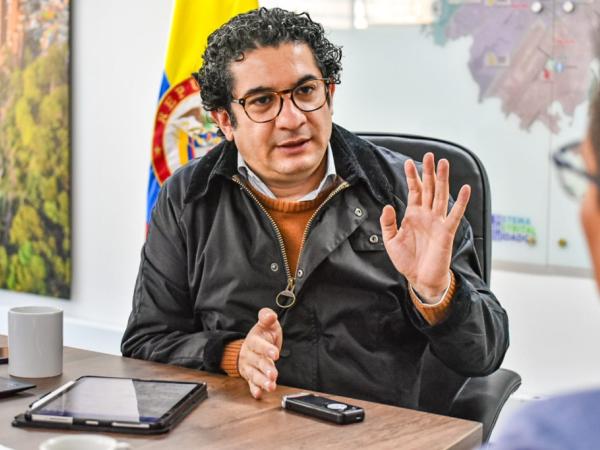
In a talk with Portfolio, Roberto Angulo, secretary of Social Integration, said that overcoming inequalities and getting people out of poverty and extreme poverty in Bogotá and the whole country, requires a joint effort of the national and regional authorities, or the otherwise this scourge would grow again in the future.
More news: The price of the dollar in Colombia starts on February and above 4,200 pesos
How is the transfers program?
We have been making an in -depth restructuring after we found a lot of challenges at the start. We have a growth that still does not reach sufficiently high sustainable levels, an inflation that already begins to yield, but that is still high, if everything remains well, we would have inflation within the rank expected by the Bank of the Republic and some Important fiscal restrictions. Bogotá was over -indebted when we arrived.
All this panorama leads us to propose a restructuring strategy of all transfers of Bogotá, absolutely all, an exercise of modernization of very deep subsidies, both with the unconcerned aids that became conditioned to generate a commitment of the people, as in prioritization and approach with communities.
What has improved in this time?
We can say that we have a component of older people not conditioned, a component of people with disabilities, we have the entire youth component that is conditioned to a route of training and productive inclusion that we want to connect transfers with productive inclusion.
We have a component of extreme poverty that remains in the Bogotá wave without hunger 2.0 for extreme poor households. We have two conditioned components, one conditioned for early childhood issues and another conditioned for education issues. And finally the component of free tickets, which is a relief on the spending side.
Roberto Angulo, Secretary of Social Integration.
Courtesy – API
Is city spending?
Yes, that is one of the conceptual innovations of this transfers system. When reflecting on the reason for implementing this platform in Bogotá and not at the national level, we find that the city offers the possibility of connecting the system with elements of urban dynamics, allowing a more precise approach and adapted to local needs.
And what are those urban elements that can encourage equity? Mainly, transport, housing and domiciliary public services. We call this set of expenses in city. What we have observed in Bogotá is that this expense is inequitable, since people in extreme poverty allocate a significantly greater proportion of their total income to cover these urban costs. That is why we are focused there to work.
Read more: Commercial War: the economic effects and how will Colombia impact
Did the nation’s ads affected them?
Of course, it is affecting us and also constitutes part of our challenge. That puts us uphill, because the nation is not helping us, with the ultimate decisions it is making, we are not pedaling for the same side. The moment when the DPS decides to dismantle its monetary transfers, is leaving the poor extreme population without this help.
This is not a minor point. We have already seen how, according to DANE data, monetary transfers in Bogotá have an effect of more than two percentage points. If nation and district pedal for the same side, poverty in Bogotá is more than two percentage points lower than it would be if we do not pedal for the same side.

Pagadiarios Bogotá
Courtesy – API
How many homes were at risk?
At the moment when social prosperity begins to disassemble this policy, we receive more pressure because we have to cover those homes. If we are consistent and committed to the city, we have to cover the households that the nation unpacking. For example, within the ads made by the director of the DPS, Gustavo Bolívar, is to stop paying the monetary transfer for 10,000 extreme poor.
That is, 10,000 extreme poor to which we do not turn today because we have a complementarity agreement with the nation. At the time they stop paying those 10,000 extreme poor homes, we have to cover them. That has a total cost of approximately $ 70,000 million a year, which is not a minor matter.
It may interest you: Ministry of Health asked the Court to clarify doubts for the readjustment of the UPC
Shortize the coup?
Our goal is to generate a platform that allows in the short term to shine, serve as a kind of social shock absorber for the poor and poorest poor population. Additionally we are already connecting with productive inclusion issues looking for medium -term objectives. But if the nation takes away that shock absorber, the most consistent is that we have to look for money to incorporate it again.
Do they have money?
We are looking for it and we are redesigning our own programs. We are looking for our plan of austerity and expense quality, savings to cover it. Because the premise of ours, anyway in an exercise of quality of spending, is to prioritize extreme poor households and there we are going up. What the DPS has just done is unprotected a good amount of extreme poor.
We would like to be able to row to the same side. It is not clear that the credits it promises, say, the nation, because it says that it will transform these resources of transfers to productive inclusion credits, it is not clear that these credits will be left to the poorest or will have a Performance, an effect on reducing poverty in the short and in the medium term that allows you to think they are a substitute.

Colombian pesos.
Archive time
Can everyone be sheltered?
Clearly the national government, not prioritizing the poor and poor poor population in their monetary transfers, is practically throwing the ball so that we in Bogotá we generate that social shock absorber. Now, Bogotá is the only city in Colombia that has a platform scheme, a transfers to respond platform, but there are populations that depend in all of these resources.
To achieve this efficiency, we have to better focus resources. That implies that in some cases there are people who have to stop receiving the subsidy, in order to give way to the poorest and most vulnerable.