The Cuban regime once again uses institutional mechanisms to punish cultural dissidence.
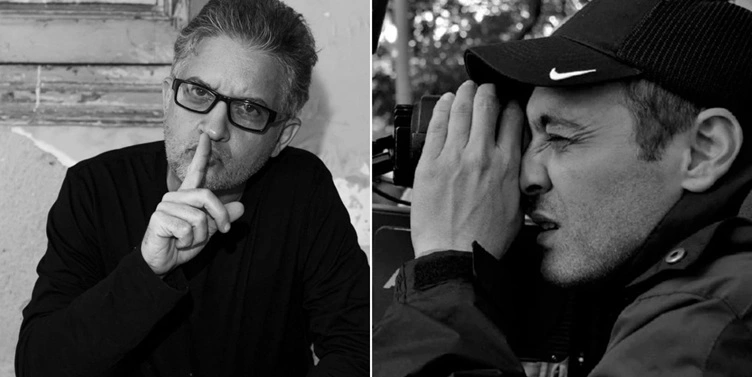
MADRID, Spain.- The renowned Cuban filmmaker Enrique Álvarez Martínez —known as Kiki Álvarez— denounced that the Cuban Institute of Cinematographic Art and Industry (ICAIC) terminated his employment relationship without prior notice and based on a “voluntary resignation” that he claims he never signed. The measure also affected the director Esteban Insausti and has generated reactions of solidarity and new criticism of state control over culture and independent cinema on the Island.
“Today my work and institutional relationship with the ICAIC and Cuban cinema has been sealed (broken, concluded),” Álvarez wrote in an extensive message posted on Facebook.
The filmmaker found out about his leave when he went to the institution’s Human Resources office to claim non-payment of his fees. At that time, an official informed him that the vice president of the ICAIC had directed on August 1, 2025 to close her contract and that of Insausti.
“Reading the file I find out that I was granted the discharge by my own decision (that is, because I requested it) although there is no attached document to prove that request,” he denounced. “A fiction? A delirium of interpretation?”
Álvarez relates the measure to his critical stance towards institutional censorship, his participation in the Assembly of Cuban Filmmakers, his refusal to participate in an official film and to receive a commemorative medal from the ICAIC, as well as his public complaints about irregularities in the Development Fund.
Álvarez, like Insausti, They were among the first personalities from the artistic and literary world to sign a letter in support of the Cuban professor, essayist and historian Alina Bárbara López Hernández and her colleague Jenny Pantojto Torres, both victims of repression in Cuba. Public positions like this have positioned them at the center of tensions with the cultural apparatus of the regime.
The filmmaker also stressed that the institution violated article 51 of the Labor Code of the Republic of Cuba, which requires notifying at least 15 days in advance of the termination of an employment contract. “They failed to comply with their duty to inform me 15 days in advance of the cancellation of the contract as dictated by law,” he wrote.
In his publication, Álvarez questioned the repressive nature of the official cultural system. He recalled that on September 23 he publicly rejected an invitation to participate in a “debate of ideas” convened by the ICAIC. “A long time ago I stopped believing in those ‘healing’ debates that do not transcend the physical space in which they occur,” he said. And he added that “a filmmaker has two options and only two: either to become a resister or a collaborator. Collaborating consists of adopting the ideas of the dominant power. Resisting involves confronting the dominant thought and creating a different aesthetic.”
His denunciation has provoked a wave of solidarity among artists and intellectuals inside and outside Cuba. The actor Luis Alberto García, For example, he wrote on social networks: “I do not want this ignominy to be relegated to oblivion… Neither Kiki nor Esteban deserve this affront.”
The director Rosa María Rodríguez reacted with a message full of emotion and denunciation: “Kiki Álvarez is one of the people I admire the most. Her cinema, her ideas, her energy. Several rights are violated here and it is another act of exclusion of a filmmaker for thinking differently. What she shares today leaves me with deep sadness.”
Likewise, he pointed out that, as a result of censorship and repression in Cuba, “the youth and the essential emigrate and this island is becoming more mediocre and aging in all aspects every day.”
Both Álvarez and Insausti have outstanding careers in Cuban cinema. Insausti is the author of works such as The hands and the angel (2002), 3 times 2 (2003), Long distance (2010) and Jazz Club (2018). For his part, Álvarez has directed films such as The Wave (1995), Giraffes (2014) and Venice (2016), all recognized in international festivals.
This new episode joins a long list of cases in which the Cuban regime uses administrative and labor mechanisms to silence critical voices within the cultural sector. The state-controlled ICAIC has been singled out on multiple occasions for its role in censorship and marginalization of independent creators.
In his farewell, Álvarez was forceful: “Our relationship was always tense, marked by my desire to contribute to becoming a Film Institute capable of promoting, promoting and articulating new forms of independent production… On the other hand, you do not exclude me: I made most of my cinema without you and no one can change that.”














