Havana/In its desperation to stop the brutal decline in tourism and the inflow of foreign currency, the Cuban Government has taken a step that it has always resisted: allowing international chains to rent hotels – all state-owned – and set the salaries of employees themselves. As confirmed by EFE with sources familiar with the negotiations, the first agreement has been signed by the Spanish company Iberostar.
This is a paradigm shift in a sector that until now had been tightly controlled by the Cuban State through the Ministry of Tourism and different companies of the Gaesa business consortium (SA Business Administration Group), in the hands of the Revolutionary Armed Forces.
The new management model, among other things, and according to the same sources, will allow hotel chains for the first time to set the salaries they pay their employees – although it is not specified whether they will be able to pay a portion in dollars or euros – instead of having to pay the salary set by the State, which is very low and in pesos.
The new system aims to begin with pilot experiences in establishments of different large international hotel chains.
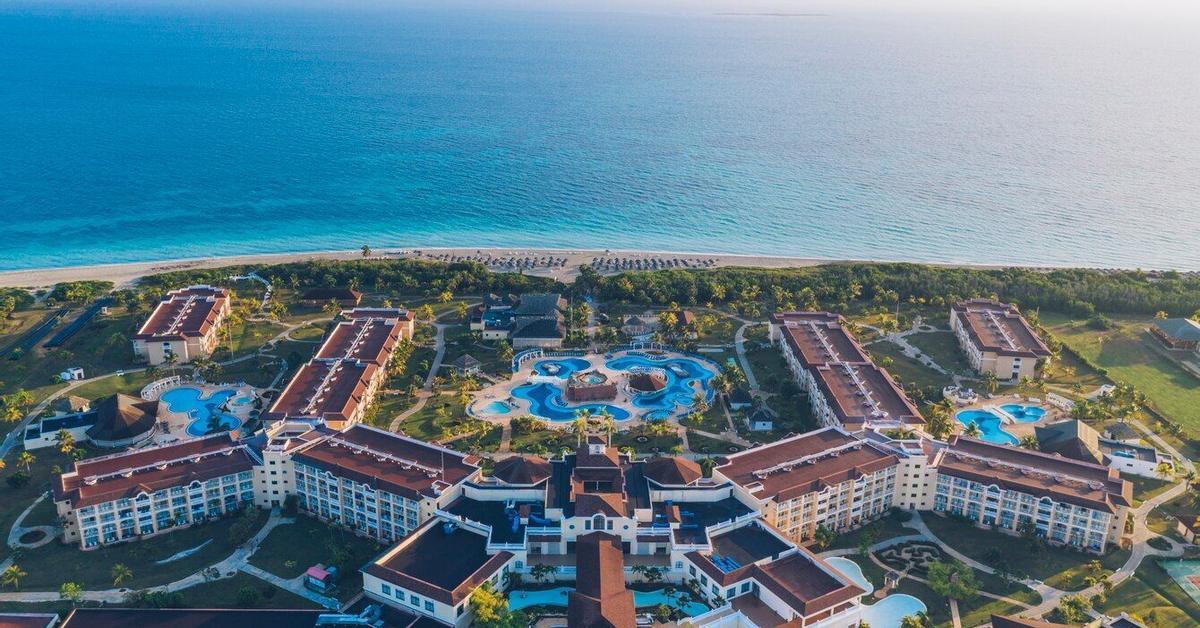
The first hotel on the island to apply this new formula is the Iberostar Origin Laguna Azul, located in Varadero. The agreement has already been signed and will begin to apply on January 1, 2026.
The Prime Minister, Manuel Marrero, announced, at this year’s FITCuba sector fair, that among the measures that the Executive was studying to boost the sector, in an unstoppable debaclethere was the leasing of tourist facilities owned by the State. These agreements, as EFE learned, represent a qualitative leap with respect to the first specific announcement in this regard: the two letters of intent signed with Chinese counterparts “for the negotiation of a lease contract for the Copacabana Hotel” in Havana, as reported at the end of April the official journal Granma.
The movement, consulted sources pointed out, has a double objective. On the one hand, it seeks to increase the income of the country, which is mired in a serious crisis and urgently needs foreign currency to import basics such as food and fuel. On the other hand, it wants to provide the large hotel chains that operate on the Island with greater autonomy and flexibility to improve service – one of the main obstacles in the sector today – and, consequently, the image of these establishmentswhich has suffered in recent years with the crisis suffered by the country.
As EFE has learned, the new system intends to begin with pilot experiences in establishments of different large international hotel chains. The Cuban authorities are negotiating the conditions of these agreements separately with each chain and apparently there are no common scales to set the rent or fixed fees. Neither party has wanted to reveal the amounts agreed for the rental.
With this decision, the Cuban Government seeks to increase its foreign currency income in two ways. Directly, with what you earn for renting establishments to hotel chains. Indirectly, also because this measure seeks to be a stimulus for a key sector in economic terms for the country.
With this decision, the Cuban Government seeks to increase its foreign currency income in two ways.
It is also the third source of foreign currency (behind professional services and remittances), which Cuba needs because it imports 80% of what it consumes. In this way, it is about revitalizing the visitor numbers, which are currently at the worst records so far this century (not counting 2020 and 2021, due to covid-19 restrictions).
So far this year, the numbers of international tourists have fallen compared to 2024, when these were already the lowest in 17 years. Sector sources expect to conclude the year at around 1.8 million people, compared to 2.2 in 2024 and 4.7 million – the island’s historical maximum – reached in 2018.
The hotels also perceive the measure as beneficial, as people involved in the negotiations with the Cuban Government have explained to EFE. Firstly, because it allows them for the first time to have “totally autonomous” management. Until now, although they managed the hotels owned by Gaesa, they had to follow multiple official guidelines and have state approval for many issues, from investments to menus, including salaries.
The plan contemplates, after these pilot tests, expanding the management change process in the country’s hotels, although no deadlines have been set.
In a context of global tourism growth, Cuba’s figures are alarming, and have been disastrous for Spanish hotel companies, such as Iberostar itself or Meliá. As the specialized media recently recalled Hostelturin line with another published article by the economic newspaper Five Daysthese firms have persisted in the Cuban bet despite being the country that goes against all the good global forecasts in the sector, especially its direct competitors, Mexico and the Dominican Republic.
In a context of global tourism growth, Cuba’s figures are alarming, and have been disastrous for Spanish hotel companies.
At the end of August, the same medium published graphics that made clear the situation of Spanish companies regarding the official figures reported by the National Office of Statistics and Information (Onei). Hosteltur recalls that “in 2018 and 2019, the Island received 4.6 and 4.2 million international tourists, respectively, driven by a more favorable context in relations with the United States and greater openness to travel.” Although pre-pandemic rates are already exceeded in the rest of the countries, this is not the case in Cuba by any means.
After the historic lows due to covid-19, the numbers in Cuba were rising, very slowly, until reaching 2,436,980 tourists in 2023. Since then, it has gone downhill. Last year, the number of foreign visitors fell to 2,203,117, and in the first half of 2025 only 981,856 were received, which proportionally does not amount to even two million per year.
The consequence for the interests of the Spanish chains has been catastrophic. They have 71 hotels on the Island, especially Meliá (34) and Iberostar (18). Far behind are Roc (with five establishments), Valentin Hotels (with four), Sirenis (with three), Barceló, Blau and Minor (each with two), and Axel Hotels with one. In total and together, they have 27,679 rooms.
The Island, in fact, is the third country in number of rooms offered by Spanish hotel companies, only behind Mexico (about 50,000 rooms in 125 hotels) and the Dominican Republic (36,000 rooms in 75 establishments). With the substantial difference that in these two countries, the sector continues to set records for employment and profits.
Between January and July of this year, the Dominican Republic received almost 7,200,000 tourists3.2% more than in the same period of the previous year, and Mexico registered, from January to June, no less than 47.4 million international visitors13.8% more than in the same months of 2024.
Taking into account that in the first half of 2025 only 981,856 were received, proportionally it would not give even two million annually
Meanwhile, in Cuba, until August, they arrived just 1,259,972 international visitorswhich represented a drop of 21.64% compared to 2024.
Although this represents an improvement compared to July – when the drop reached 23.2% compared to 2024 – the figures now make the government objective of achieving 2.6 million tourists this year unfeasible. Taking into account that in the first half of 2025 only 981,856 were received, proportionally it would not give even two million annually, which would exceed the negative record of 2024, when 2.2 million travelers were received.
It was the worst mark in 17 years, discounting 2020 (with 1,085,920 foreign visitors), 2021 (with 356,470) and 2022 (with 1,614,087), the years affected by the covid-19 pandemic.
Onei recorded that in August 135,985 international travelers arrived on the Island, a lower volume than that registered in July, when 142,131 did so.
On the other hand, according to the Onei semi-annual report, between January and June of this year they did not reach one million (981,856), 25% less than in the same period of 2024 (1,309,655). Consequently, income collapsed by 20.6% (from almost 71,000 million pesos to just over 56,000 million). Applying the rate of 24 pesos per dollar, it represents a drop from 2,950,741,875 to 2,343,539,083 dollars.
Onei does not provide net income after deducting operating costs – very high in the tourism sector – but in the case of Cuba it is estimated that these represent 70% of gross income, which would give a net income of 703 million dollars, in the best of cases.