The US military deployment in the Caribbean and the internal political crisis intensify uncertainty in Venezuela. Between hope for change and fear of reprisals, citizens express divided opinions on possible intervention
The relationship between Venezuela and the United States is going through one of its most critical moments in decades. The US military deployment in the Caribbean, with more than 15,000 troops, intensifies fears of direct intervention. Analysts warn that the combination of military pressure, economic isolation and internal repression places the country in a situation of extreme vulnerability.
Meanwhile, the daily lives of Venezuelans are marked by the paradox of living between the threat of an international conflict and the daily struggle to obtain food and basic services.
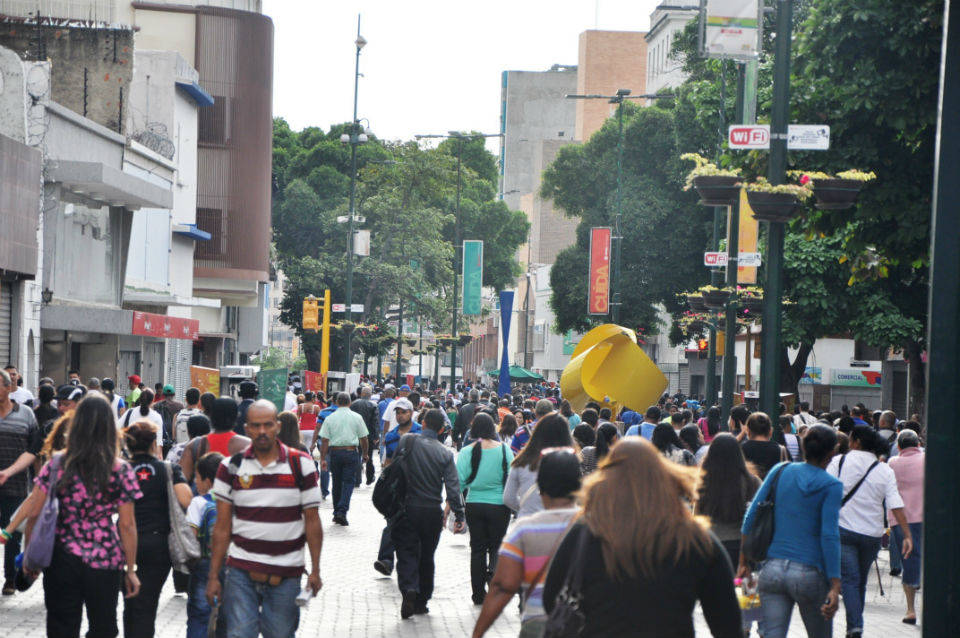
SuchWhich He toured the streets of Caracas to gather the voices of citizens regarding the possibility of a US military intervention in Venezuela.
«I do believe that there will be an intervention, but not as people think, that they will come and there will be a clash of two sides face to face, a combat as such, no. I consider that it will be an intelligence operation in which we will try to make as little noise as possible. I really would like it, it would bring a drastic change, it would revive the hope that many young people share of wanting to see a free and progressive Venezuela than the one we currently have,” commented *Carlos Pérez (name protected to protect identity).
In contrast, *Juana López, who requested anonymity, stated that “The entire history of the United States in Latin America is one of aggression, invasion and dispossession of our resourcesto economically destabilize our country, and only responds to a political whim. “What they want is our wealth, from the entire South American region, and in the case of Venezuela, what they want is for President Nicolás Maduro to leave the country on a simple whim.”
«Honestly, I would like there to be a change, but I really don’t know if it will happen, I hope so. If it happens, I hope it is not as people think, because obviously it would be strong,” declared *Alejandra Díaz (name protected by identity).
On the other hand, *José García, who requested anonymity, said that «All this is nothing more than pressure. What our opposition has is a business, and they already divided the country, but here is a town, a country with entrepreneurial people, who are really clear about what the interests of the United States are. “They are a purely arms-oriented country, and their business is to sell weapons and create wars, they do not want peace.”
«I have seen information on social media, but I don’t have that much knowledge about this. The government says that the United States is to blame for the blockades and economic problems, and they want to wage war, however, others say that all this is to liberate Venezuela. I don’t have a very defined concept, and I’m waiting, but I’m really not sure if they’re going to come or not. “I don’t know what to believe at this point,” said *Lourdes Zapata (not her real name).
When asked if they have food and reserves in case of a possible intervention, citizens offered diverse answers. While some claimed to have taken minimal precautions to face a possible crisis, others recognized that the lack of money prevents them from preparing adequately.
«I remain on the lookout, but I have not taken as many precautions. Due to the situation in the country, I do not currently have the necessary resources to make a large market and save it.“I consume what is the market that I have in my house, and I live from day to day,” said one of the interviewees.
«I don’t have any of that, I mean, I have food, but I’m not prepared in case something happens. If it happens like people say it will happen, the power would go out and all that, then no, I’m not prepared,” admitted another of those consulted.
«In reality we go out to buy what we need for the week, or we buy for a whole month, so we always have certain reserves of food. In the event that something happens, I don’t think it will last for a very long time and it will be a completely militarized country,” argued a citizen in the center of Caracas.
During the journey, the common factor is that Many citizens preferred not to offer statements. The refusal, as some explained in a reserved manner, responds to fear of possible retaliation by the authorities, even for the simple fact of expressing an opinion about the political situation in the country.
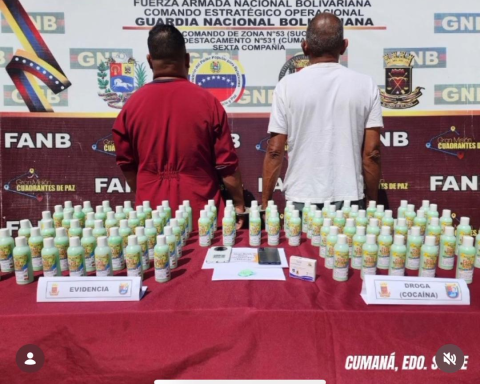
Since August, Washington has reinforced its presence in waters near Venezuela under the argument of combating drug trafficking. More than 20 air attacks were recorded against suspicious vessels, with dozens of deaths so far in areas of the Caribbean and the Pacific. At the same time, the suspension of international flights to Caracas following warnings from the FAA (Federal Aviation Administration) about risks in Venezuelan airspace increases the isolation of the country.
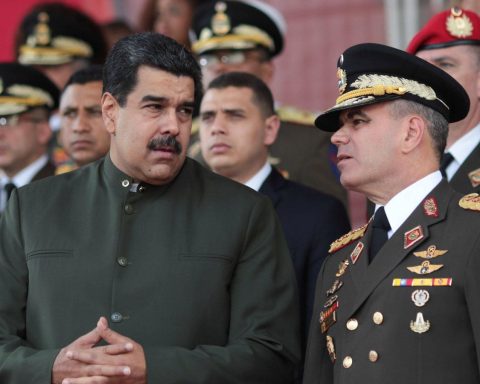
The US administration has declared that it considers Nicolás Maduro’s government illegitimate after the 2024 elections, widely questioned by international organizations. This position is supported by several Latin American countries, which deepens the diplomatic crisis.
*Journalism in Venezuela is carried out in a hostile environment for the press with dozens of legal instruments in place to punish the word, especially the laws “against hate”, “against fascism” and “against the blockade.” This content was written taking into consideration the threats and limits that, consequently, have been imposed on the dissemination of information from within the country.
Post Views: 142