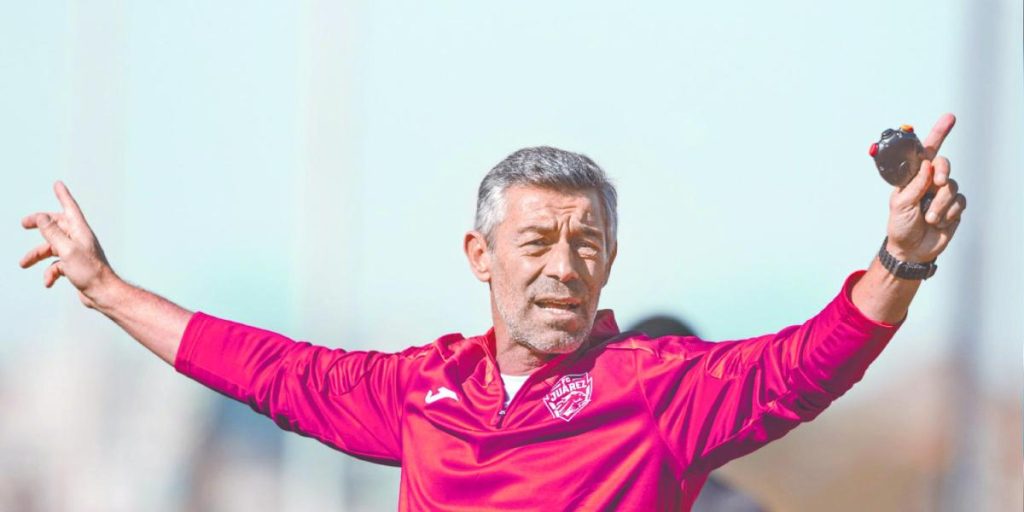
Shackled at his ankles and dressed in a prison uniform, the deposed president of VenezuelaNicolás Maduro appeared this Monday before a federal court in Manhattan, where he reported having been “kidnapped” by US forces and proclaimed that he remains the legitimate leader of his country.
“I am innocent. I am not guilty. I am a decent man. I am still the President of my country,” Maduro said in Spanish, raising his voice before Judge Alvin Hellerstein interrupted him to ask him to confirm his identity. As he left the room, he added: “I am a prisoner of war.”
Federal charges and life sentences
Maduro, 63, faces four federal criminal charges including narco-terrorist conspiracy, conspiracy to import cocaine and possession of machine guns and destructive devices. Each carries a maximum penalty of life in prison.
Prosecutors in the Southern District of New York accuse him of being the head of a cartel of Venezuelan officials who would have collaborated with criminal organizations such as the Sinaloa cartel, Los Zetas, the Colombian guerrilla FARC and the Venezuelan gang Tren de Aragua.
According to the accusation, Maduro, who became president of Venezuela in 2013 until Saturday, January 3, would have used presidential facilities to move drugs, protected shipments with military support and given shelter to violent groups.
“As president of Venezuela and now de facto ruler, Maduro allows cocaine-fueled corruption to flourish for his own benefit, that of his regime, and that of his family,” the court document states.
The defense and kidnapping allegations
Maduro’s lawyer, Barry Pollack, announced that he plans extensive litigation over the legality of the US operation, which he described as a “military kidnapping.” Maduro and his wife, Cilia Flores, were forcibly removed from Caracas in the early hours of Saturday during attacks that included ground commandos, aerial bombardments and naval deployment.
The lightning action, which lasted about 140 minutes, raised serious doubts about the loyalty of his closest collaborators towards the President, given the technological, logistical and firepower potential of the Venezuelan army, which did not react to the attack.
It has not been officially reported how many victims the US operation left in Caracas. A medical organization reported about 70 dead and 90 wounded, while military sources spoke of at least 15 deaths. Havana assured that 32 Cubans from Maduro’s security team died in combat and under the bombing of American aircraft.
Cilia Flores, 69, also pleaded not guilty and faces the same charges, except for narcoterrorism. Both will remain detained in New York until the next hearing, set for March 17.
The new indictment also includes the son of the deposed president, Nicolás Maduro Guerra, known as “Nicolasito”, and the Minister of the Interior, Diosdado Cabello.
Delcy Rodríguez takes over as interim president. Jorge, his brother, the parliament
While Maduro appeared in New York, the new Venezuelan Parliament was installed in Caracas. Delcy Rodríguez, until then vice president and first in the line of succession, was sworn in as interim president by order of the Supreme Court.
“I come with pain for the kidnapping of two heroes that we hold hostage in the United States,” Rodríguez said in his swearing-in. “I also come with honor to swear on behalf of all Venezuelans,” said the politician, who opened a channel of dialogue with the United States, respecting the sovereignty of both countries.
Maduro’s son, a legislator in Parliament, provided his “unconditional support” to Rodríguez and assured that his parents will return “sooner rather than later” to Venezuela.
This Monday, deputy Jorge Rodríguez, psychiatrist and Chavismo’s chief negotiator with the US, was re-elected as president of the National Assembly (AN, Parliament) of Venezuela, two days after the US attack on Venezuelan territory. The legislator is also the brother of the current president in charge, Delcy Rodríguez.
Now at the head of the Executive and Legislative powers, the Rodríguezes were appointed in early December by Maduro himself as members of the political bureau of the PSUV, a body that, according to the president, will lead a new phase of the revolution.
Both brothers have been sanctioned since 2018 by the US Department of the Treasury for helping Maduro “to maintain power and solidify his authoritarian government,” recalled an agency record. EFE.
Demonstrations in New York and Caracas
Outside the courthouse in Manhattan, two groups of protesters clashed verbally: some defending Maduro as legitimate president and others celebrating his capture. “We are outraged by what the United States has done to the duly elected head of Venezuela,” said Sherry Finkelman, an 80-year-old retired teacher.
In contrast, Alejandro Rojas, a Venezuelan data scientist living in the US, said: “It is so emotional, being able to reconnect with family, being able to have a country back again.”
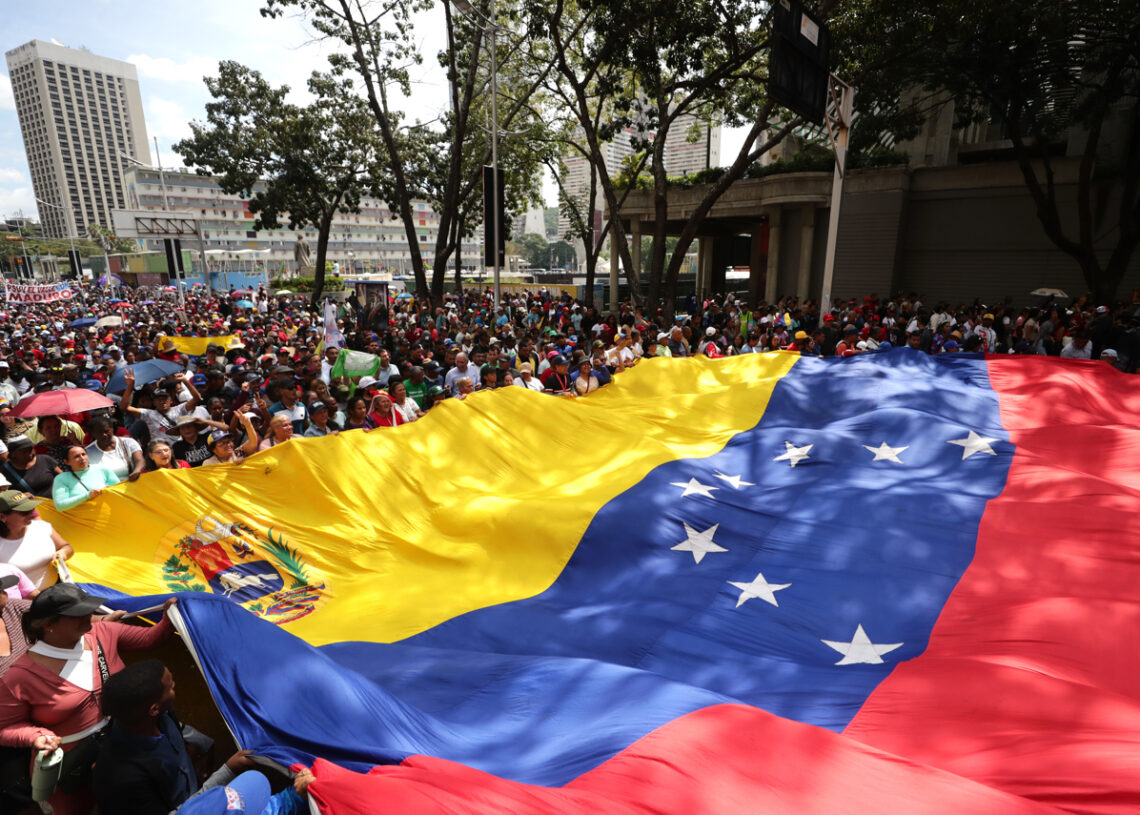
In Caracas, thousands marched under the sun to demand the release of Maduro and Flores. “Maduro hold on, Venezuela rises!” chanted the protesters, carrying flags and official propaganda dolls such as “Súper Bigote” and “Súper Cilita.”
“We are marching because we want to show the world that our president Nicolás Maduro and our first combatant Cilia Flores are not alone,” said Antony Quintana, 39, reported the French agency AFP.
Lula picks up the phone and recognizes Delcy Rodríguez
Brazilian President Luiz Inácio Lula da Silva had a brief telephone conversation with the then Venezuelan Vice President Delcy Rodríguez.
According to official sources, both commented on the situation in Venezuela after the US bombing that preceded the military operation to transfer Maduro to New York, where he faces narcoterrorism charges.
Lula harshly criticized the intervention, calling it a “very serious affront to sovereignty” and an “extremely dangerous precedent” for the international community, warning that the violation of international law opens the door to a world of “violence, chaos and instability.”
Brazil immediately recognized Rodríguez as interim president, who was sworn in on Monday before the Venezuelan Parliament, a treatment that distances itself from the treatment given by Planalto to Maduro, who was never legitimized by Lula’s government due to doubts about elections, in 2024, which were accused of being fraudulent and that Chavismo could never document in his favor.
The Brazilian Government promoted a Celac meeting to debate the crisis, although without regional consensus, and took its condemnation of the armed intervention to the UN Security Council, insisting that Latin America must continue to be a “zone of peace.”