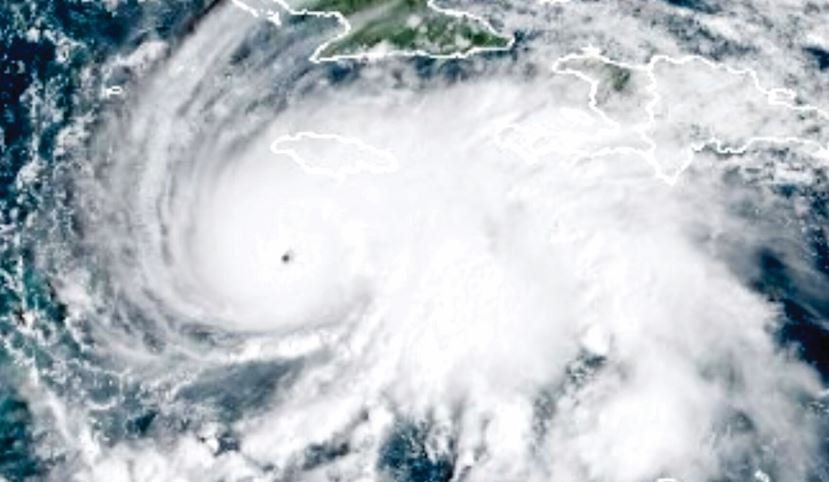
PORT-AU-PRINCE, HAITI.- The passage of Hurricane Melissa through the Caribbean is already beginning to leave a trail of damage and displacement. Haiti, one of the most vulnerable countries in the region, faces heavy rains, flooding and affected communities, while Cuba prepares for the direct impact of this powerful cyclone, which reached category 5 with winds of up to 270 km/h.
In Haiti, more than 2,000 people have been sheltered in schools and community centers set up as emergency shelters.
As explained to EFE by the deputy representative of the United Nations Children’s Fund (Unicef), Yannig Dussart, 20 schools and high schools were identified to house affected families, of which nine already house 1,991 people in the municipalities of Les Cayes, Coteaux, Jean du Sud, Île-à-Vache and Les Cayes.
Another 117 people remain in temporary shelters in Port-Salut and Île-à-Vache.
“The immediate needs are emergency shelters, clean water, sanitation and food assistance,” Dussart warned.
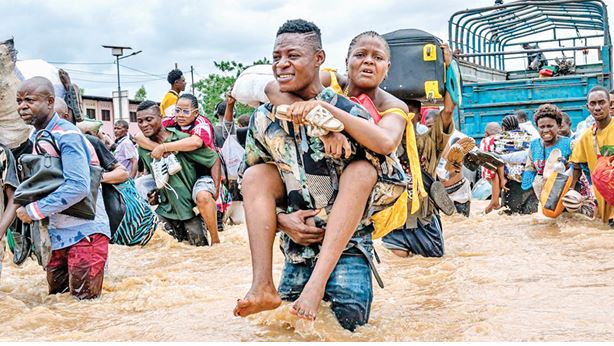
According to the latest report from the Haitian Civil Protection Directorate, at least three people have died and 16 were injured. About 10 houses were damaged and 450 homes flooded as a result of the rains and flooding caused by Melissa.
Unicef also reported that it has provided emergency financial aid of $92 to 1,400 affected households to strengthen their resilience and facilitate access to essential goods. The agency warned about the high risk of landslides and impacts on agricultural activity in the impacted areas.
A powerful hurricane in the Caribbean
Melissa is moving slowly very close to Jamaica, with sustained winds of 270 km/h and higher gusts.
Meteorologists warn that atmospheric conditions will continue to deteriorate** as the phenomenon moves westward and approaches Cuba, where it could make landfall early Wednesday morning at a still undetermined point on its southeastern coast.
The Cuban Institute of Meteorology (Insmet) warned that the hurricane will cause coastal flooding and strong storm surges in the provinces of Granma, Santiago de Cuba and Guantánamo, with effects also in mountainous areas of the eastern third of the island.
The Cuban Civil Defense General Staff declared the “alarm” phase in six provinces: Guantánamo, Santiago de Cuba, Holguín, Granma, Las Tunas and Camagüey. In addition, the provinces of Ciego de Ávila and Sancti Spíritus went into the cyclonic alert phase, given the expected extent of the effects of Melissa.
Active season
Local meteorologists point out that the current hurricane season is especially active, with a high probability that more hurricanes will form in the region in the coming weeks.
Melissa has highlighted the high vulnerability of the Caribbean to extreme hydrometeorological phenomena, especially in countries with structural weakness such as Haiti.
In the Dominican Republic, although the phenomenon does not have a direct impact, its external bands have caused heavy rains, flooding and saturated soils since the middle of last week, maintaining active alerts in several provinces.
Relief agencies throughout the region remain vigilant regarding the evolution of the hurricane, which will continue to generate adverse conditions in the coming days.
Government evaluates
The Dominican Government began the evaluation and recovery phase after the passage of Hurricane Melissa, which
left in its wake prolonged rains, cut off communities and considerable losses in the sector
agricultural.
During his meeting at La Semanal with the Press, at the National Palace, President Luis Abinader
offered a preliminary assessment of the damage and highlighted that, although the country continues under the effects of cloud bands, the Government’s focus now shifts from prevention to reconstruction.
“Today we went from the emergency stage to the remedy stage. We have been focused first on saving lives, and thanks to the early action of the institutions we were able to avoid a major tragedy. Now
We are entering the recovery phase, where we will be evaluating and repairing the damage to both housing, agriculture and road infrastructure,” Abinader explained.
The president reported that the strongest impact occurred in the agricultural sector, where preliminary losses amount to RD$1,340 million, according to reports from the Ministry of Agriculture.
The most affected provinces are San Juan, Azua, Barahona, Elías Piña, San Cristóbal, Monte Plata, Espaillat and La Vega, with more than 36,700 damaged crops, mainly banana, cassava,
coffee and rice.AR” (prevention, help and remedy).