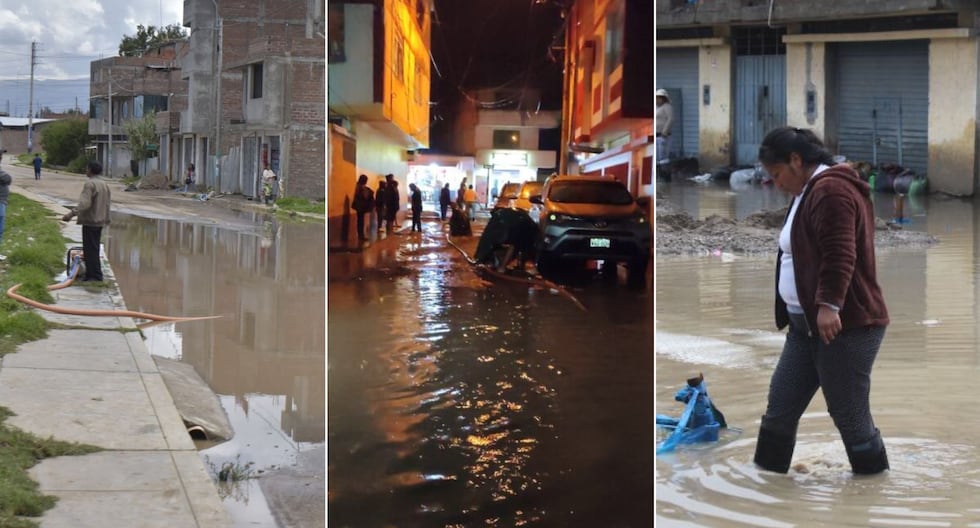
Five sectors of the Chilca district have been identified as risk points for landslides (huaicos) and flooding for the 2026 rainy season, a stage that, according to the forecasts of the National Meteorology and Hydrology Service of Peru (Senamhi), will begin this month and will last until March. According to the Civil Defense Office, the sectors at risk are Peñaloza (Ocopilla), Echadero (Azapampa), Auquimarca, Auray and Pueblo Unidos.
PEÑALOZA
César Ramos Escalante, head of Civil Defense of the Chilquense commune, explained that the Peñaloza neighborhood, located in the Ocopilla area, is probably the one that is at greatest risk. Here, as has happened in previous years, the activation of two streams is expected, which could generate landslides and floods.
“There are two activations (of streams): the one in the Peñaloza park and the one in the Yurimaguas area; the drop of water is greater and, on previous occasions, the roads have been disabled and flooding of some homes has occurred”Ramos warned.
In this sector, an average of 800 families are at risk, according to MDCH data. A similar panorama is expected in the Pueblo Unidos sector, where there is also a ravine that usually becomes active during the rains.
CHANNELS
Echadero and Auray are also at risk, not because of the presence of streams, but because of the irrigation canals that cross these sectors. According to the Office of Civil Defense, the construction of homes and artisanal bridges, as well as the accumulation of waste, could cause the canal and drainage system to end up overflowing.
“In the canals, the rain pulls solid waste and waste; then, the artisanal bridges installed become an obstacle to the circulation of water”explained the official.
Between the two sectors, the District Municipality of Chilca identifies some 900 families that would be affected.
In Auquimarca, the risk is present for about 200 families; This is due to poor storm drainage connections, which with a heavy load of rain see their gutters and drains collapse.
PREVENTION
This Tuesday, the Civil Defense Office will hold a meeting with neighbors, with the exposed areas as the main focus.
The idea is to improve emergency reporting so that help arrives directly, avoiding bureaucracy.
“If there is any impact, we want to do an effective job: take the machinery directly with the action; not have to do an evaluation”he finished.