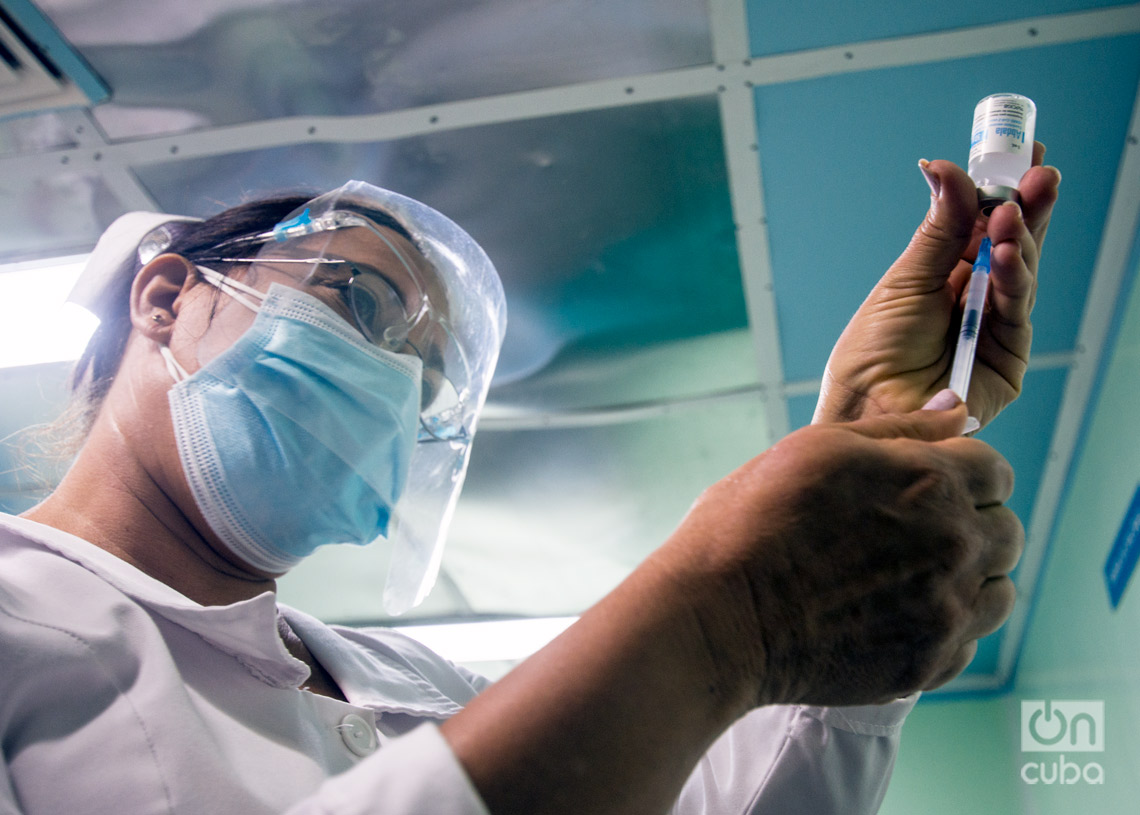
In February of this year the Ministry of Public Health (Minsap) advertisement That, for the first time, at least 95% of 9 -year -old Cuban girls would receive the Human Papilloma virus (HPV), a key preventive measure against cervical cancer, one of the main causes of death due to cancer in women.
With regard to vaccination against this pathogen, the specialist and deputy director of the Finlay Vaccines Institute Dagmar Garcia explained This Monday on Facebook that almost all sexually active people will spread with some type of HPV during their life, and that if the infection persists for years, it can generate cellular changes that eventually become cancer.
HPV vaccination began to be performed worldwide in 2006 and arrives in Cuba almost 20 years later. On the island, in 2020 21 out of 100 thousand women they were diagnosed with cervical cancer, a figure that will decrease significantly after the entrance of the immunizing the national vaccination calendar. Cérvicouterino cancer appears as the fifth cause of death in women and the second, specifically, in the group between 15 and 44 years of age.
The bivalent Cecolin vaccine, which will be applied in Cuba, is of Chinese origin, is produced by the INNOVAX company and protects specifically against serotypes 16 and 18, responsible for approximately seven out of ten cases of cervical cancer in the world.
Garcia warned that vaccination is like a “training” for the immune system: he teaches him to recognize and combat the most dangerous types of the virus before natural exposure during the sexually active phase.
On the recommended age to administer the immunizer, he commented: “The vaccine is more effective when applied before exposure to the virus. That is why it is mainly recommended for girls and adolescents before the start of sexual life.”
In addition, the pharmacist emphasized that Cecolin is safe, effective and has the prequalification of the World Health Organization (WHO). Applying it from childhood means to advance 15 to 20 years to the appearance of the disease and ensure that girls and adolescents are protected against one of the most important risks for their future health.
“Vaccinar is the solution,” concluded Garcia, who also stressed that this public health decision helps reduce female mortality from cervical cancer and strengthens prevention in Cuba.