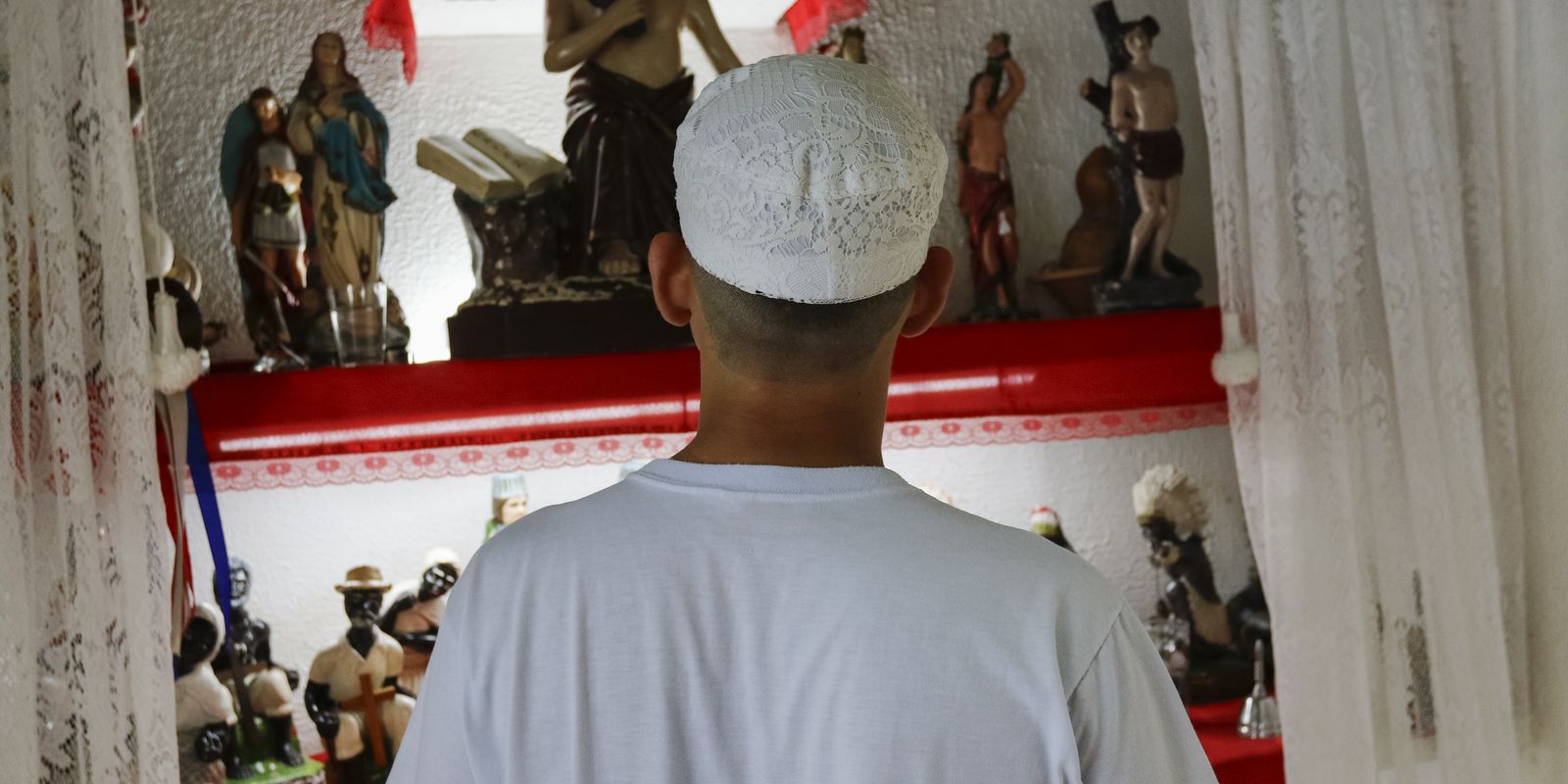
The routine of a street sweeper in Brasilia included, besides the heavy work, being a victim of prejudice for being adept at Umbanda. When complaining about the treatment, he was fired. However, an action filed by him in court recognized that he suffered discrimination and cursing at work, and the Company Environmental Value, which provides urban cleaning service in the Federal District, was ordered to pay an indemnity of R $ 15 thousand to the worker. 
The decision of the Regional Labor Court (TRT), on the 23rd, which recognized that there was religious racism, can serve as a way of clarification for other victims. Professionals who go through violence in the professional environment may require the right to work in peace and not be a victim of discrimination because of their faith.
Prejudice at work is far from an isolated case. According to the Labor Public Prosecution Service (MPT), until July 31, there was, generally, 515 complaints of discrimination due to color, origin or ethnicity. Last year there were 718 cases. Regarding discrimination due to African matrix religions, as was the case of the street sweeper in the capital, the MPT recommends that these crimes be reported.
Segregated worker
Prosecutor Danielle Olivares Corrêa, who is a national coordinator for the promotion of equal opportunities and the elimination of discrimination at work, clarifies that This kind of prejudice can even be identified by jocosa jokes and stigmatization of the religions of African matrices. “Prejudice ends, for example, leaving the individual isolated, sometimes, in a working group,” he lamented, in an interview with Brazil agency.
The prosecutor explains that the person can be segregated by both colleagues and the hierarchical superior, that it does not pass certain tasks or play joking and inadequate jokes. “We call recreational racism, but it can happen in many ways. For example, giving no opportunity for that worker to be promoted.”
Denunciation Paths
Danielle Olivares points out it is important that the person who is offended by a prejudiced comment can initially report the institutional channel, and also in other instances, such as the Police Station and the Public Prosecution Service. “One way does not exclude others,” he ponders.
One challenge is to join the evidence of discrimination. “The main proof is the witness. These are people who have witnessed the harassed conduct of the worker. But there can also occur through social networks or messaging application, for example,” says the attorney.
She adds that it is legitimate to record discriminatory conversations for use in a future process. It is important that, within companies, there is even an internal policy to combat racism. “Companies can create, for example, diversity committees that bring this discussion with workers education programs,” says the prosecutor.
Awareness
It is recommended, in its view, partnerships with black collectives and anti -racist organizations, with education incentive programs, so that situations of racism are recognized. “This should be the agenda, for example, for the training of workers when dealing with the issue of bullying.”
Law No. 9,029, of April 13, 1995prohibits every form of racial discrimination in the employment relationship. “The employer who does not take the proper precautions to prevent discrimination in this environment may be the target of a fine and prohibition of public bank loans.” In addition, the company may be subject to being sentenced to collective moral damage in a public civil action of the Public Prosecution Service.
In these relationships of discrimination in the professional field, the black woman is even more vulnerable than men. Even because it already receives the lowest salaries, according to a survey by the Ministries of Women and Labor and Employment (MTE) released in April – The average salary is 52.5% lower than that of non -black men.
“No arrangements”
In the case of the street sweater in Brasilia, the company claimed that the resignation occurred by “low performance of the employee, amid an internal restructuring process”. The TRT assessed that the documentary and witness evidence showed that the worker was the target of religious racism and that the dismissal occurred shortly after the prejudiced treatment of the company’s hierarchical superiors denounced.
In the sentence, Judge Acélio Ricardo Vales Leite, from the 9th Labor Court of Brasilia, considered that no action was taken by the company even after the complaints of the employee.
In the second instance, Judge Pedro Luís Vicentin Folran pointed out that the employer’s omission in the face of acts of religious racism constitutes a violation of the dignity of the worker and imposes the civil liability of the company.
“Verbal violence is also violence and, besides a simple curse, the complainant, follower of Umbanda, suffered religious racism for not professing Eurocentric religions arising from Christianity,” he said.
The company was ordered to pay compensation corresponding to six salaries of the worker, twice, and the decision to recognize the worker’s right to the maximum degree (40%) unhealthy work additional, due to professional conditions.
Company Nega Racism
In a statement, the company Valor Environmental pointed out that it received with “perplexity” the decision of the court and complained that the conviction would have occurred from a statement of the employee during his previous notice.
Moreover, he denied that there are evidence of religious racism. “The allegations of religious discrimination only came to the company’s knowledge after the lawsuit filed,” said the company that will appeal the decision.