Days ago was news Disconnection and subsequent departure from the largest of the Turkish floating plants that remained in Cuba. It was due, according to the brief official information, to “commercial reasons.”
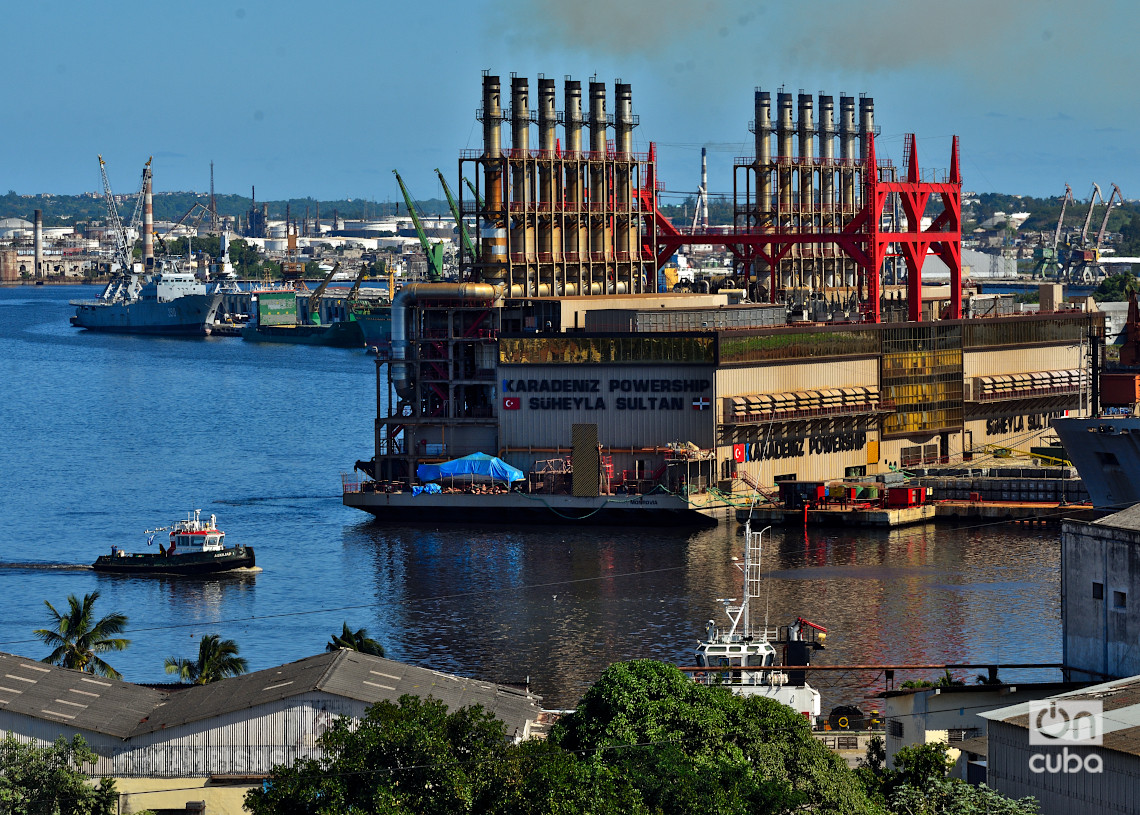
The departure of the Suheyla Sultan, anchored until then in the Ensenada de Melones, in Havana, meant the loss of 240 MW, an important figure in the midst of the energy crisis suffered by the island, exacerbated in recent months.
That floating plant had arrived in Cuba More than two years ago to complete a park of eight units of different generation capabilities. He did it as rent, as part of an agreement between the Cuban government and the Karadeniz Holding company, in Türkiye, in progress since 2019.
These teams were installed in the Bays of Havana, Mariel and Santiago de Cuba and came to contribute more than 600 MW as a whole. However, in 2023 the first two left “in correspondence with what was agreed in the contracts”, As reported then The Minister of Energy, Vicente de la O Levy.
Then, in 2024, others left until there were only two in the capital, according to What was explained by the Minister himself during the December parliamentary sessions. On that occasion, O Levy blamed the exit to the “impossibility of fulfilling the payment commitments for the absence of currencies.”
So far the amount paid by Cuba has not been made public for the rental of these plants, although independent experts – based on reports from other countries – estimate a millionaire cost. However, the island authorities have defended their income as a “good business” in the prolonged scenario of economic and energy crisis.
In 2025
After the departure of most of the Patanas, the two that were in operation, according to various sources, were the aforementioned Suheyla Sultan, identified in the official reports such as the “melons”, and the Erol Bay, with an approximate capacity of 63 MW and known as the “rule pin”, for its location in that Havana municipality.
Both had remained generating throughout 2025, although with difficulties and stops – partial or total – increasing due to the lack of fuel, a problem that has strongly hit the generation of electricity along with the continuous breakage of thermal units.
Already in May, the possibility of an imminent game of those teams It was denied by the Ministry of Energy and Mines (Minen) after days of rumors in social networks and media publications. These speculations had been fed by the arrival in Havana of a freighter used to move large tonnages such as those of floating plants.
For others, Jesús Abad Vigoa, first vice minister of Minen, had recognized shortly before As “a latent risk” the possibility of retreating the patanas “given the difficulties in honoring their monetary commitments”, which gave more likelihood to speculation that ended up partially confirmed a few months later.
Then, in July, again before Parliament, O Levy said that the Government had executed “minimum payments to keep the patanas generating during July and August”, although finally the Suheyla Sultan would not delay to leave.
At that time, the head of Energy and Mines said that of the eight patanas that once had the island had retired five, which raised three that followed in Cuba, although only two were regularly reported in the parts of the electricity union (UNE).
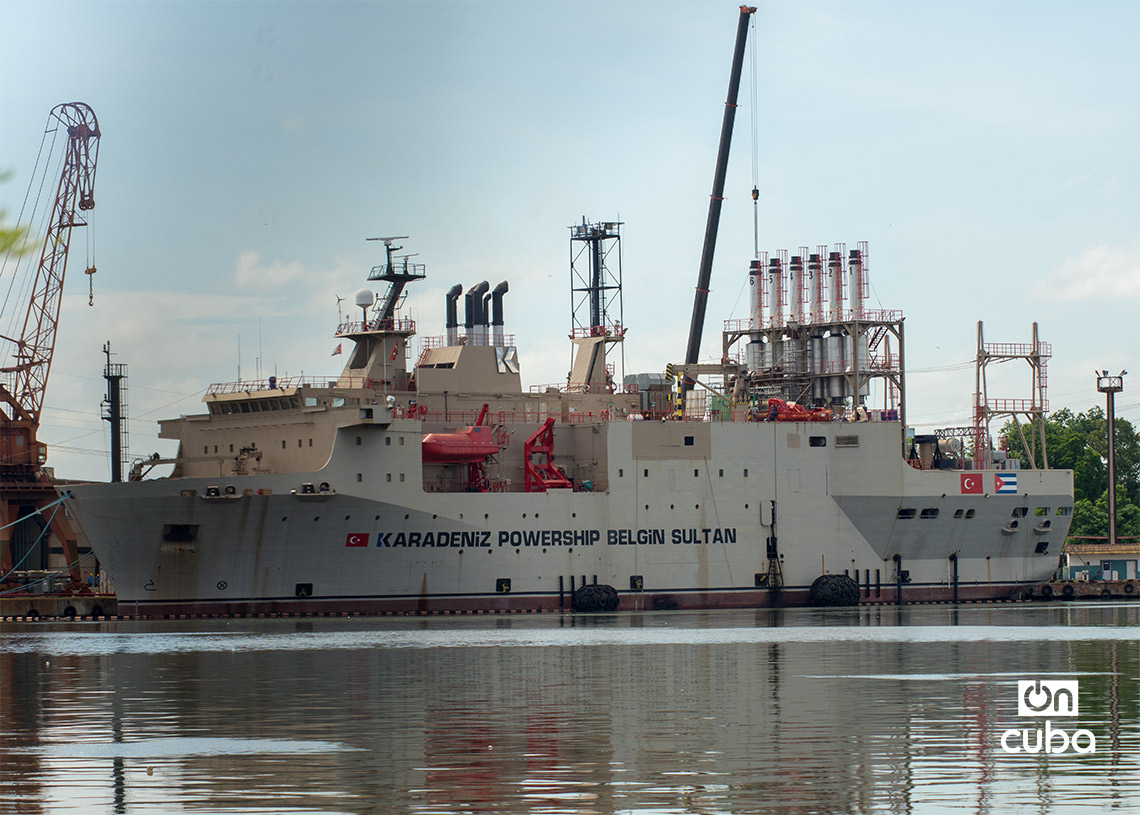
The third, apparently, was the Belgin Sultan, also called KPS-57, a small support pin, not usually used in the generation, in which last September occurred last September A fire that left two dead – both Turks – and several injured. It would have remained in Havana, in the shadow of the other two.
And now?
After the disconnection of the largest of floating centrals, the UNE has re -referred to the rule pin, which presumably would remain generating beyond the problems with the fuel that can paralyze their engines.
This would be, according to logical calculations, the only plant of this type that would continue to regularly operate in Cuba.
The novelty is that this week it has officially begun to mention a melons, despite the fact that the one that until recently was called that way is no longer on the island. In it part last Tuesday He was identified as the KPS56, to which seven engines should connect that day and contribute 45 MW, although it seems that it happened last Wednesday.
What is this floating central?
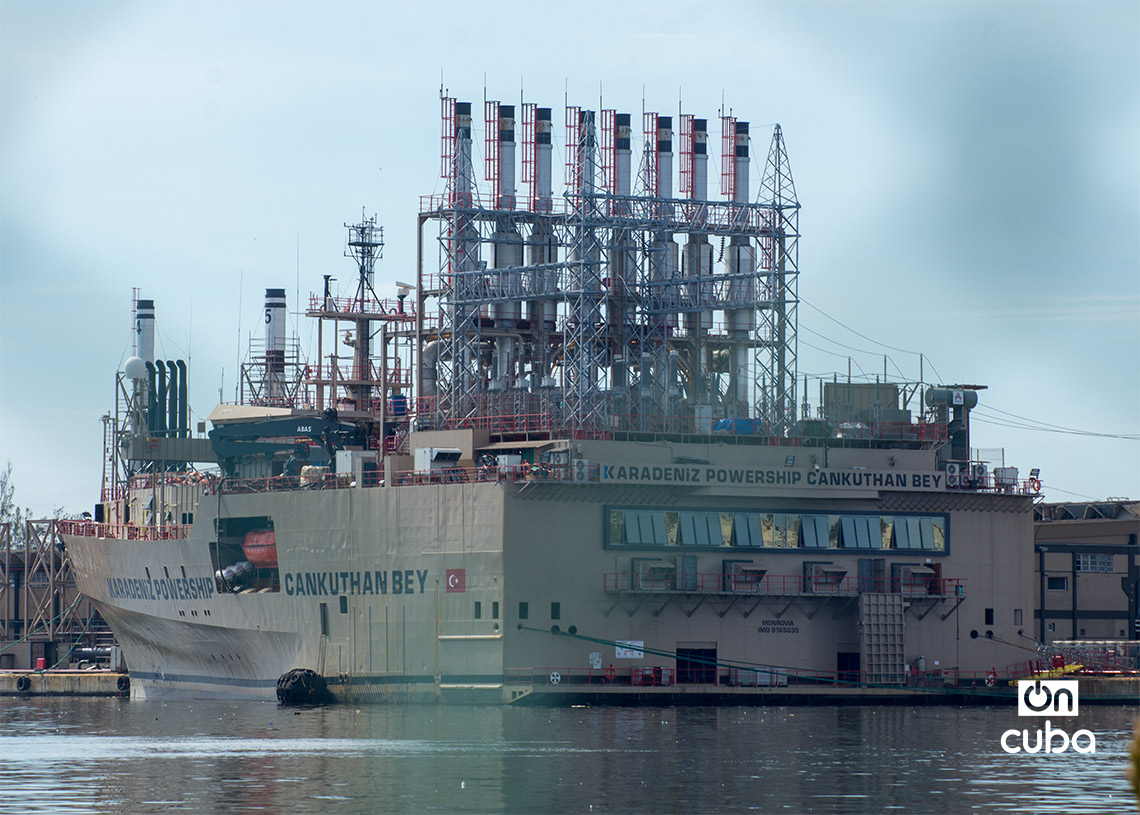
Well, it’s the Cankuthan Bey, as he verified In situ Our photoreporter Otmaro Rodríguez. There is anchored next to the aforementioned Belgin Sultan.
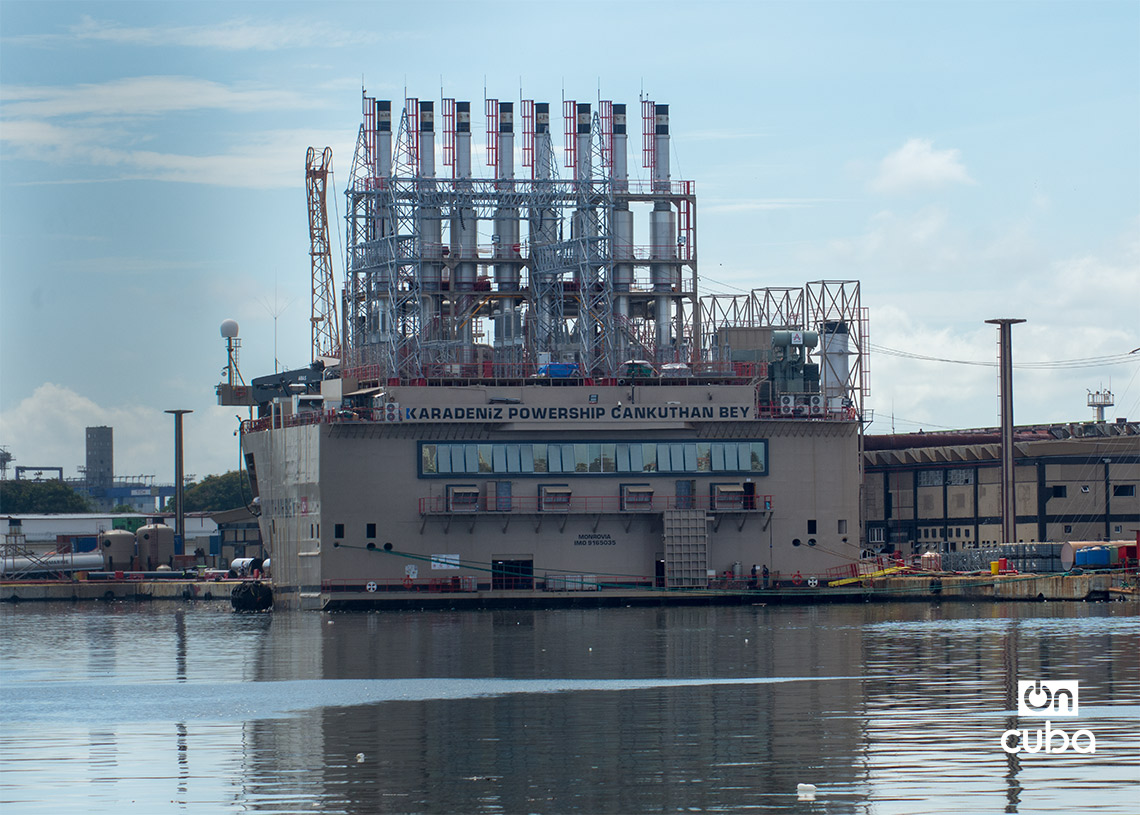
We talk about a pin that It arrived in December after the exit of other centrals and generated rumors and expectations. However, the UNE said that it was only passing through Havaneras waters, where “work on launching its units” would be carried out and, once these work was finished, it would leave the island. It is not clear if he finally did.
According to information available on it, Cankuthan Bey has a capacity of 80 MW, a third of what the suheyla sultan could generate, although higher than that of the rule pin. To contribute the maximum of its capacity, something that would also depend on the availability of fuel, would partially relieve the void left by the newly disconnected plant.
So far, the Cuban authorities have not publicly provided details about their implementation or the time that would remain in operations, nor have they explained in depth what happened with the Suheyla Sultan, beyond saying that their disconnection was due to “commercial reasons”.
With it, two floating centrals in operation in Havana would be again and three if Belgin Sultan is counted, whose nominal capacity would be much lower. If nothing is clarified in an official way, in the coming weeks and – I wish – months it can be verified what its contribution and transcendence could be in the middle of the precarious energy scenario of Cuba.