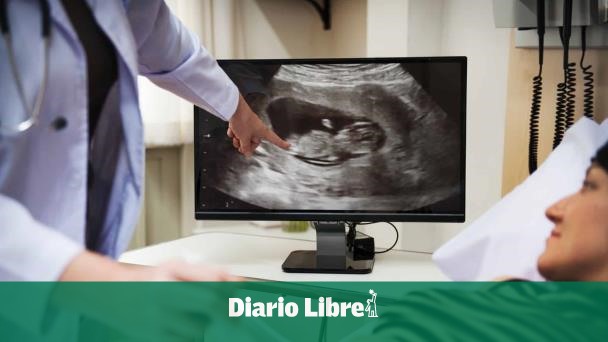
Just a few decades ago carry out a Sonography during the pregnancy It was considered a luxury reserved only for those who could pay private medical studies.
Today, this procedure has become a fundamental part of the prenatal monitoringallowing doctors and mothers to know precisely the development of the baby from the First weeks of gestation.
The doctor Berty of Jesusgynecologist, explains in conversation with Free newspaper the Ultrasound types currently indicated in the controls of the pregnancy and in which phase of the gestation period they are carried out.
“The Sonographies They are suggestive studies, they are from follow-up And it is important to highlight that they are not invasive. He Final diagnosis The doctor will determine it, with the clinic and condition of the patient, “said of Jesus when introducing the issue.
Although a pregnancy can extend up to 40 weeksthe specialist comments that international medical guides say that Six checks quality are enough to properly document the prenatal period.
“It can depend a lot on whether the patient is diabetic, if it is hypertensive. There are patients who require a follow-up A little more continuous, “he said.
Sonography Transvaginal
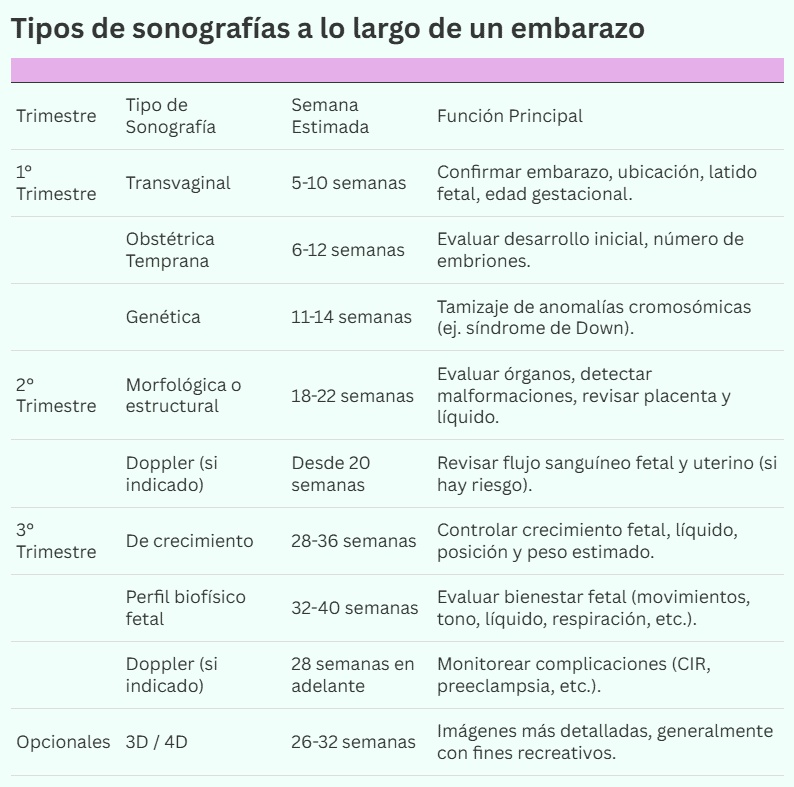
The first Sonography which is told a pregnant woman or suspected of pregnancy It is the transvaginal, which is done in the period of 12 First weeks After the last menstruation date.
“Transvaginal is indicated because the uterus is still intrapélvic pregnancy May the patient have. It is indicated below 12 weeks because already above that time, the uterus becomes extrapelvic, grows and rises a little beyond the pelvic part, “he explained.
Here it is detected if there is a pregnancy well implanted or if there is a pregnancy anembrado, which is when the bag is formed, but the complete embryo is not formed. It is also detected if there is a pregnancy Ectopic (outside the uterus), being able to have remained at a cervical level, of the abdominal level tubes.
The first time is heard Embryo beatwhich is generally captured after 6 weeks because the endocardium and embryocardium (cardiac structure initial that appears before the heart has its definitive shape) are formed between the weeks 3 and 7.
Sonography genetics
Arrivals weeks 12 at 14 pregnancygynecoobstetra can request a Sonography genetics or of Nucal translucenceso called for the translucidity observed in the baby’s neck area.
Its main objective is to detect genetic problemsstructural problems of the baby and Chromosomal anomaliesbeing the Down syndrome The one with the greatest finding in this study, which is subsequently confirmed with a blood sample.
“Despite the diagnosis, women normally continue with their pregnancy Because the Down syndrome It is not a condition incompatible with life, “highlights the specialist who works in Maternity Our Lady of Altagracia and at the National Institute of Diabetes, Endocrinology and Nutrition (Inden).
Sonography morphological
Between weeks 18 and 24, another Sonographic Trace is made, that is the Sonography morphological, which is not usually contained within the coverage of health risks administrators.
It evaluates the Fetal Anatomy And in cases of having previously observed some alteration, see if it persists.
“It is seen if the lungs are properly formed, if the fetus has a good heart, a normal brain, its kidneys, the stomach. They look possible Malformationsfetal development, the placenta, the cord is evidenced, if the amniotic fluid is in relevant quantities, if everything is fine and that the baby is going to reproduce well, “said the doctor.
Sonography Obstetric
Among consultations, the gynecologist can request a Sonography Obstetric, known as the Sonography conventional (black and white), provided that the pregnancy Be above 12 weeks gestation.
Voluntarily, this study can be raised to 4D format and 5d for an ultrasound that allows the baby to see in motion and in real time inside the uterus, with a more detailed and realistic image than the traditional ones.


You can see the Face features (eyes, nose, mouth), limbs, and Movements like yawn, smiles or sucking your finger. Many parents choose her to Emotionally connect With the baby and save visual memories.
Fetal well -being studies
The doctor of Jesus indicated that there are other complementary traces that are made throughout the pregnancyas long as the patient’s condition merits it. These are known as Fetal well -being studies.
The first of this group is the Biophysical profilewhich examines the anmiotic fluid, tone, body movement, respiratory and fetal relaxation.
According to the doctor, the indication of this study is no longer so frequent, because the parameters it collects are very similar to those of the Sonography Obstetric.
In the same way, it can be complemented with a Hemodynamic profilewhich examines the fetal and placental blood flow and detects circulatory alterations (risk of Fetal suffering).
“It values blood pressure, cardiac output, peripheral vascular resistance and mother’s circulation towards the fetus. It is a crucial profile to determine the baby’s condition with respect to labor. That profile is currently used,” added the doctor.
This study is important to identify Fetal suffering early and preeclampsia.
The third that completes the list is the placental dopplerwhich is done in patients who have added comorbidities, such as old caesarean sections or a high number of Legrated.
“Each caesarean section that you do is comorbidity, why? Because predisposes you in percentage terms with each caesarean section to a greater probability that you develop a condition called placental accrethism, which is when the placenta mischief the uterus and goes out, you can go to the bladder or the intestine,” the doctor explained.
Psychological support
When asked what happens in case any of these studies is detected an anomaly in the baby or multiple Malformationshow the mother is communicated, the doctor of Jesus said that a Multidisciplinary Committeewhich includes Psychological supportto guide the patient, since in many cases the baby dies shortly after birth.
-
The gynecologist recalled that, in the Dominican Republic, the Criminal Code does not contemplate the realization of abortions to the presence of malformations and that the legacies are only allowed in cases of fetal death, where the patient must be induced to expel it.