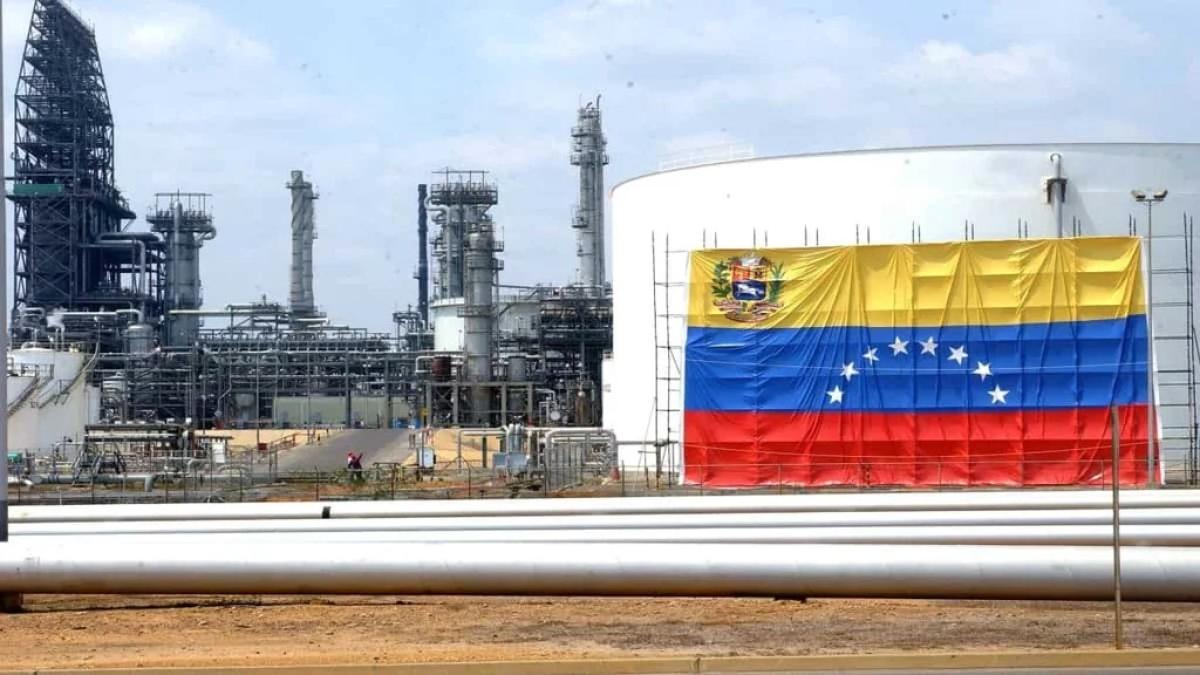
A note from the AFP agency developed Venezuela’s oil potential and Trump’s interests after the capture of Nicolas Maduro. According to the note after yesterday’s events, donald trump He stated that he wanted to reopen Venezuela to the oil companies Americans to exploit their gigantic crude oil reserves. A perspective that would mean an important change for the country’s production.
What does Venezuelan oil represent?
Caracas has the largest proven oil reserves in the world, with 303.221 million barrels, according to the Organization of Petroleum Exporting Countries (OPEC), of which Venezuela is a member, ahead of Saudi Arabia (267.2 billion) and Iran.
But production is very low: “around 1 million barrels per day (mbd)” before tensions with the United States escalated in December, compared with “around 3.5 mbd” when Hugo Chávez, Nicolás Maduro’s predecessor, came to power in 1999, says Peter McNally of Third Bridge.
“Negligence, the mediocrity of infrastructure, the lack of investment and corruption” have hampered the exploitation capacity, estimates the analyst.
The sanctions imposed by Trump during his first term caused production to fall to a historic low of 350,000 barrels per day in 2020.
How does Venezuela avoid sanctions?
Due to sanctions, there are few importers of Venezuelan oil: it is estimated that China buys 80% through Malaysia, another producing country that serves in a certain way as a screen. Around 5% of production goes to Cuba under agreements between both countries.
To evade the embargo, the country resorts to “ghost tankers” that use numerous tricks (false flags, false routes…), such as the Skipper, the first ship intercepted by the US navy within the framework of the blockade in December.
And to avoid US sanctions related to dollar transactions, Caracas in 2025 carried out more and more transactions in a cryptocurrency indexed to the dollar exchange rate (what is called a “stablecoin”), USDT.
What is the American presence in the country?
Part of Venezuelan oil is produced by the American group Chevron. The company has a license granted by Washington that allows it to maintain a partnership with Venezuela’s national oil company and export part of its production, particularly to the US market.
However, Chevron is prohibited from paying cash taxes or royalties to the government and pays them through a portion of the oil produced.
The other American groups present in the early 2000s, ExxonMobil and ConocoPhillips, left the territory in 2007 after rejecting the conditions imposed by Hugo Chávez, which required the State to become the majority shareholder of all companies present in the country.
Why is Trump interested in Venezuelan oil?
“We must be surrounded by safe and secure countries and we also need energy, that is very important,” declared Donald Trump on Saturday.
“There is a lot of money to be taken out of this land,” he added, stating that the United States would be “reimbursed for all the money spent” in the country.
The US president considers that “the oil exported under embargo by Caracas is stolen from the international community,” explains John Plassard, of Cité Gestion Private Bank, to AFP, and that these volumes were extracted thanks to US equipment and investments before Hugo Chávez’s nationalizations.
Its objective is also to repel “Chinese actors from the American continent”, a strategy that “adds to the efforts undertaken by the United States in the Panama Canal” to deprive China of its influence in an area through which a large part of Venezuelan oil transits, the analyst emphasizes.
Is Trump’s plan realistic?
“Any resumption of production would require considerable investments, given the deteriorating state of the infrastructure,” says Giovanni Staunovo of UBS.
However, investing today is not very interesting. Black gold prices are weighed down by excess supply and fell in 2025 despite the numerous geopolitical events (Ukraine, tariffs…) that limited this decline.
“The main responsibility of the large American oil companies is to be accountable to their shareholders, and not to the government. In this sense, I doubt that we will see renewed interest in Venezuela in the near future,” highlights Ole Hansen, an analyst at Saxo Bank.
What impact on prices?
In a well-supplied market, analysts agree that instability in Venezuela will have a limited effect on the price of a barrel, with a likely marginal increase this week.
“Logistics around the ports could be disrupted, flows would be erratic,” considers Plassard, for whom the market could be more concerned about Trump’s threats towards Tehran, whose production is much greater.
“If Iran violently shoots and kills peaceful protesters, as is its custom, the United States will come to its rescue,” Trump declared on Friday, in response to the protest movement that began in Tehran.
pml/zap/sag-mab/jvb
© Agence France-Presse
Receive your Perú21 by email or WhatsApp. Subscribe to our enriched digital newspaper. Take advantage of the discounts here.
RECOMMENDED VIDEO