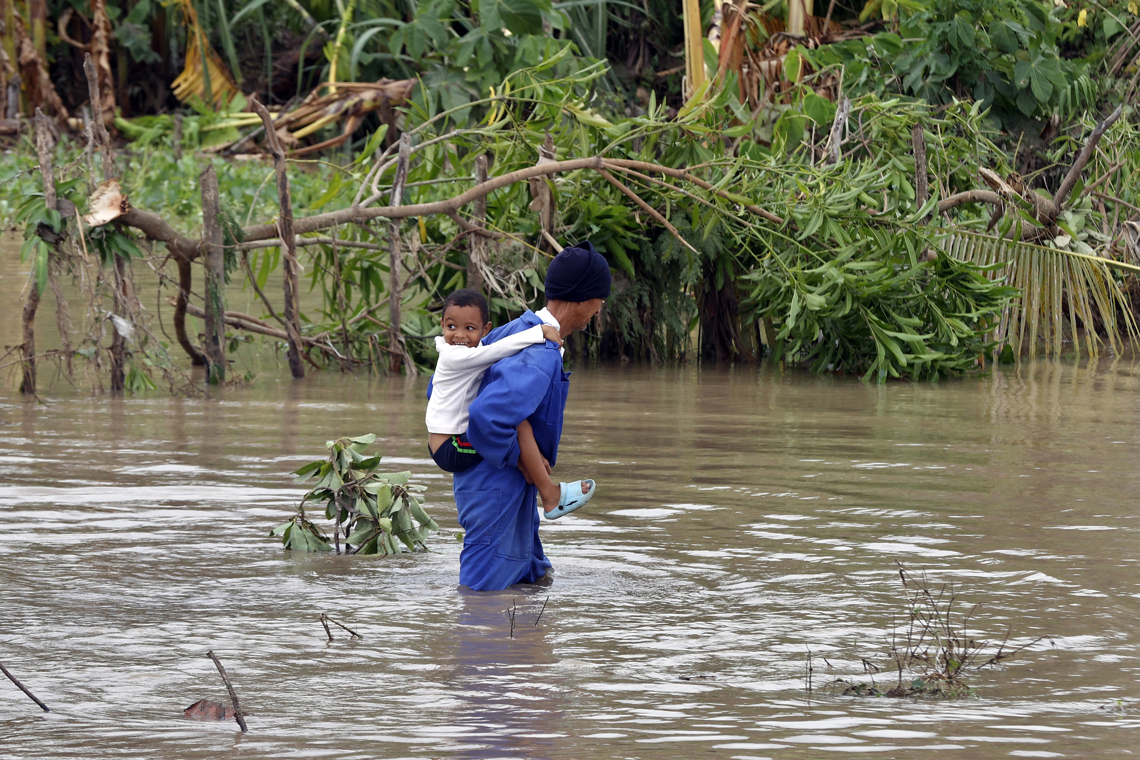
The Civil Defense of Cuba activated the recovery phase in the provinces of Holguín, Las Tunas and Guantánamo this Thursday afternoon, confirming that they do not face a complex hydrological situation after the passage of the Hurricane Melissa.
First Colonel Luis Ángel Macareño Véliz, second chief of the National Civil Defense General Staff, detailed last night that this initial stage of evaluation and recovery can last up to 30 days, or exceptionally 60, depending on the progress in each area.
To date, the Civil Defense has no evidence of fatalities or missing persons. According to Macareño, “the objective was life,” while he celebrated citizen discipline and the work of the media and authorities.
To progress, he said, damage commissions with “accurate, quick, but efficient” evaluations are required, as well as prepared community groups.
Likewise, he warned that residents must maintain strict compliance with the measures aimed at preventing accidents and human losses in this phase.
Díaz-Canel, who traveled to Holguín today “to check the damage and promote immediate recovery,” indicated last night that “there is no doubt that the most complicated thing is the floods caused by the rain” and that the country has not yet lowered the alarm level because the rainfall continued in some points.
The first quantified damages
Still, in the last few hours, rescuers are trying to reach many highly affected rural and mountainous areas, mainly due to the intense rains, which have caused multiple rivers and dams to overflow, sudden floods and landslides.
Provincial authorities preliminarily reported fallen trees, electrical outages and sea penetrations with waves of up to eight meters.
In Granma, all the rivers and streams overflowed, isolating Río Cauto and Dos Ríos; The hardest hit municipalities are Bartolomé Masó, Buey Arriba, Jiguaní, Cauto Cristo and Bayamo, with more than 126 thousand evacuees.
In Santiago, the damage includes total and partial collapses in Palma Soriano and Guamá, as well as losses in coffee, banana and cassava.
Holguín, where Melissa left on Wednesday, protected 275 thousand people. Collapsed roofs, 30 flooded homes in Cueto and damage to bananas, corn, cassava and vegetables are reported there. In addition, 13 reservoirs in that province release water through rapid accumulation.
Mainly, some 735 thousand people were evacuated or protected in the six provinces in cyclone alarm (Granma, Santiago de Cuba, Guantánamo, Holguín, Las Tunas and Camagüey). This figure represents more than 7.5% of the national population and almost 18% of the inhabitants of those provinces.
The Minister of Energy and Mines, Vicente de la O Levy, explained that the two thermoelectric plants in the region did not suffer damage and that they could be reconnected to the National Electric System (SEN) when the multiple distribution lines are fixed due to the fall of trees and electric poles, something that will take a few days.
This situation must be added to the chronic generation problems derived from the energy crisis that the country is suffering, which in the east – where some 3.5 million people reside – causes blackouts of 20 hours a day in large regions.
Added to this are the effects on other public infrastructure affected by Melissa, such as hospitals, educational centers of all levels and roads.