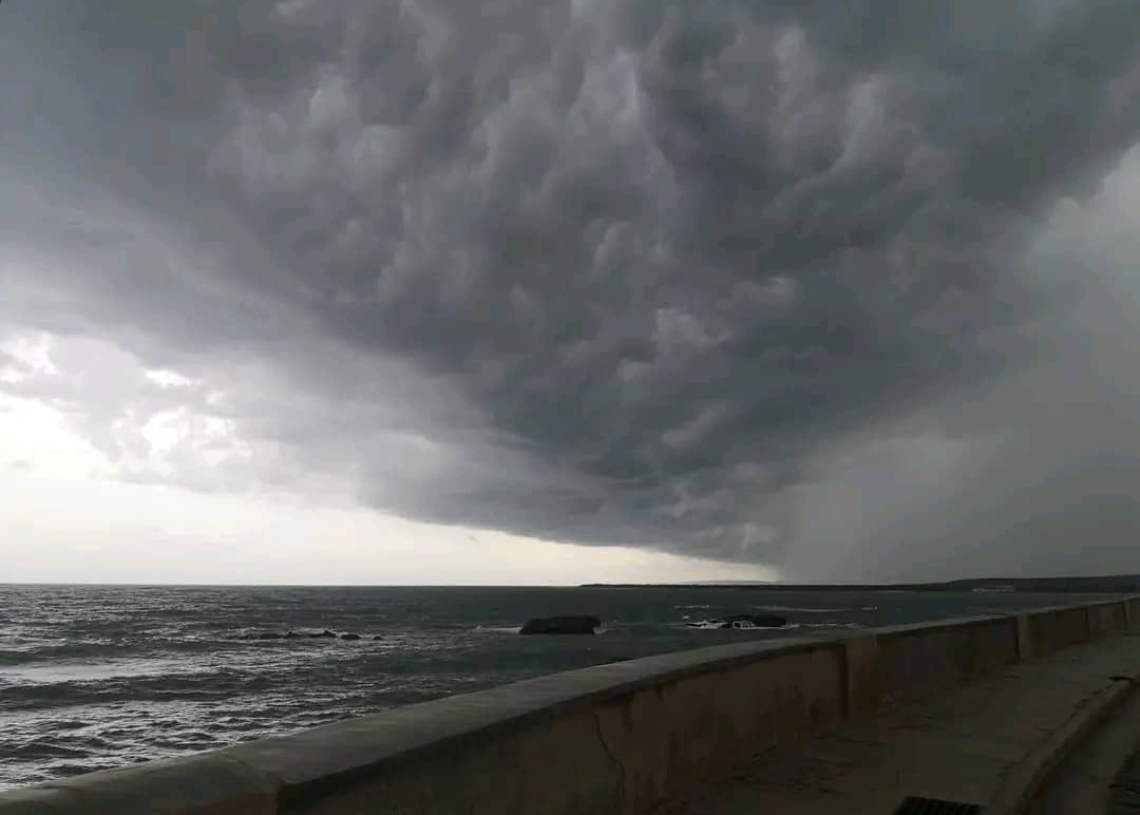
This Monday afternoon, the proximity of the Hurricane Melissa —which at that time had not yet crossed Jamaica and, therefore, was not fully approaching the southern coast of eastern Cuba— in minutes transformed the blue sky of Holguín into a dark blanket and let the first rains fall. The winds, still light, announced the imminence of an event classified as extraordinary danger and with no recent history in this part of the country.
In the streets, the population was torn between resolving essential issues and searching for food and other resources to face not only the hours of Melissa’s passage through the city and the province, but also those that followed, when the region would be disconnected from the National Electric System (SEN) and without mobile telephony.
Days of isolation, ingenuity and survival lie ahead. The rest does not seem to matter: confusion and concern predominate in the streets and homes. Tired faces reflected on the long power outages, the shortage of basic products—mainly food—caused by inflation, and the recent increase in cases of arbovirus. Many people knew they were infected, due to various symptoms, although without certainty from which virus they were suffering from.
Since Sunday, USD stores had covered their windows with large metal sheets and remained open Monday morning. Other spaces, such as the Alex Urquiola Provincial Library and nearby premises, also protected their stained glass windows.
The bars and points of sale in the central Plaza de La Marqueta removed tables, chairs and protected structures. MSMEs and private establishments—the main suppliers of products necessary during and after meteorological events of this type, such as canned goods, oil, cookies or pasta—continued to operate.
Some businesses, such as the stores at the Victoria Natural development, located in front of Calixto García Park and at the Casa de Iberoamérica, closed their doors to the public. “Right now, the most important thing is to stay safe and take care of your family,” they reported.
Others, such as the La Lucecita gift shop and printing services, suspended their activities from noon, prioritizing the safety of workers and customers. “We ask you to take the necessary precautions in the face of the meteorological situation,” they communicated on social networks.
The usual and long lines stretched in front of the banks. At the end of the month, almost no one has money even for the most basic purchases, and when you have it on cards, withdrawing it in cash is an ordeal. Many MSMEs only accept cash payments.
The Provincial Defense Council described Melissa as a “hydrometeorological monster” and assured that this Monday the evacuation of people residing in risk areas, vulnerable to landslides and flooding of rivers or dams, should be completed.
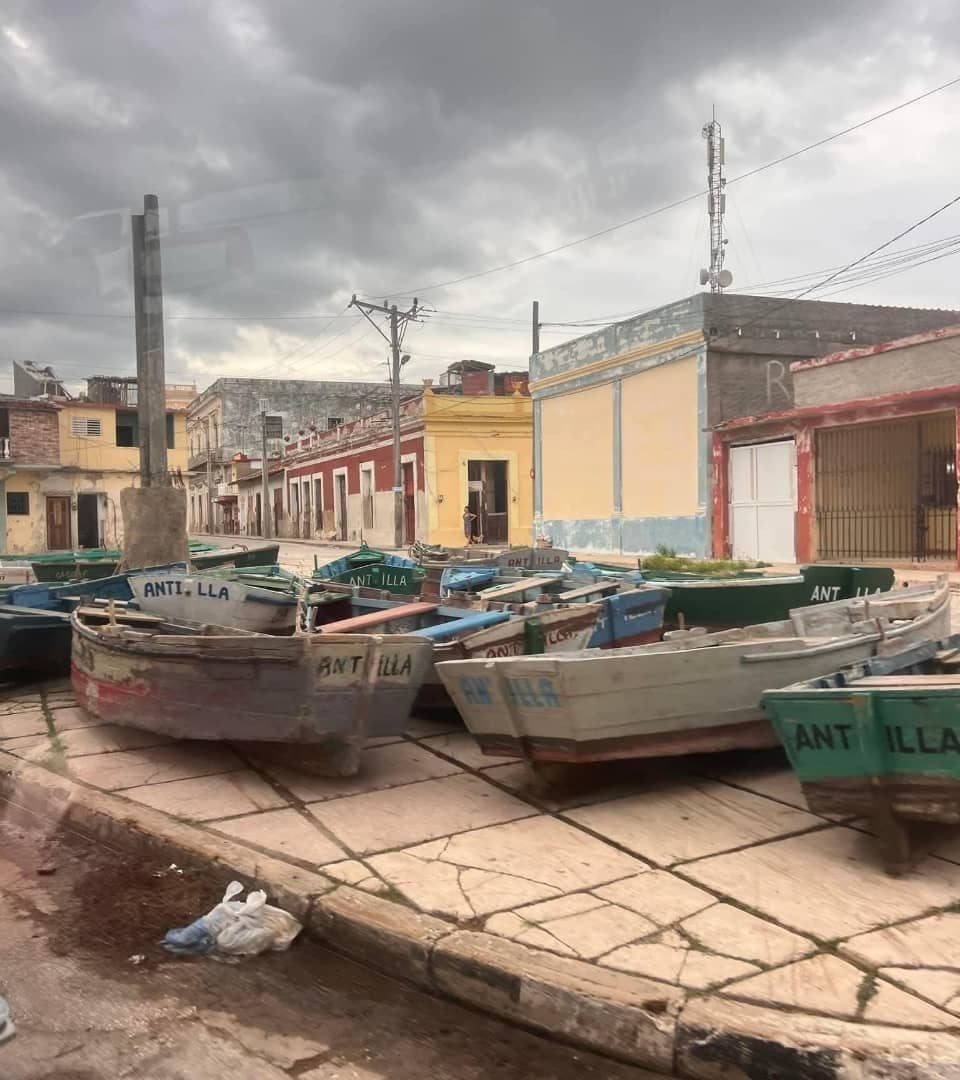
Of the 650 thousand people evacuated in the east of the country, according to official sourcessome 79,932—grouped into 21,500 families—belong to Holguín. The majority live in the so-called “eastern municipalities” (Mayarí, Sagua de Tánamo, Antilla and Frank País), where Melissa is expected to go out to sea at some point on the northern coast.
The hurricane covers a radius of more than 600 kilometers, with intense rains, strong winds, tornadoes and rising sea levels.
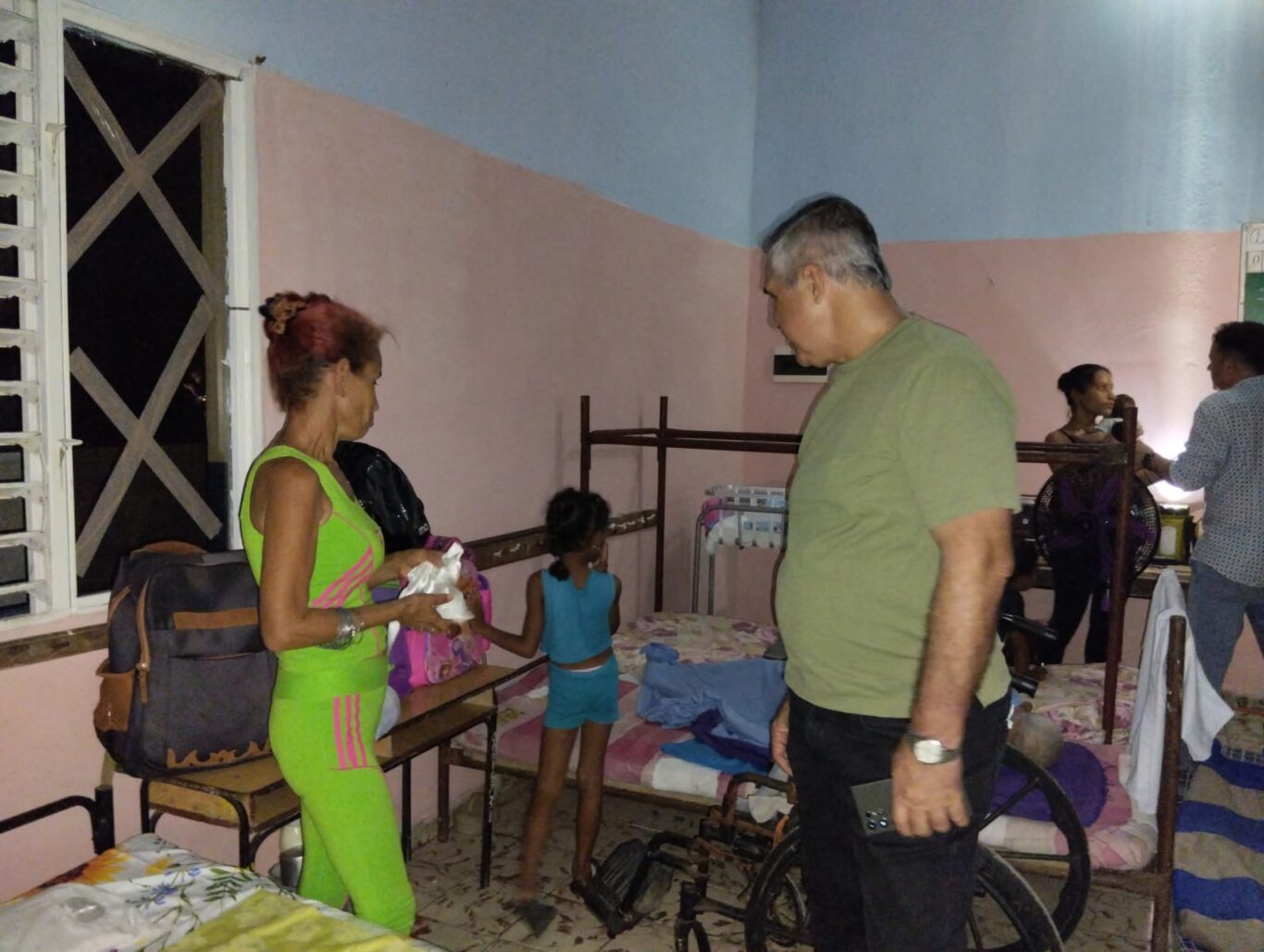
Many of the evacuated people—residents in land saturated by recent rains and now located in educational centers, shelters, or relatives’ homes—only carry with them the essentials: documents, medicines, some clothes, some small objects. They fear losing the rest when they return home. The deteriorated and fragile housing infrastructure becomes, once again, a threat to life. The return, for many, will mean starting from scratch: another example of daily resistance, especially in impoverished municipalities in eastern Cuba, some still without recovering from the impact of the Hurricane Oscar last year.
The National Electrical Union assured that it would prioritize generation for the eastern provinceswith the aim of guaranteeing basic services, although the blackouts remained the same or worse. The Holguín Electric Company warned on social networks that “during peak hours, when the switchable maximum arrives, it may not be possible” to maintain the planned protection.
When the winds exceed 60 km/h, the province would be disconnected in a phased manner, and the affected circuits would not be reconnected until the hurricane passed, in coordination with the National Dispatch.
Tropical storm winds (95–118 km/h) are expected in almost all of Holguín, and hurricane winds (more than 118 km/h) in the eastern area, the most vulnerable.
The Moa FOIL group (more than 100 MW) and the Felton thermoelectric plant in Mayarí (more than 200 MW) will gradually reduce their generation as Melissa advances, leaving the province and the east of the country without electricity service. Felton reinforced his structures to resist the winds.
In the city there is a race against time and for survival. Finding charcoal—the main source for cooking in the face of power outages—has become difficult. Some have raised the price of a bag from a thousand to 3,500 pesos, taking advantage of the shortage.
“Everything is more expensive now, and it will be worse later,” they say in the streets.
On social networks, demands focus on the drainage of clogged gutters, the cleaning of rivers, the pruning of trees near damaged power lines and the protection of fragile buildings. There is also emphasis on serving the homeless. “Before,” says Luis David Izquierdo, a resident of the Ciudad Jardín neighborhood, “things were not like this. There were risks, but also more security and speed to prepare at home.” This Monday, while neighbors secured roofs, removed dangerous objects or looked for drinking water, crews were seen cleaning areas of the 18-story building and the avenue towards the Lucía Iñiguez hospital. However, in much of the city there was not a single pruned tree to be seen.
The collection of solid waste in main landfills was also announced, although the one located at the entrance to the Alcides Pino neighborhood—where people are still seen searching for objects—has grown considerably. In this same neighborhood lives Alina Pérez, who decided to take refuge with a relative: “I live alone, in a house in poor condition, especially the roof and near a river. I can’t stay there. I took my things to my sister’s house and I’ll leave too. If I didn’t have one, I would have to go to an evacuation center,” she says.
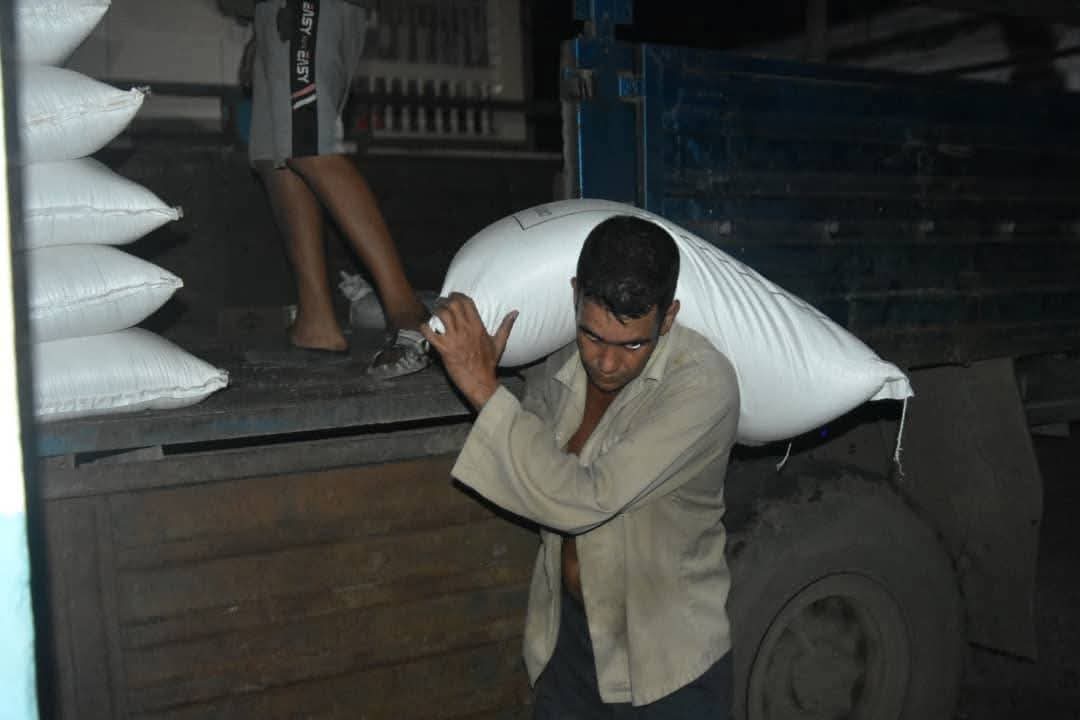
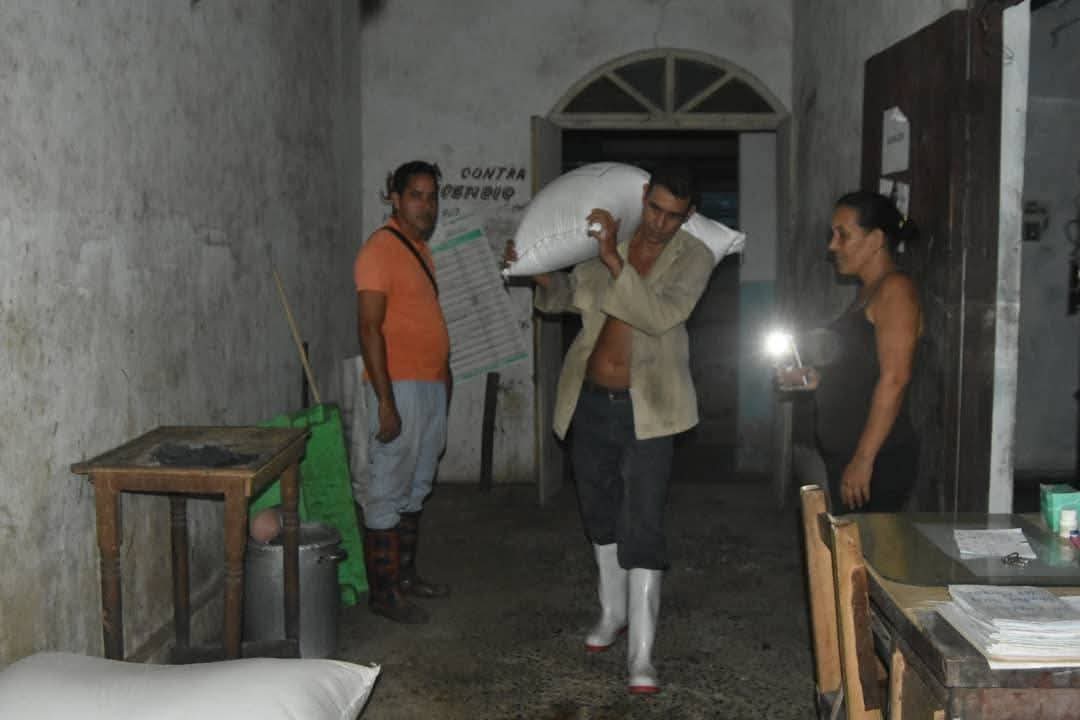
The authorities reported that two pounds of rice and one of sugar corresponding to the June basic basket will be sold, although only in some popular councils. Some gastronomic establishments, for their part, advertise prepared products available after the hurricane.
On Sunday afternoon, a car drove through Calixto García Park with speakers broadcasting updates on Melissa’s possible route and the measures to be adopted depending on the phase in which the province found itself. Behind, another vehicle was filming the operation. The Provincial Defense Council asked owners of vehicles with audio equipment to collaborate to share information. “It is vital to keep the people informed,” said Idalberto González, a resident of the Hilda Torres neighborhood. “If we can do it from our electric motorcycles or other means, we contribute to saving lives.”
Local stations maintain constant programming, although concern persists about how to get information without electricity, internet connection or means to charge batteries, especially during the twelve hours of impact of the hurricane and the following.
During that period, each family—and the authorities of the Provincial Defense Council—will begin to evaluate the damage of a phenomenon that evokes the devastating passage of Hurricane Ike in September 2008.