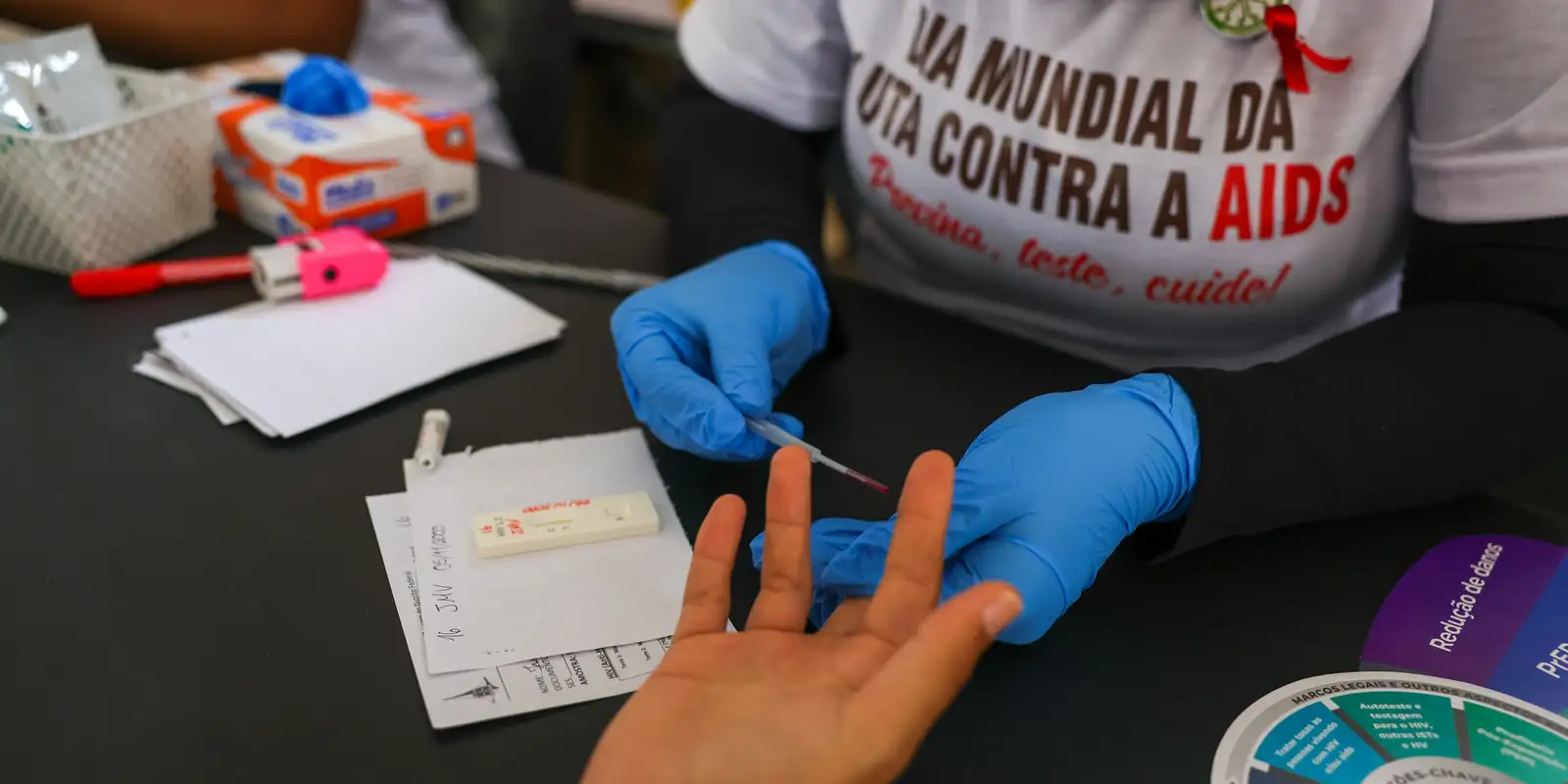
The Ministry of Health announced this Monday (5) that it distributed more than 1 million rapid tests to detect sexually transmitted infections (STIs) in indigenous territories in 2025, which represents an increase of 25% compared to 2022. According to the ministry, which had the support of the 34 Special Indigenous Health Districts (DSEI), testing coverage for HIV/AIDS in indigenous communities has increased by 47% since 2022.
Between 2024 and 2025, testing coverage for HIV and other STIs grew by 63.62%, which reflects the growth in the availability of tests for early diagnosis and timely access to treatment. Actions in the territories also include the distribution of condoms, aiming to strengthen prevention strategies.
In the assessment of the secretary of indigenous health at the Ministry of Health, Weibe Tapeba, this strategy is crucial, because “it expands and qualifies early diagnosis, improves access to treatment and reduces transmission among the indigenous population, in addition to revealing the real dimension of the burden of diseases and infections in indigenous lands”.
The director of the Department of Primary Attention to Indigenous Health (DAPSI) of the Ministry of Health, Putira Sacuena, stated that the expansion of testing “strengthens the control of STIs, especially when combined with prevention strategies and actions to reduce morbidities and guarantee quick and qualified treatment for the patient”.
Red December
Last year, the Ministry of Health launched the national “Red December” campaign to raise awareness about HIV/AIDS and other Sexually Transmitted Infections (STIs). The webinar “Red December in the indigenous context – HIV/AIDS: prevent, diagnose and care” was also promoted to discuss updates on STIs, with an emphasis on HIV/AIDS, within the scope of Epidemiological Surveillance and Primary Care for Indigenous Health.
The event was aimed at indigenous health professionals who work in surveillance and assistance to STIs, linked to the Special Indigenous Health Districts (DSEI), as well as those who work in the Base Poles and Basic Indigenous Health Units (UBSI).
According to the ministry, the initiative sought to qualify and strengthen comprehensive care and combat HIV/AIDS in the context of indigenous health, contributing to the improvement of prevention strategies, clinical management and early diagnosis, and also to expand access to information and the quality of care for people living with HIV.