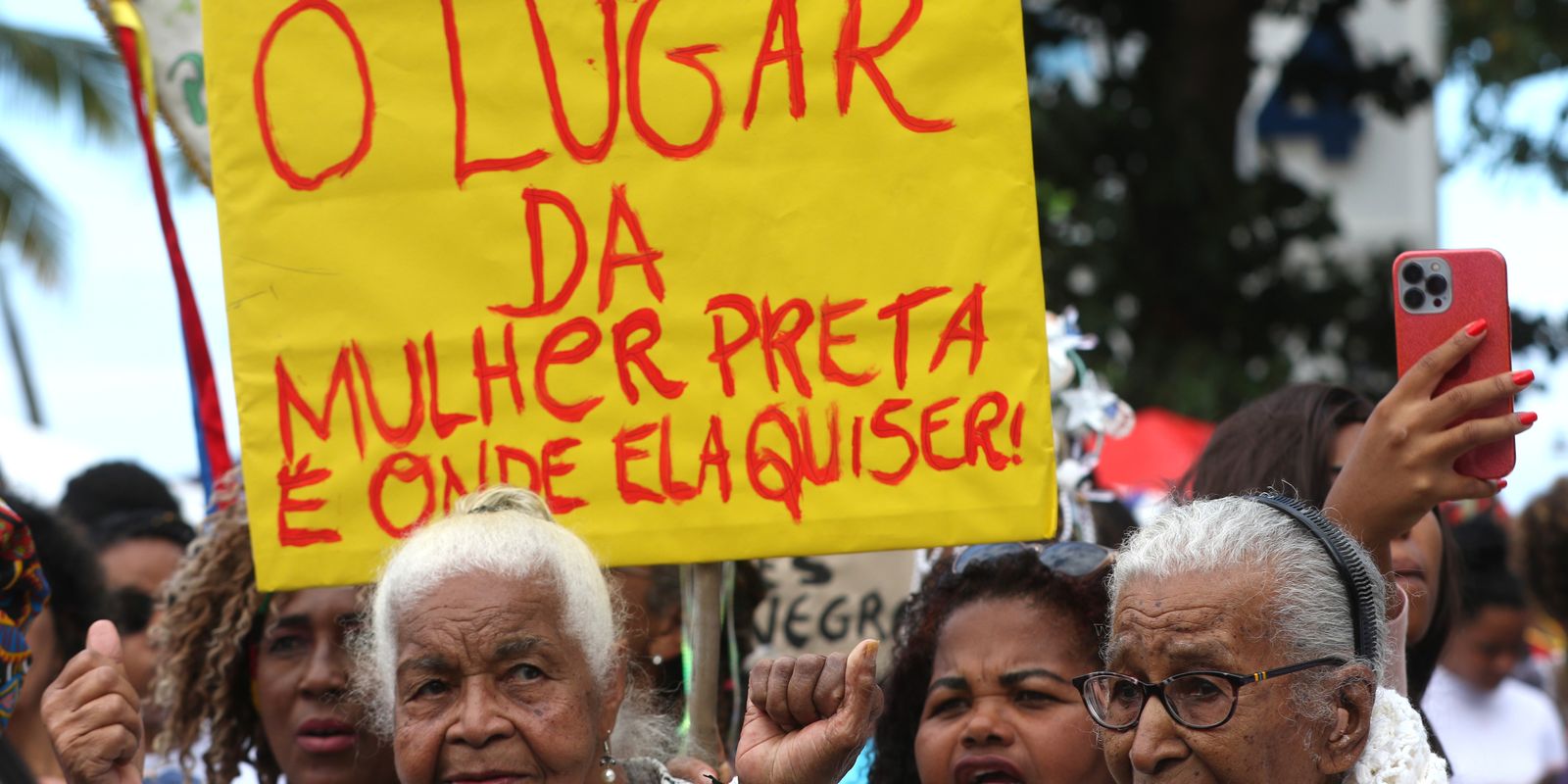
Installed in Praça da República, in the city of Belém (PA), the Black Zone brings together black women from different places in meetings, exchanges of experiences and debates, which take place in parallel with the official events of the 30th United Nations Conference on Climate Change (COP30).
In addition to echoing the voices of those who are not in the official space of global climate negotiations, they are also preparing for the Black Women’s March.
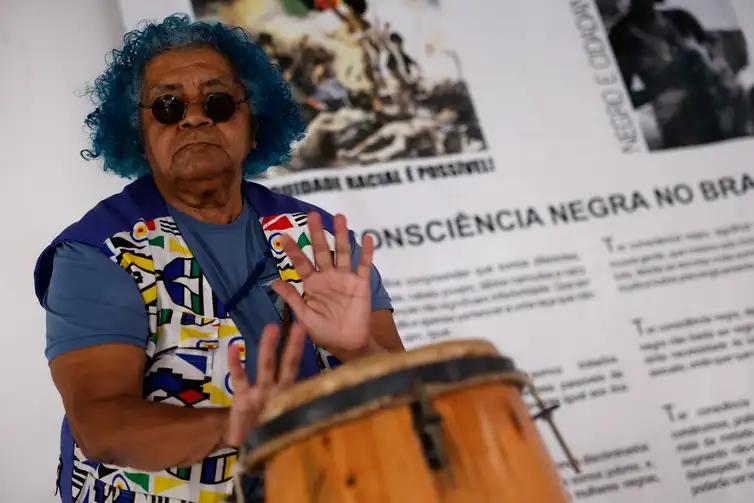
Dona Nilma at the Center for Studies and Defense of Black People in Pará – Tânia Rêgo/Agência Brasil
The temporary meeting space pays homage to Raimunda Nilma Bentes, Dona Nilma, artist, writer, activist for the black population and creator of the first march that took place in 2015.
“In 2011, we were in Bahia in an international activity and, perhaps due to some speeches, I felt a need for us to do something more forceful. So I decided to suggest, at a micro meeting of the Association of Black Women’s Organizations, a march of 100 thousand black women”, recalls Dona Nilma.
The year chosen was 2015 since in 2014 Brazil would host the Football World Cup and in 2016, the Olympics in Rio de Janeiro.
“By coincidence, it was also the year that coincided with the commemoration of the first mixed march of black people, held in 1995. In other words, it [a marcha] It was proposed like that, almost done”, he recalls.
The chosen theme, March of Black Women against Racism and Violence for Good Living, reflected the main struggles faced by them and still without a large network of social organizations and movements of black people structured, around 70 thousand women marched to Praça dos Três Poderes, on November 18, 2015.
“There were a lot of people, much more than we thought would come. It seemed like there was a pent-up demand. And we saw loose women, they weren’t from any organization. Black women just coming from there, on the other side, from everywhere. They wanted to go, to participate”, says Dona Nilma.
Ten years later
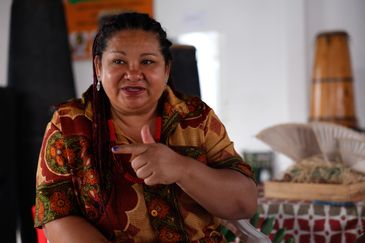
The project coordinator of the Center for Studies and Defense of Black People in Pará Maria Malcher – Tânia Rêgo/Agência Brasil
On November 25th, ten years later, a large number of black women addressed the Powers of Brasília with very similar demands: reparation and a good life.
According to the project coordinator of the Center for Studies and Defense of Black People in Pará, Maria Malcher, reparation is a much more far-reaching topic, which also includes the fight against violence, xenophobia and racism.
“It deals with historical reparation itself, due to the process of enslavement of the African diaspora in Brazil, and we have this presumption of ancestry, but we also want to denounce it, in order to really deepen the agenda of the black women’s movement”, he explains.
Good living already encompasses two aspects, one more macro and the other more in the aspect of local territorial struggles, explains Dona Nilma.
“The macro aspect is a political project proposal, such as an energy transition with social justice, the issue of no consumerism, the supremacy of the collective over individualism, cooperation instead of competition and the issue of the economy being subordinated to ecological factors of the environment, and not the other way around as happens today”, he says.
For Dona Nilma, in the most regional aspect, good living reaches the demands for better conditions specific to each territory.
“We are talking about black women in Brazil, where the majority of us are domestic workers, not that this is bad, but there is the issue of status and remuneration, a retirement that considers the value of care. Women have always been caregivers, it comes from the womb. We even want to demand the issue of participation in Parliament, underrepresentation everywhere”, he reinforces.
In the context of the city of Belém and Brazil itself, where women are the majority and among them, black women make up a greater number, COP30 debates climate change, which for them is an urgent matter already experienced.
“Changes come for everyone, but as you know, they are aggravated by the conditions and objectives that are given, that is: socioeconomic, cultural and environmental inequality”, laments Dona Nilma.
Committee
To face the challenge and fight for more representation and participation in climate decisions and actions, they created the National Committee of Black Women for Climate Justice, made official on November 10th, in Belém.
“We launched with 36 black movement organizations, some even with access to the COP, especially national organizations in the Southeast. Because we don’t know of any black movement organization in the Amazon that has had access to credentials”, he says.
The collegiate, in addition to influencing the COP30 environment, is also working on a manifesto to be delivered to the heads of the Three Powers – Executive, Legislative and Judiciary – on the 25th during the march in Brasília.
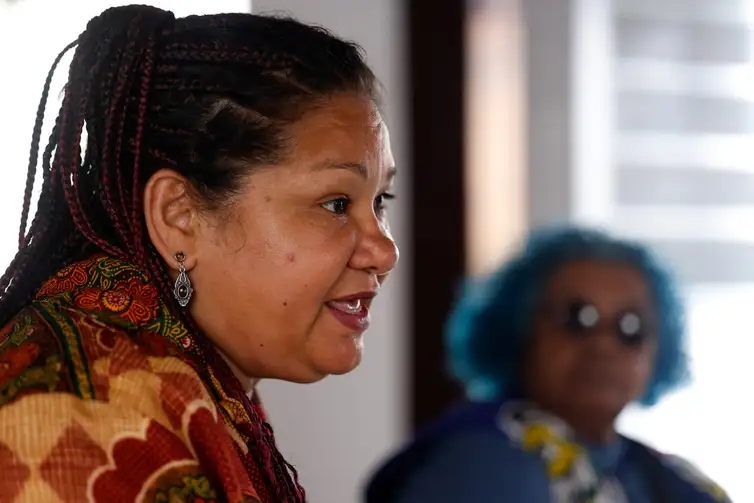
Maria Malcher and Dona Nilma Bentes, activists of the black movement, talk about the Black Women’s March – Tânia Rêgo/Agência Brasil
The program also includes other activities that will converge on the great meeting of black women.
“There will be more than 50 activities, from global dialogues, especially the women’s movement dialogues, to the Afrolatino-American and Caribbean Network assembly, which will bring together women from all over Latin America and the Caribbean. We will have the LGBTQAPN+ transnational dialogue, and the youth dialogue. These three categories will be in Brasília, holding their meetings and staying for the march”, says Maria Malcher.
Added to the final document of the march, there will also be a manifesto from Levante Negro pela Educação, which works in the fight for an anti-racist National Education Plan (PNE), another economic manifesto, in addition to studies.
“The march has this formative dimension. We created an economic manifesto and this manifesto will be delivered. Some research too, in partnership with black research organizations”, reinforces Maria.
Primer
For black women’s organizations, networks and groups, a booklet organized by the communicator Flavia Ribeiro. According to Maria Malcher, the document is a guiding, training and mobilization document, intended for anyone who wants to participate in the march.
“Flávia did this didactic transposition of this very important work here, about the march. Above all, the Belém March and our actions in the State of Pará in a booklet format, already bringing the history, which is important, of how we walked in this second march and also the proposals for reparation”, he concludes.