Within the framework of the 80th anniversary of the liberation of Korea, the footprint of the independence movement in Mexico and Cuba revives a history of hardships, exploitation and resistance, starring migrants who, from henequén and sugar cane plantations, kept alive the cause for the freedom of their country.
In 1905, Korea was mired in a deep political and social instability, marked by the Japan-Corea Protection Treaty that stripped the Peninsula of much of his diplomatic sovereignty, which would end five years later in the Japanese colonization.
That year, about 1000 Koreans started from the Korean port of Chemulpo in what is now known as Incheon, in South Koreatowards the port city of Salina Cruz, in Oaxaca, Mexico, deceived by promises of employment and well -being in the North American country.
Of the henequene farms to the struggle for independence
After a brief period in sugar plantations, most were transferred to Yucatan to work in Henquén farms, a type of agave, under conditions of exploitation.
“These workers, despite the hard circumstances, organized subsidiaries of the National Association Korean (ANC) to raise funds and send them to the provisional government of the Republic of Korea,” said OH DAE-Rog, head of the Research Team of Historical Sites abroad abroad of the Institute of History of the Movement for the Independence of Korea, in a study published this year.
In the 1920s, some of these migrants moved to Cuba, where they continued their work in cane plantations and urban works. There they replied the community organization, maintaining links with the independence network throughout America.
“Despite the difficult living conditions, the immigrant Korean workers were delivered with dedication to the cause of the release of their homeland, Korea, which at that time was under the colonial domain of the Japanese empire,” said the director of the Academy of the Heritage of Korea, Kim Yong-Dal, who investigated the historical sites in Latin America in 2014.
Kim said the Koreans opened branches of the National Korean association in various regions of Mexico and Cuba to raise funds between the community.
“The existence of this government, from its establishment in 1919 to 1945, was possible thanks to these resources,” he added.
He also explained that in his search for universal values “such as freedom, peace and happiness” adopted a favorable position towards the Mexican revolution of the 1910, focused on peasants and workers.
“They even participated in the Cuban revolution. An emblematic example is Jerónimo Lim, son of the Korean independence in Cuba Lim Cheon-Taek, who joined the revolution,” he said.
Own names and posthumous recognition
Among the protagonists of this story is Kim Seong-Jae, known as Alfonso Kim, born in Cuba, who was secretary of the Chapter of Matanzas and youth leader in Havana. His father, Kim Chi-il, had emigrated from Mexico and was awarded in 2015 for his contributions in the Korean National Association.
Lee Jong-Heon, leader of the Association of Korean Residents in Cuba; Kim Sang-Jun, active in both countries; and veterans such as Lim Cheon-Taek, Pack Chang-Woon and Soh Byeong-Hak, who participated in the foundation of the Mérida chapter in 1905 and promoter of the teaching of Korean in Cuba.
The Ministry of Patriots and Veterans affairs recognized several of them as “independence fighters”, granting orders and medals of merit to their descendants.
Historical sites in Mexico and Cuba
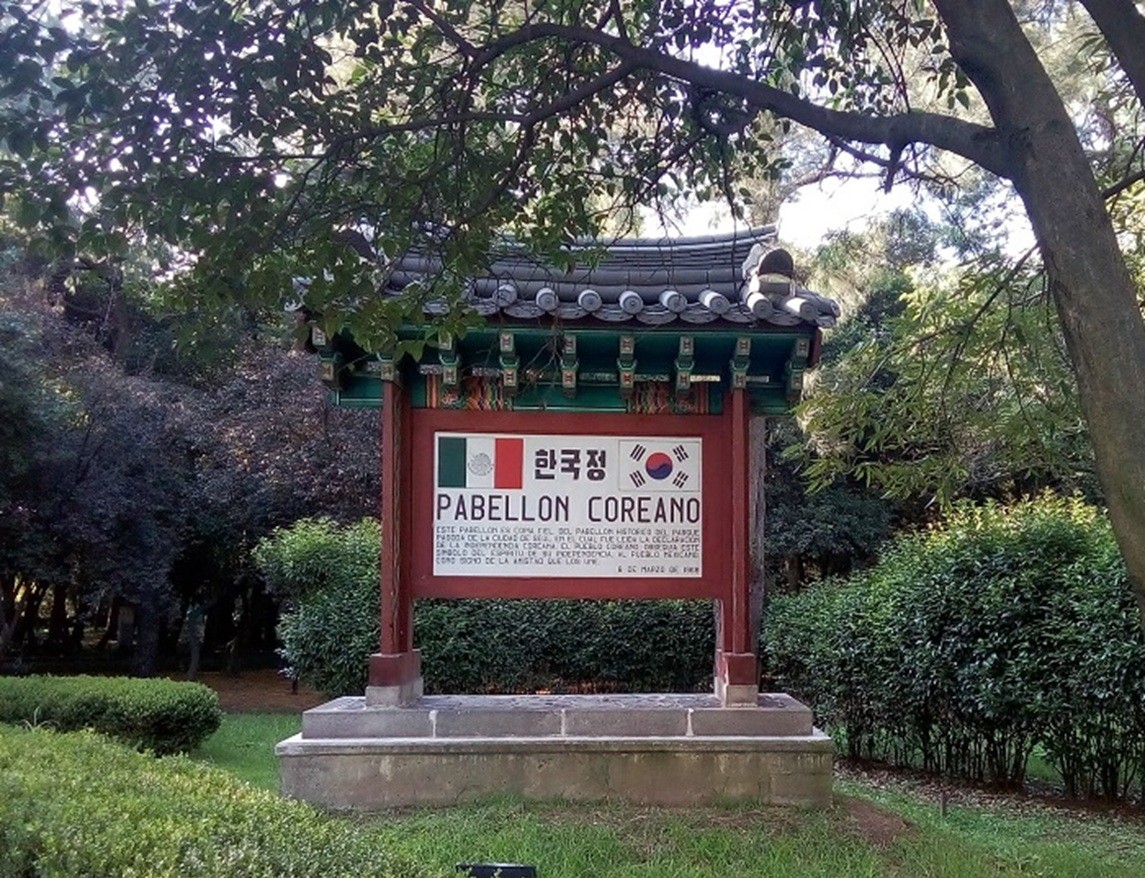
In the list of places linked to the Movement for the Independence of Korea abroad, Mexico occupies the fifth place, with 53 sites, only below the four countries with the greatest historical links with Korea: China, USA, Russia and Japan.
Outside Mexico, the only Latin American country on the list is Cuba, which occupies the eighth place, with 13 sites, tied with India.
A study of the aforementioned researcher OH identifies from old headquarters of the National Association Korean to tombs and commemorative monuments.
In Mérida, the former headquarters of the local chapter, meeting and coordination of activities, and in Mexico City, a historic building in which collections were organized. In Cuba, there are various tombs in Cárdenas and the ANC building in Havana, among others.
The trajectory of these migrants shows that the struggle for Korean independence was not fought alone in Asia. From plantations in Yucatan or sugar centrals in Cuba, its material and moral contribution was part of an effort that was worth the release of the Korean Peninsula.
Author: Ruy A. Valdés.