The Agreement on the Conservation and Sustainable Use of Marine Biological Diversity in Areas Beyond National Jurisdiction (BBNJ) came into force this January, after two decades of international negotiation. Immediately after the text was finalized in March 2023, 145 countries signed the document, which came to be called the High Seas Treaty, including Brazil. 
To come into force, this agreement on the oceans beyond national maritime strips needed the ratification of at least 60 countries before it came into effect 120 later. In Brazil, the National Congress ratified the agreement on December 16, 2025, but even before that, in September, another 60 countries had already confirmed their participation.
As of the publication of this report, 84 countries have already ratified the agreement, according to the global network of social organizations High Seas Alliance. But why does this international treaty on a common good outside the countries’ territories attract so much interest?
According to the director of the Department of Ocean and Coastal Management of the Ministry of Environment and Climate Change (MMA), Ana Paula Prates, although other international treaties establish rules for the conservation of marine biodiversity, they mainly reach national territories, while this is the first to fully address this international region, which represents two thirds of the planet’s oceans.
“This integrated look was necessary, since everything that happens in international waters also interferes with our jurisdictional waters. Be it the issue of biopiracy, the environmental impacts of projects, such as deep trawling fishing, or the issue of plastic itself”, he says.
Living beings
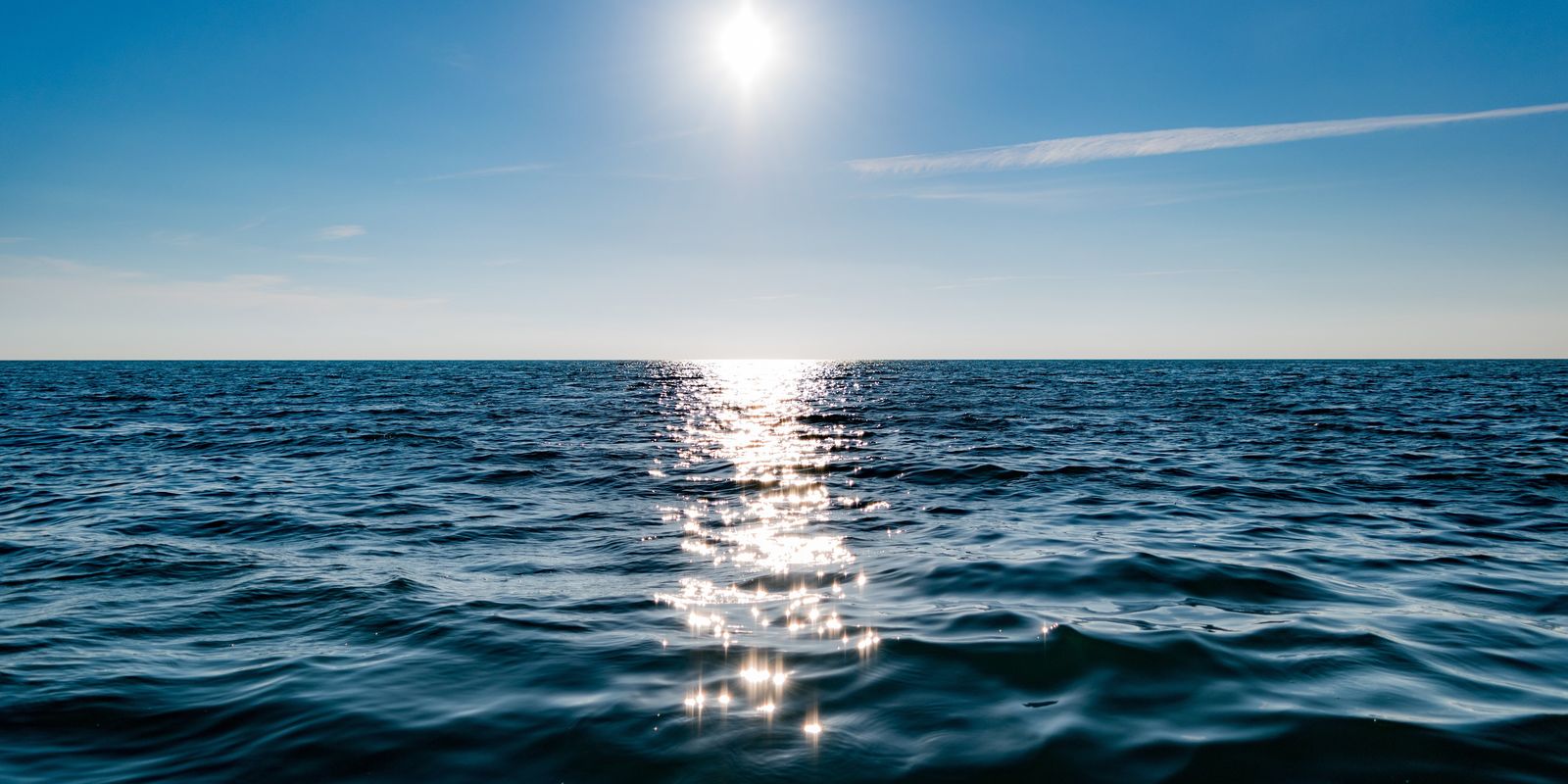
With more than 360 million kilometers in length and places that exceed 10 kilometers in depth, the oceans are mainly responsible for balancing the planet’s temperature, produce more than half of the oxygen necessary for life and are home to vast biodiversity. Around 64% of this immensity represents the high seas area, in addition to national jurisdictions.
“By knowing better and carrying out studies on the environmental impact of the activities that humans carry out in this area, we have the possibility of improving the protection and conservation of this biodiversity, which is by far the most important for maintaining life on earth”, says Andrei Polejack, director of research and innovation at the National Institute for Ocean Research (INPO), a social organization dedicated to research and development of the ocean.
The text of the High Seas Treaty basically deals with guidelines and global governance for the conservation and sustainable use of biodiversity on the high seas, based on four pillars:
Creation of protected marine areas in international waters (equivalent to the Conservation Units foreseen in Brazilian territory);
Assessment of economic activities in relation to environmental impact;
Sharing the benefits of genetic resources;
Technology transfer and capacity development.
In practice, any activity that takes place on the high seas will be subject to the rules of the agreement, as the treaty is binding and therefore becomes a legal obligation imposed on participating countries. “It will not be according to each country, each company or their respective country. So, for example, deep-sea trawling, which is something that happens too much and no one even knows where, will now have to be evaluated together with these countries [que participam do Tratado do Alto-Mar]”, explains Ana Paula Prates.
To act in these regions, countries will also need to better understand the biodiversity present, based on investments in science and technology capable of reaching species, such as deep-sea submersibles, and genetic mapping of the fauna and flora existing in the high seas.
Benefits
“We have a wonderful possibility of new resources for medicines, cosmetics and other solutions. But that will have to be evaluated together and also shared the benefits among all the countries that have ratified. Likewise, another issue that will be super controversial, but will have to be negotiated, will be the establishment of protected maritime areas”, says the MMA representative.
The idea is that when there is doubt about the capacity to conserve and maintain the balance of a given ecosystem and the species present in it, the region is protected, with measures that range from assessing the impacts of human activities to be carried out in the area, to the creation of protected marine areas.
“This is a process that adopts some principles of international law, which are binding in this treaty, such as, for example, the precatory approach, which if we don’t know exactly what the impact is, then it is better for us to suspend activities”, reinforces Polejack.
COP of the High Seas
With the treaty already in force, only countries that have ratified it will be able to participate in the construction of institutions, operational rules and processes so that the agreement can be operationalized. The first negotiations for the construction of these instruments must occur with the holding of Conferences of the Parties (COP) to the High Seas Treaty.
Even before this stage, when the agreement received the signatures of countries interested in participating, the United Nations General Assembly (UNGA) set up a preparatory committee, responsible for choosing a country to house the secretariat and other institutions such as the scientific and technical staff, in addition to establishing the financial structure and rules for decision-making.
Two meetings have already been held in April and August 2025 and a third should take place in March 2026, at the United Nations headquarters in New York. “Nessa [reunião] We will be able to decide where the secretariat will be, which is already in dispute. Belgium has already presented itself, Chile and now China. The three are candidates to be the headquarters of the executive secretariat. It is also necessary to define the date of the first COP, which we still don’t know”, says Ana Paula Prates.
Advantages
In Andrei Polejack’s assessment, Brazil has a lot to contribute with all the diplomatic and scientific knowledge developed through action in other international treaties, such as those created at Eco92, in Rio de Janeiro, which deal with climate, biodiversity and desertification. He also considers it important that debates be held about the social and collective interests of the population.
“This work has to be based on scientific evidence, it has to consider the balance between the uses of this biodiversity in areas beyond national jurisdiction, on the high seas, but it also has to distribute the benefits generated in commercials. So, there are a lot of details. It’s a complex agreement and it really needs all voices together”, he concludes.