Santo Domingo.- From the early hours of the morning, the environment of the Jet Set nightclub once again became a space for gathering and protest.
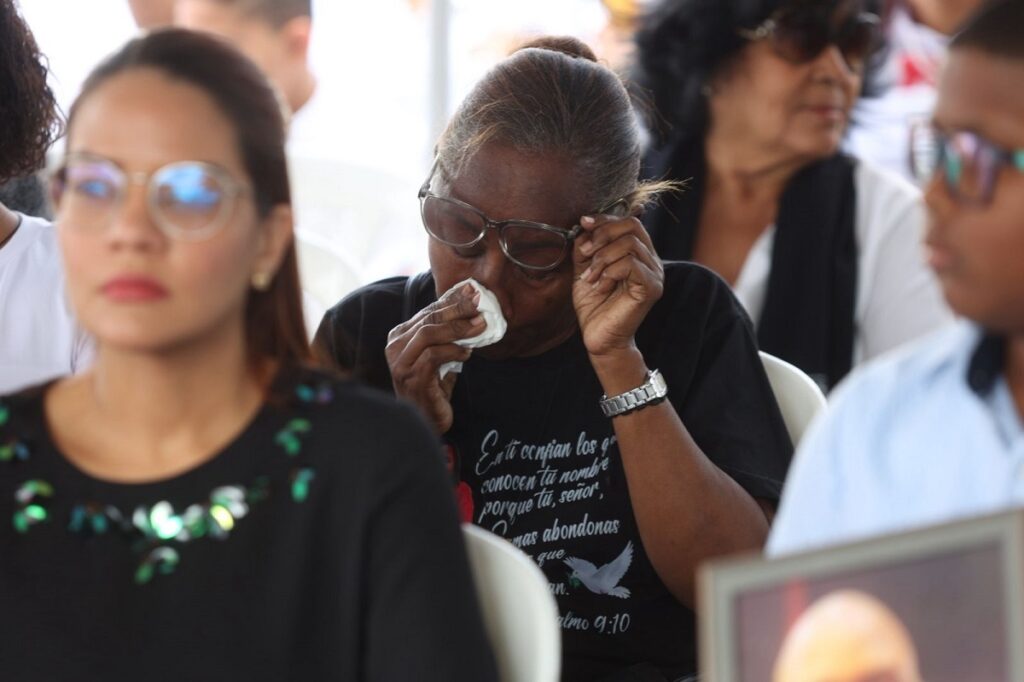
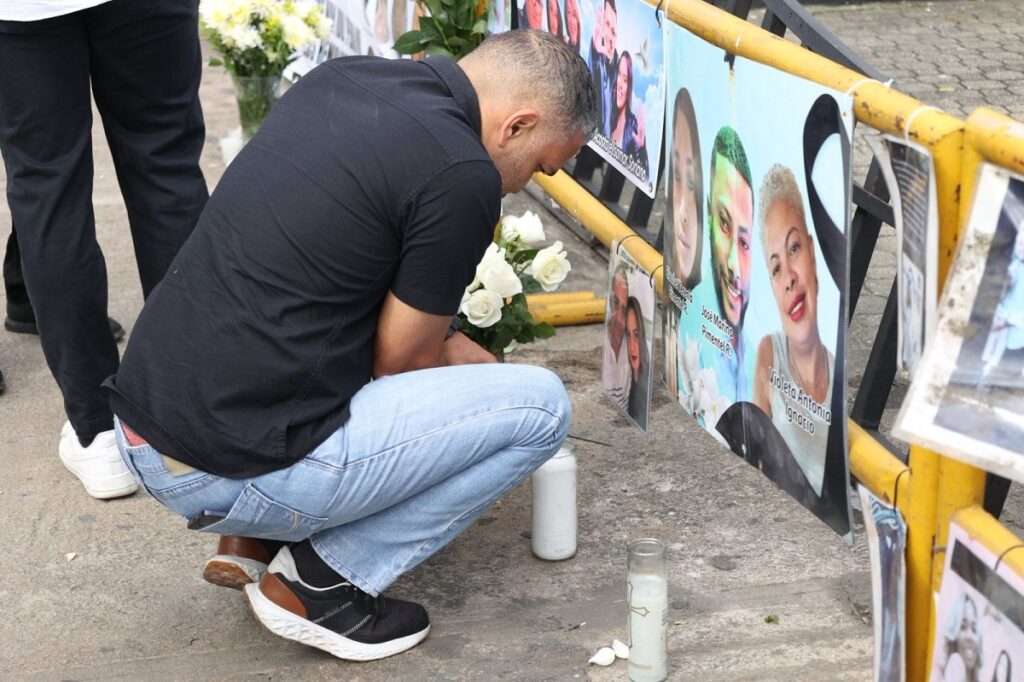
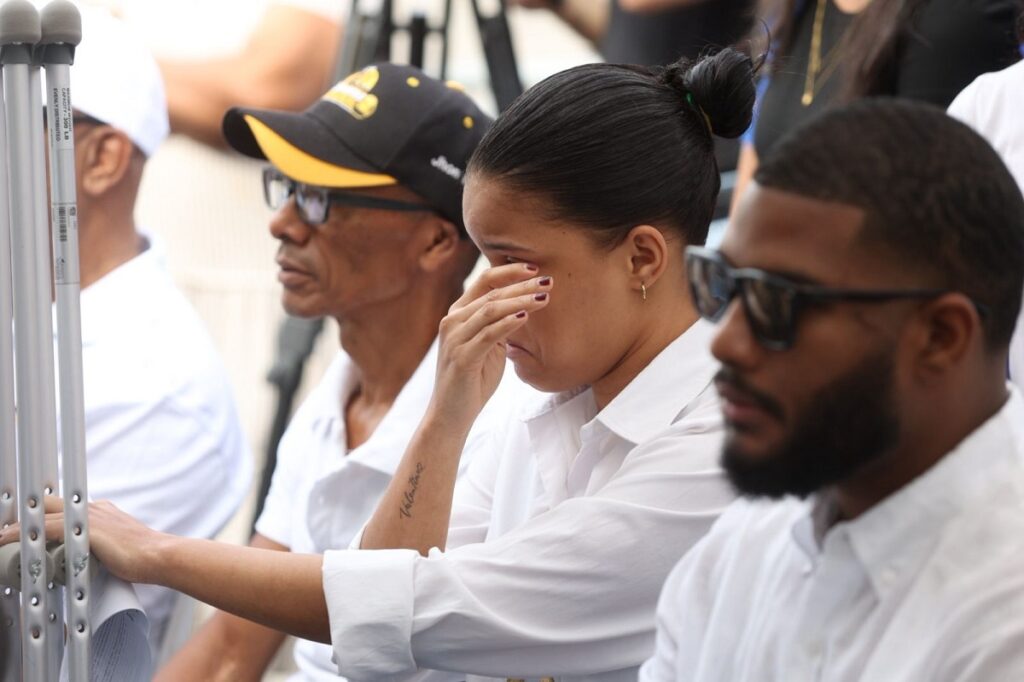
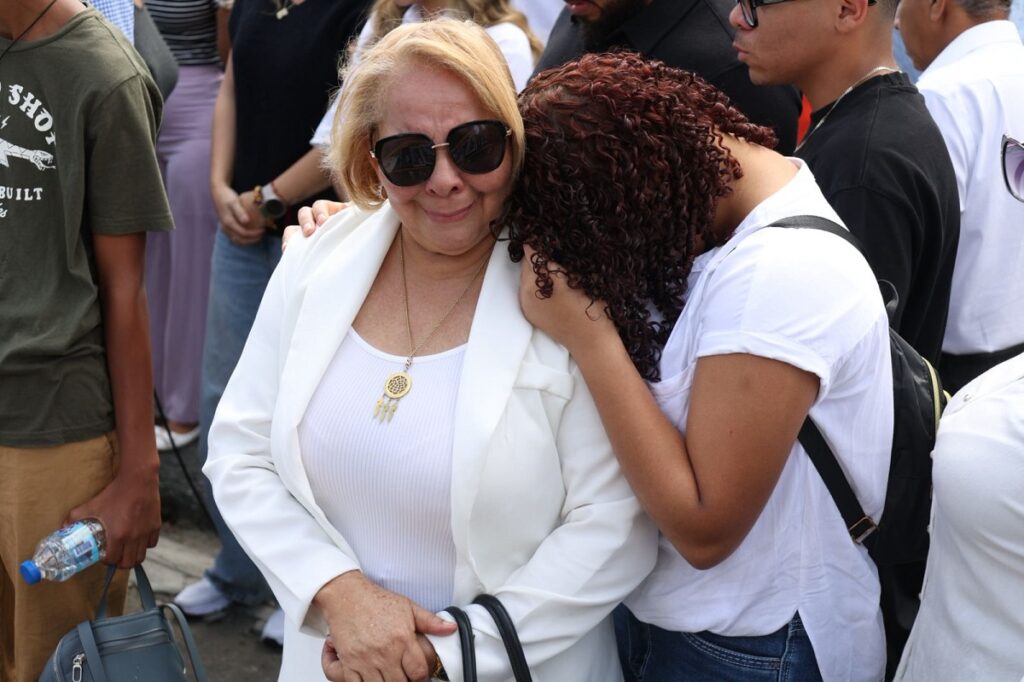
Lighted candles, flowers, photographs and long silences accompanied those who returned to the place where a night of fun turned into tragedy. The atmosphere was one of mourning, but also of firm determination.
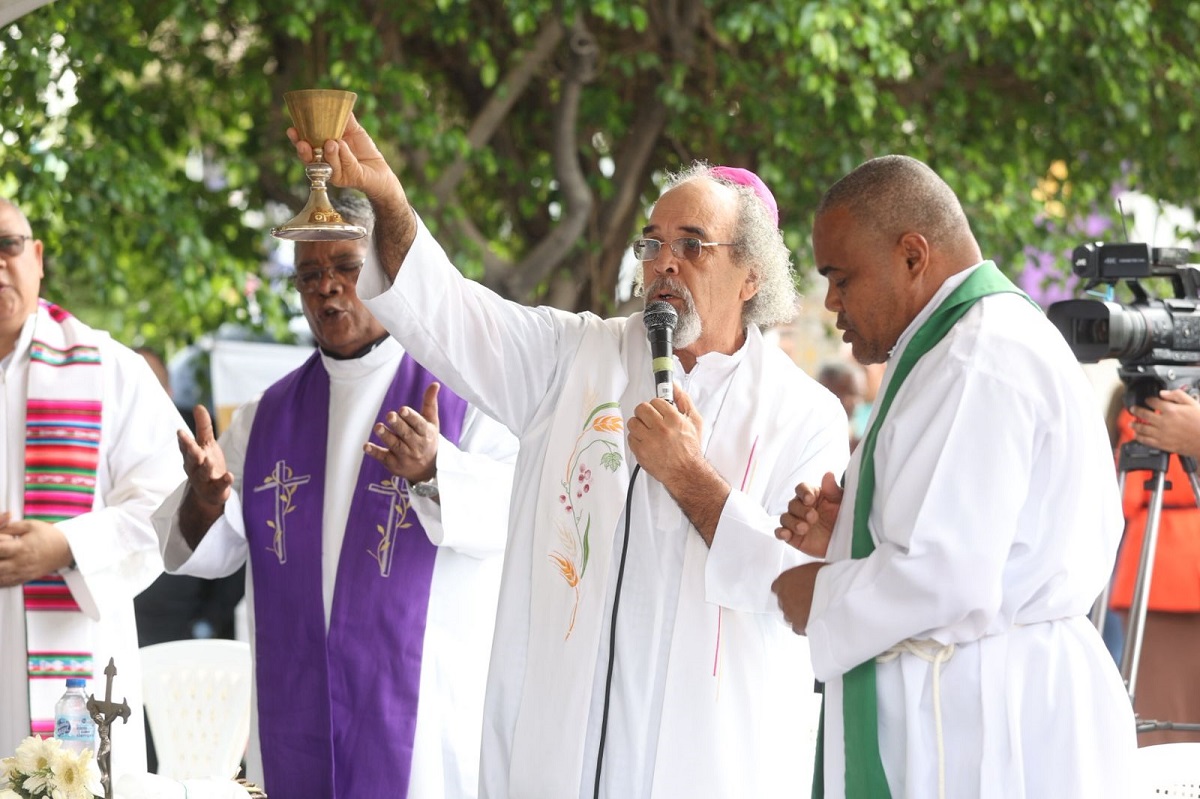
The father Rogelio Cruz assured that the claim will not stop and warned that the country faces a moral and institutional test in the face of one of the greatest tragedies in its recent history.
“From the first day we said that every day 8 we were going to be here with only one direction: crying out for justice,” he stated..
10 months and an fraud that does not happen
This Sunday, February 8th marks ten months of the collapse of the nightclub roof Jet Seta tragedy that forever marked the Dominican Republic and left a devastating toll of 236 people dead and more than 180 injured.
Almost a year after the eventthe judicial process continues to be involved in delays and controversies, especially around the technical expertise of the building, key piece to determine criminal and civil responsibilities.
A place marked by memory and reclamation
“Today’s clamor is the same as the first day,” said Father Rogelio Cruz.
“But this justice that we are asking for has to have two essential elements: that it be salt and that it be light.”
“A justice that gives flavor and illuminates”
During his speech, the priest explained the symbolism of his words.
“Justice as salt is what gives meaning, flavor and dignity to this tragedy; not a justice that is shuffled and shuffled again without answers,” he said.
The second element, he added, must be light.
“A light that illuminates the authorities and all those who have to apply justice, so that families do not have to go around begging for it like until now,” he stressed.
Criticism of the judicial handling of the case
Father Rogelio harshly questioned the development of the judicial process, denouncing practices that in his opinion constitute a denial of the right to justice.
“How do you explain that the Palace of Justice, “which is everyone’s place, has been practically privatized in the first hearing?” he asked.
“Isn’t that a mockery? Isn’t that a denial of justice?”
He also rejected versions that suggest that the case would be “practically resolved.” “It is not true that they have 70% of the process solved. The magnitude of this fact does not allow for shortcuts or fixes,” he stated.
“Here justice is bought”
In one of the most forceful moments of his speech, the priest denounced what he considers a structural practice of the Dominican judicial system.
“In this country, justice is bought and paid for,” he said. “Whoever has plenty of money can buy judges, silence voices and tie up processes from the beginning. Everyone knows that.”
He warned that there is a risk of minimizing a tragedy “unprecedented in the history of the Dominican Republic” and turning it into just another file.
“This case does not withstand what the people call a legal scam.”
The voice of a survivor
The event was also marked by the testimony of Ana Maria Ramirez, survivor of the collapse, who spoke on behalf of those who made it out alive and those who died that night.
“I wasn’t going to talk today, I’ve talked a lot, but I thank everyone who is here,” she said, visibly moved.
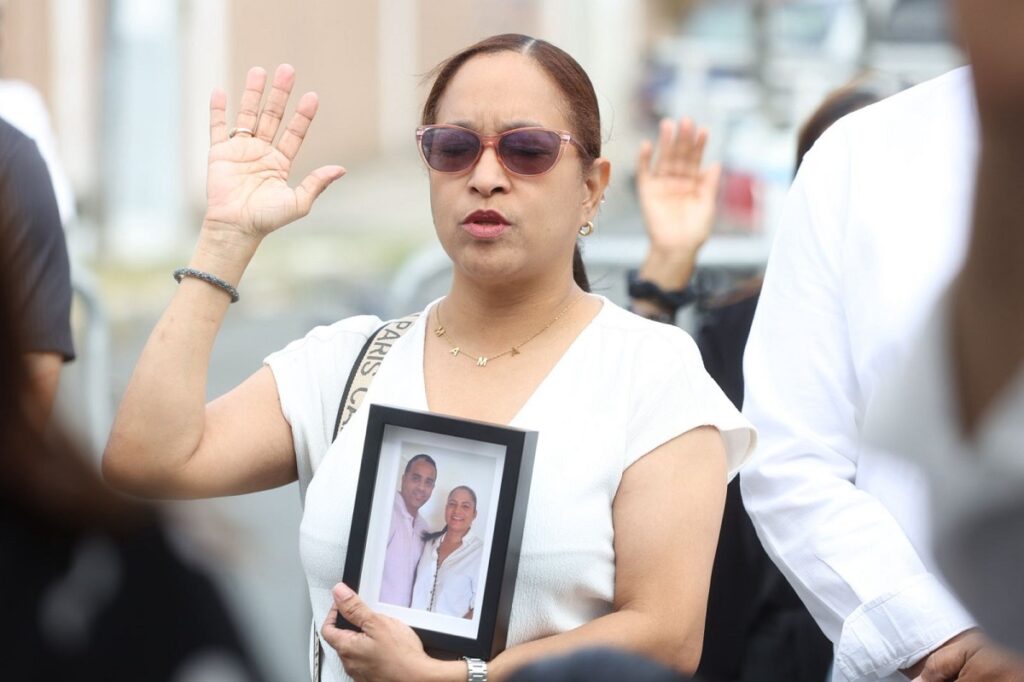
“We have established ourselves as a family that seeks the same thing: that those who died here have not died in vain.”
Ana María warned that impunity opens the door to new tragedies. “When things come to nothing, it’s easy for them to happen again. People think that there are no consequences, that nothing happens, because the owners have money and commitments,” he said.
From pain to organization
The survivor acknowledged that the initial grief prevented them from reacting strongly. “If they had the advantage it was because the pain and tears did not allow us to look forward,” he said.
“Today we have to dry our tears and continue.”
He made a public call to all family members and survivors to join. “Unity is strength. No one can be left alone in this.”
A cry against indifference
Ana María also cited a message received that same morning from Melba Segura de Grullón, mother of Alexandra, one of the fatal victims, who warned about social indifference.
“They cannot be indifferent. Nobody can be indifferent,” he said. “I call on you to join us and embrace us as one family that wants justice.”
The pain that does not subside: the testimony of a brother
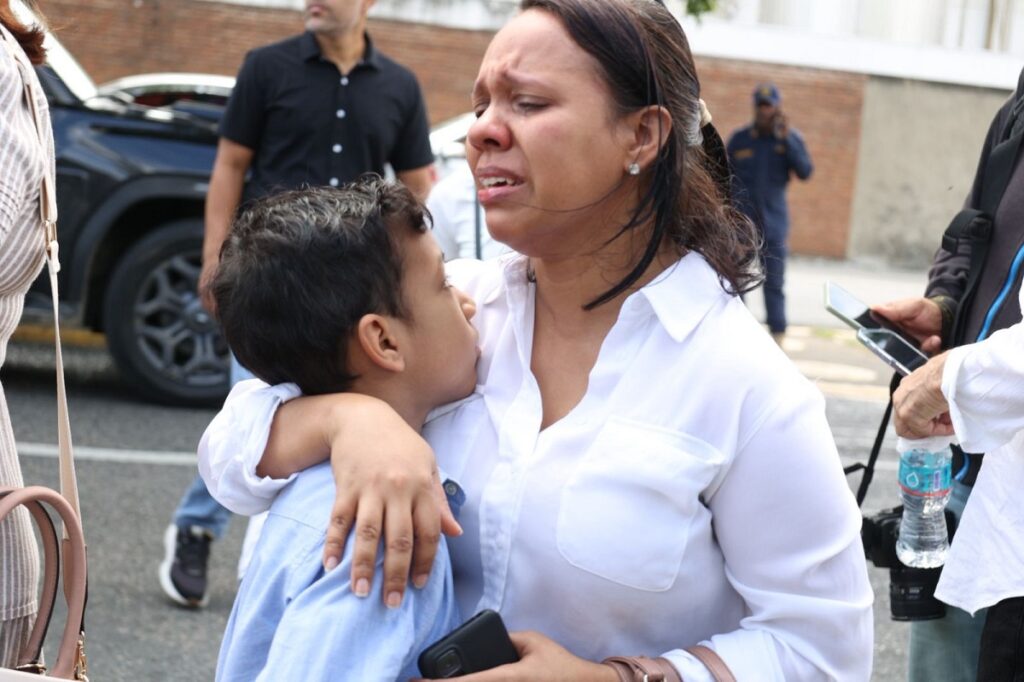
Among the voices that marked the day was that of Rafael Santanawho lost his brother and sister-in-law in the Jet Set tragedy, leaving two orphaned childrena 10-year-old boy and an 8-year-old girl.
Visibly affected, Santana described a grief that has not diminished with the passage of time.
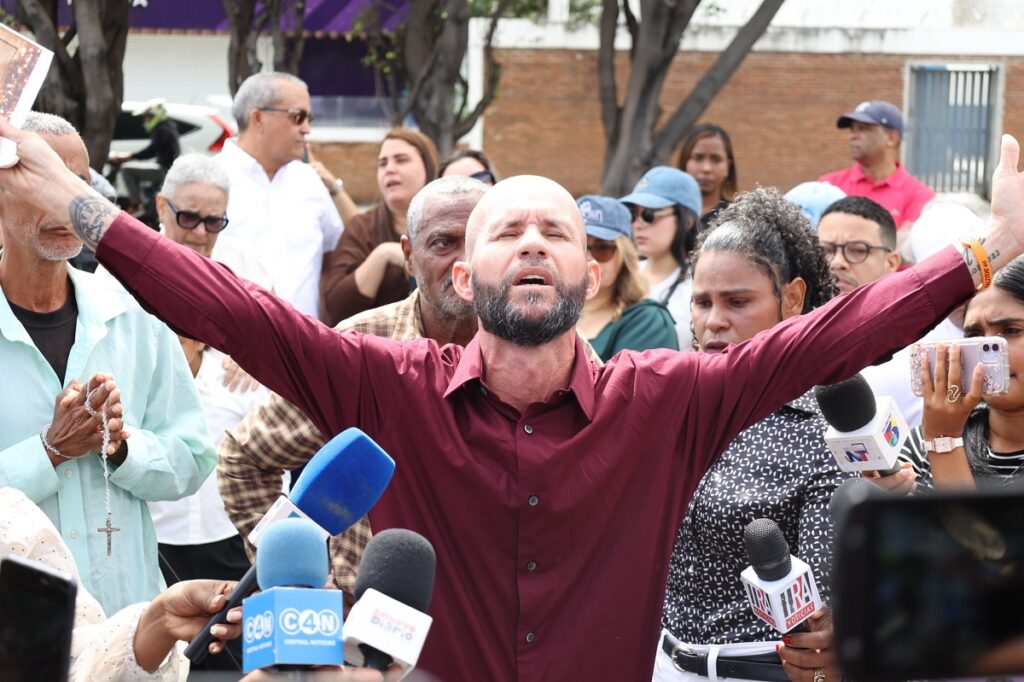
“I have felt devastated for ten months. I have not been able to sleep, I have not been able to eat. And it is still difficult for me to go to the house where they lived, where they left two children who ask about their father and mother every day,” he said.
The family member reported that the minors continue to occupy the spaces they shared with their parents, without fully understanding a definitive absence.
“They slept there, they did everything with their parents. They are two little children who are still waiting for answers,” he said, his voice breaking.
Santana also expressed a deep distrust in the Dominican judicial system, a perception that, he assured, has not changed despite the gestures of institutional solidarity after the tragedy.
“I have never believed in the justice of the Dominican Republic, and today, ten months later, I still do not believe,” he said.
He recalled that on April 8 he received a hug from President Luis Abinader, along with other relatives of victims.
“That day they told us that the country and the Government were with us. But the reality is that it has not been like that, nor will it be like that, nor will it ever be like that if there is no justice,” he said.
In a moment full of symbolism, Rafael Santana knelt in front to the scene of the tragedy to pay tribute to their loved ones.
“Today I will kneel here, in front of the Jet Set, in memory of Pedro Etebe and Sudairytwo examples of life,” he said.
He assured that his claim is not only personal, but collective.
“Just as I want justice for the two of them, I also want it for all those who lost their lives here,” he added.
The testimony became even more intimate when he spoke directly about his brother, whom he described as a man of integrity and deeply committed to his family.
“He was a good, noble man, a good son, a good father, an excellent engineer. I adored him with my soul. I never thought I would lose him in this way,” he said.
He mentioned his brother’s children, who he said continue to ask about him.
“His children ask about their father every day. You can’t get over that,” he said.
Rafael Santana closed his intervention by appealing to faith as the only support in the absence of judicial responses.
“Only God has given us strength. I can do everything through Christ who strengthens me. It is the only thing that keeps us standing.”
ten months later
Ten months after the collapse, the Jet Set It’s still an open wound. The flowers wither, but the claim remains intact.
Families do not ask for privileges, they insist, but for truth, clear responsibilities and guarantees that a tragedy like this will not be repeated.
Every day 8 they return. Not only to cry, but to remember that the pain is still there and that justice is still pending.