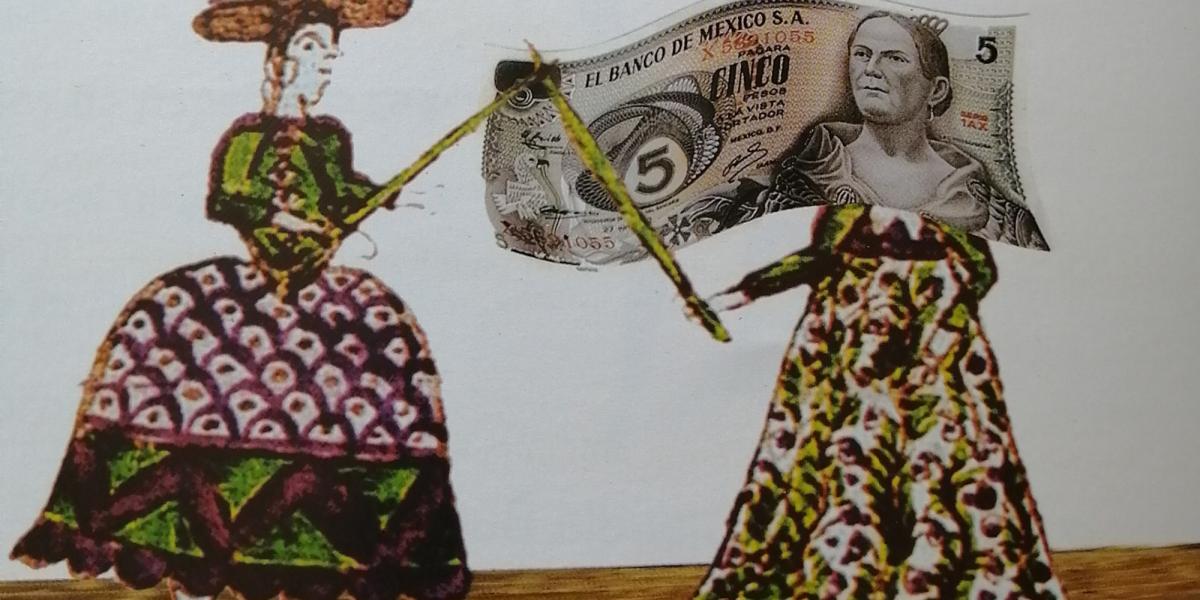
“Long of ingenuity, gentle in ways, verbose word, nourished of understanding, agile of imagination, resolved of character and lovely in love with the ideals that could make the glory of Mexico,” was like many passionate historians described Josefa Ortiz Domínguez, also known as the corregidora and heroine fundamental patria of our independence.
Josefa, trapped between the four walls, recalled that in the meetings that she and her husband had organized there was talk of the latest democratic doctrines, of obtaining justice for the Indians and of disappearing the bad government. Friends, lawyers, intellectuals, military and landowners, had planned to explode the rebellion on October 1 of that 1810.
Baptized as María Josefa of the Natividad Crostencia Ortiz Girón, he was born in Valladolid – today Morelia – just one day like today, September 8, but from 1788. Daughter of Juan José Ortiz and Manuela Girón, Spaniards settled in the new conquered lands (these same, dear reader). From a very young age he lost them both and was under guardianship of his older sister, María Sotero and, with her, moved to the capital of the viceroyalty (today CDMX) to receive education.
Precisely at that time, it is not known whether at the College of San Ignacio or when she entered the Biscayan, the exciting story of her life began (as they have told us from primary school).
It all started when on one occasion, the school was adorned to receive the visit of Miguel Domínguez, a lawyer from Mexico City, member of the Audience and Senior Officer of the Supreme Government of New Spain. They swear that Josefa was caught just to see her and asked permission to visit her more often. Granted authorization, in a short time they became boyfriends and after many laps of romantic love, on January 23, 1791, they married in the Metropolitan Sagrario.
After the link, everything was honey on flakes: Miguel Domínguez was appointed corregidor of the city of Santiago de Querétaro by the viceroy Félix Berenguer de Marquina, the children began to arrive and the Ortiz de Domínguez marriage moved to live there.
It was the year of 1802 when Josefa began to identify with the fury that caused the abuse of the gachupines – Spain born in the Iberian Peninsula – towards Creoles, mestizos, indigenous and people in general. He rejected that everyone was treated as second, third and even fifth citizens, only because they were born in a colony and not in the imperial metropolis.
She and her husband were highly appreciated in Querétaro, sought the well -being of the city and treated the population with good ways; However, discontent began to grow and spread. By 1808, given the overthrow of King Ferdinand VII of Spain and the invasion of the Napoleonic Empire to the Iberian Peninsula, the outrage became fury and ideas were polarized in the colonies: some wanted a legitimate king; Others, a free government. Josefa belonged to the latter and given his strong personality and his advanced temperament decided to participate.
Some rebel Creoles began to organize in “literary groups”, where the ideas of the Enlightenment were disseminated, prohibited by the Catholic Church. The corregidora was integrated into one of those groups and was convincing her husband to participate as well. He did so and with such a good result that the rebellion was planned from his home and the alleged literary gatherings ended up becoming a very cultured, exquisite and successful political conspiracy. That is, Josefa Ortiz’s house hosted and domicile of the struggle for independence.
Josefa had everything under control. He successfully faced the messy agenda of villains and leaders and fulfilled punctually the insurgency agenda. The beginning of the rebellion was planned to explode on October 1, but the events were advanced. The conjure had been discovered and the situation was serious: there were apprehensions, homes of homes and in the grocery store of the González brothers, the realistic army had discovered the spears and bullets.
On September 14, 1810, Josefa had been locked up by her husband. For security reasons, he had said. But there was no time. It was necessary to warn Captain Allende. Find out the danger to Cura Hidalgo and move soon.
Josefa reviewed the situation: her husband was not. The door closed. The trancious windows. His twelve children who knows where. And suddenly he remembered. The floor of his bedroom was the roof of the fourth bedroom of Mayor Ignacio Pérez, also a supporter of the movement. Then, the shoe was removed. With the heel he started hitting fast, many times, with force and without stopping. The mayor warned the urgency of the call. He entered the house, arrived on the top and the hole of the key, Josefa told him that without losing a second he would head to San Miguel el Grande and find the captain around what happened in Querétaro. Pérez obeyed. Allende was able to reach the Curato de Dolores and early Sunday, September 16, Miguel Hidalgo announced that the struggle for independence began, with music of bells and shouts of freedom.
This is how Josefa became a heroine all in her, from the thoughts of her head to the heel of her shoe, they were essential for the birth of a new homeland. Ours,