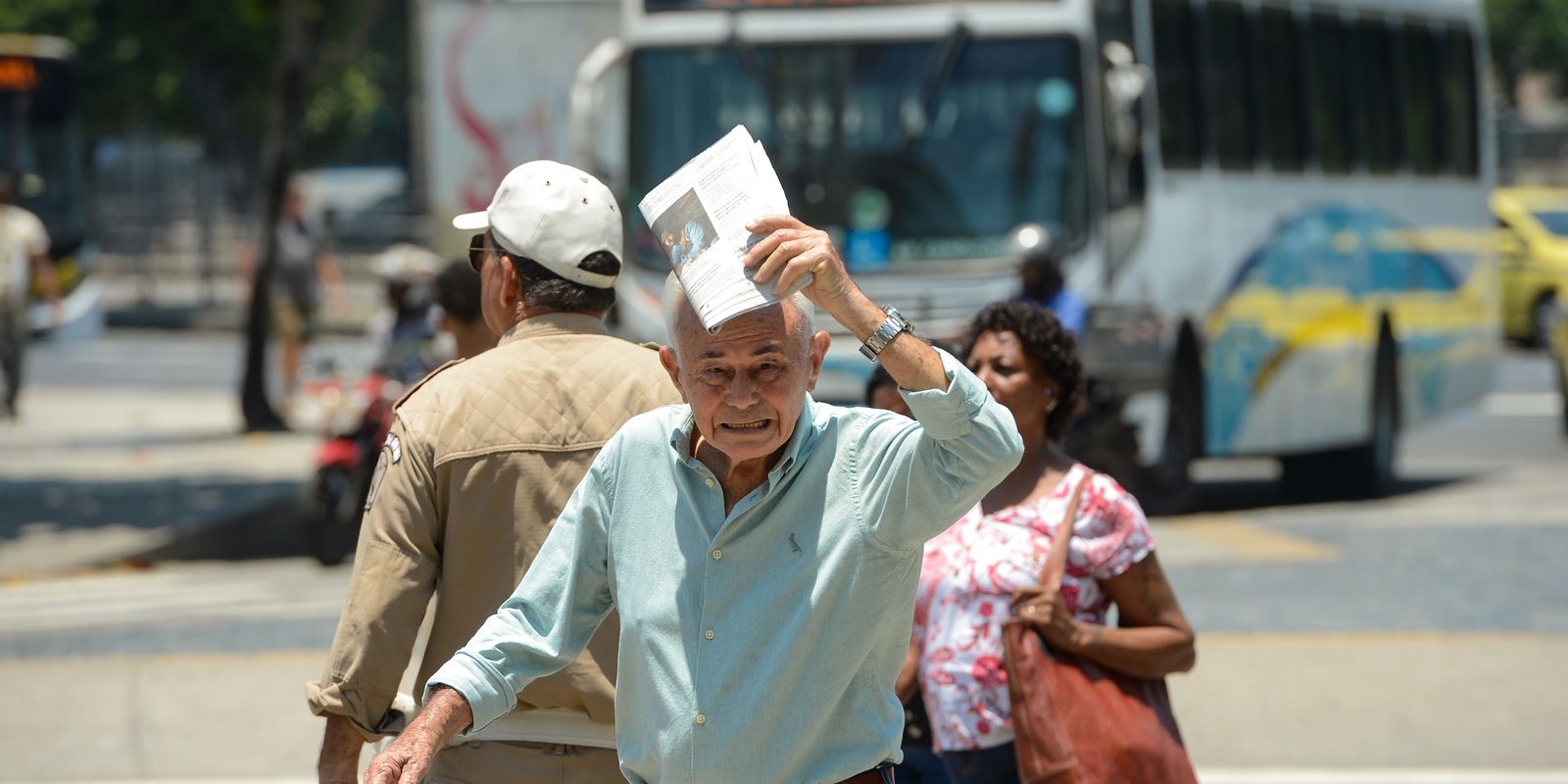
The heat in Rio de Janeiro has led more than 5,000 people to seek medical attention from units of the Unified Health System (SUS) since the beginning of 2025, according to data from the Municipal Health Secretariat (SMS-RJ). The sum includes who sought urgent and emergency networks, considering the Emergency Care Units (UPA), the Regional Emergency Coordinations (CER) and the hospitals.
In January, the Secretariat estimates that 3,000 people were served by complications due to intense heat. In the first 18 days of February, about 2,400 people have already been served in SUS emergency units in the city.
“The Municipal Health Secretariat of Rio de Janeiro already verifies an increase of people looking for emergencies with problems related to heat, especially dehydration and decompensation of chronic diseases,” he said in a statement. SMS-RJ adds that the biggest concern is with the elderly and children, who usually have less network sensation.
The persistence of high temperatures caused the city of Rio to announce last Sunday (16) guidance measures for the population This week, in which it has already been registered temperature record.
In an interview with Agência Brasil, the municipal secretary of health, sanitary doctor and federal deputy Daniel Soranz explained that the municipality has done a work to cross data from the last 12 years that shows an increase in decompensation of chronic diseases and the mortality rate in the elderly on warmer days.
“Today, we have been able to prove with data that the hottest days are the days when we have the highest mortality per diabetes, hypertension, heart failure and kidney failure,” he explains.
In 2024, the city released the first edition of “Extreme heat confrontation protocol”which describes the impacts of heat waves on human health and presents contingency actions for each heat level-from heat 1 to heat 5. Since June, even, the river color monitors heat levels, which vary by reason temperature and relative humidity registered in the city. According to the Epidemiological Intelligence Center (CIE), of the first 45 days of 2025, the city of Rio was 27 of them out of heat 1.
“Mortality from chronic diseases increases on intense hot days. Also the cases of dehydration and burns on the skin, which was already foreseen, increase further on hot days 4, which are the hottest of the year, ”says the secretary. The announcement that the municipality of Rio de Janeiro had entered the Heat level 4 -Characterized by high heat rates, from 40 ° C to 44 ° C, with permanence or increase for at least three consecutive days-was made on Monday (17), at 12:35, by the color rio.
Hydration
Among Announced actions On Sunday by Mayor Eduardo Paes (PSD) are the opening of 58 points of cooling, stop for hydration of workers who spend a long period exposed to the sun and the preparation of the municipal health network to increase cases of cases resulting from high temperatures . The city also reinforced the recommendation of water intake, use of light clothing and non -direct exposure to the sun during periods of high temperatures.
“From the data collected, the increase in mortality, we managed to guide the population not to do physical activities and not to expose themselves to the sun at the hottest moments of the day. We also managed to guide the use of chronic medications and the need for hydration, ”says Soranz. The secretary responsible for SMS adds that constant hydration prevents health problems from being aggravated and protects the population from more intense hot days.
“With hydration, we can avoid some kinds of hospitalization and the worsening of some diseases,” he says. According to the sanitary doctor, the recommendations are valid for “all professionals who work under the direct sun or who exercise on the hottest days”, but focus mainly on children and the elderly, who dehydrate more easily compared to to the other groups.
With the approach of the carnival, which should move more than R $ 12 billion in revenues in the countryas estimated by the National Confederation of Commerce of Goods, Services and Tourism (CNC), SMS-RJ has established health posts at the Marquês de Sapucaí sambadrome, located in the Santo Cristo neighborhood, where the parades of the Rio de Rio samba schools take place. January.
“There are four health posts inside the sambadrome to take care of the people who will be there taking advantage of the carnival and also in the main blocks of the city, so we are also reinforcing the emergency and emergency units to meet the demand of 1 million revelers that will enjoy the Carnival in the city of Rio de Janeiro, ”says the secretary.
*Intern of Agência Brasil under the supervision of Vinícius Lisboa