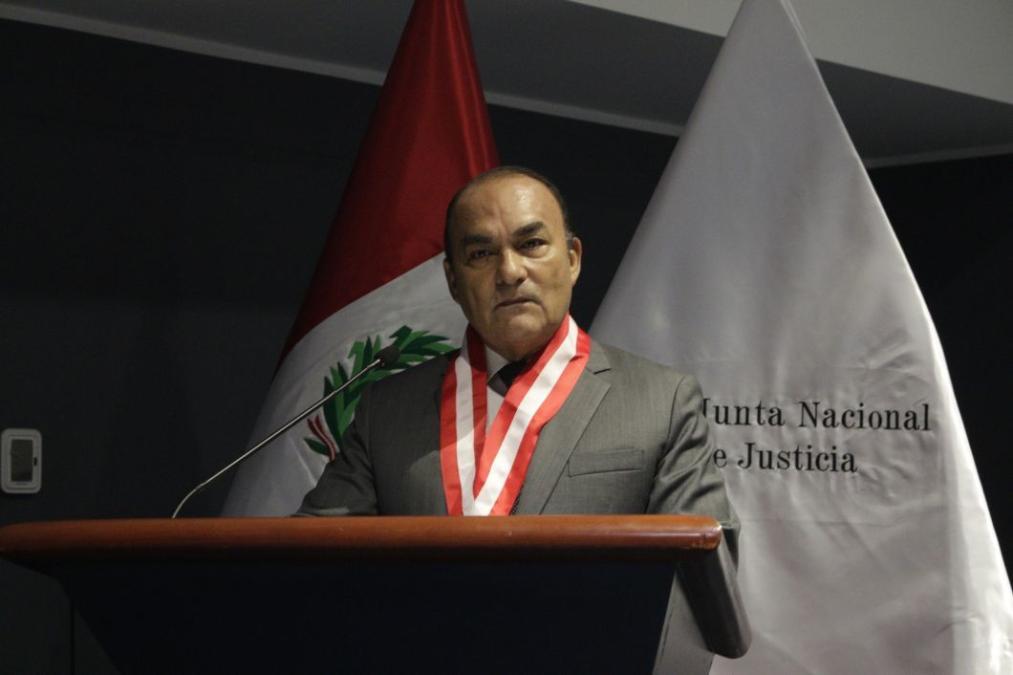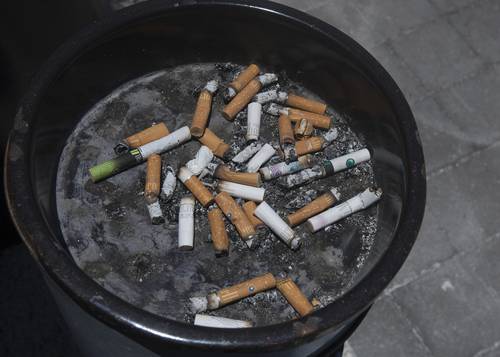
▲ Merchants’ representatives affirmed that the increase in levies to tobacco has not discouraged their consumption and can promote illicit trade.Photo The day
Dora Villanueva
La Jornada newspaper
Wednesday, September 10, 2025, p. 5
The “healthy taxes” proposed by the Ministry of Finance and Public Credit in the Federation’s Revenue Law Initiative for next year will leave approximately 41 billion pesos to the public coffers and will be allocated in their entirety to the health budget, said the officials of the agency at a press conference.
Both the secretary of the branch, Édgar Amador Zamora, and the Undersecretary of Expenditures, Bertha Gómez Castro, explained that these resources will be reflected in the Health Budget.
“The president’s instruction is very clear. He wants to establish all transparency and that we can inform in the quarterly cuts how much has been collected and how much we have led to health spending,” said Gómez Castro.
He added that the health sector budget will go from 881 thousand 460 million pesos in 2025 to 965 thousand 663 million next year. Virtually half of this nominal increase, of 84 thousand 203 million pesos, would come from the highest special tax and services tax rates (IEPS) to sugary drinks, with non -caloric and tobacco edulcorants proposed in the economic package.
On Monday, the Treasury sent the economic package to Congress, in which it proposes to “increase the quota of 1,6451 to 3,0818 pesos per liter of product (flavored drinks), including those that contain any type of non -caloric sugars”. In cigarettes, the IEPS increase would be between 160 and 200 percent, in handmade tobacco, 32 percent, but it is also sought to tax other products containing nicotine.
At a press conference, Édgar Amador Zamora said that it seeks to support a comprehensive health strategy. The Undersecretary of Income, Carlos Lerma Cotera, acknowledged that this type of encumbrances in Mexico have not had “very clear results in consumption” – as happened with the 2014 reform -; What has been observed is that the cost of attending the diseases associated with the intake of these products, which are estimated at 116 billion pesos per year, was fired.
As for the 8 percent tax AD VALEEM To “violent” video games, the secretary stressed that he would leave at least 183 million pesos.
On the other hand, Amador Zamora explained that limiting the tax benefit that banks have to receive reintegrates for contributions to the Institute for Banking Savings Protection is part of a homologation with international standards applied in the United States and Canada, where these quotas are not deductible.
Antonio Martínez Dagnino, head of the Tax Administration Service (SAT), reiterated that with this measure it is planned to capture around 10 billion pesos annually. This fiscal benefit is only part of how profitable IPAB bonds have resulted (Bit.ly/4gq2jza).
He added that it is not yet known how much it would be obtained with the incentive to the repatriation of capital; The last time a program of this type was applied, 380 billion pesos were captured.
“It is not a fiscal amnesty,” he said, “in fact, the rate at that time was 8 percent. Now it would be 15 percent and we are putting more locks.”
Martínez Dagnino pointed out that everything proposed in the economic package went through the lawyers of the Ministry of Finance, the Fiscal Attorney’s Office and the SAT, so that “all measures comply with the constitutional parameters”.
Meanwhile, organized trade representatives rejected the proposal of the Ministry of Finance to increase tax rates to tobacco and soft drinks, since it is, they assured, a blow to the pocket of the people and the stores, in addition to the fact that the measure will lead to the illegal market.
This proposal “comes to break the fiscal stability agreement with former President Andrés Manuel López Obrador,” said Cuauhtémoc Rivera, leader of the National Alliance of Small Merchants (ANPEC).
He explained that the proposal raised by the Treasury is a “collection fiscal measure”, because although the purpose is to reduce the consumption of products such as cigarettes or flavored drinks, collection will increase because people continue to buy those products.
The leader commented that the ANPEC will ask for an open Parliament, because it is a proposal of the Federal Executive Power. “We want all voices to be heard and that somehow allows us to have a more representative consensus, that all interests are considered,” he said.
Gerardo Cleto López Becerra, president of the Council for the Development of Small Trade and the Family Business, warned that the proposal will reduce merchants sales and assured that the proceeds have not been addressed to the health sector.
In turn, the employer confederation of the Mexican Republic commented that these measures generate tax uncertainty, can discourage investment and there is no evidence that they reduce the consumption of harmful products.
(With information from Alejandro Alegría)