Havana/In recent days, the cemeteries and funeral homes of Havana have experienced unusual and constant activity. Hearse cars and Etecsa vans enter and leave without pause, while the reception area and the Colón chapel, the most important necropolis in the capital, remain packed. The same situation is repeated in the cemeteries of Guanabacoa and Regla, as well as in the funeral homes of these municipalities and in Calzada and K, in El Vedado.
“At first it seemed like a cold, but then everything got worse in a matter of days,” Maritza, 38, remembers about the illness of her 89-year-old diabetic grandmother. “Everyone in the family was infected. She began to retain fluids, swell and lose her appetite. The medical report states that she died of a heart attack, but we all knew that the virus precipitated her death. There is no treatment, there is no plan, and there was nothing to do,” he tells 14ymedio.
“At first it seemed like a cold, but then everything got worse in a matter of days”
The dengue epidemic and chikungunya, which in the last week has raised the number of patients in intensive care to 156, is filling hospitals, especially with people who already suffered from other diseases.
“We recorded the organ that failed, not the infection. But it is evident that viruses such as dengue or chikungunya aggravate the clinical symptoms and precipitate deaths,” confirms a doctor at La Benéfica hospital, who recalls that the elderly are among the most affected.
Obituary services reflect the severity of the health crisis facing the country. “There are days when the hearses cannot cope and all the rooms are full. Relatives constantly ask: ‘What did he die from, the virus?'” says a worker at the Guanabacoa funeral home, describing the saturation they face daily. “I can’t tell you what these people are dying from, because that doesn’t appear anywhere, but I can tell you what the relatives of the deceased say, and I can assure you that the majority of those who arrive here are dying from complications with the virus.”
/ 14ymedio
“I can’t tell you an exact number either,” he adds, “but there are days when between 10 and 20 people are dying, and that is not normal, or at least it wasn’t a few months ago. And the family members, of course, are upset. Many people would be alive today if it weren’t for these viruses.”
Beyond the numbers, obituary services function as an unfiltered reflection of the structural crisis facing the country. While solutions are conspicuous by their absence and silence predominates, in cemeteries and funeral homes reality cannot be disguised. The saturation, the pain of families and the lack of resources show a collapse of the city that had not been seen since the most critical times of the covid pandemic, five years ago.
Obituary services function as an unfiltered reflection of the structural crisis
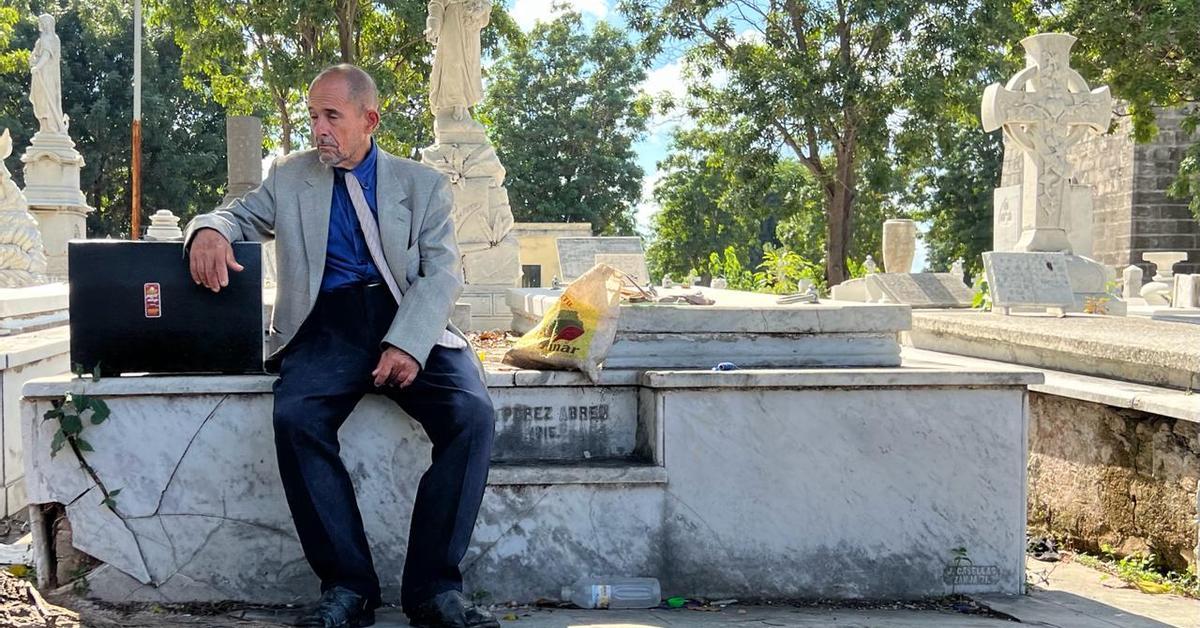
“I work as a watchman near the cemetery and almost every morning after duty I come here to visit my aunt, who died a month ago as a result of the virus. She couldn’t stand it.” Sitting next to the grave, Frank summarizes the feeling that runs through many in the city: “Every day I see how desperate families arrive. My aunt died a month ago; at first it seemed like a simple cold, but in 48 hours her condition became complicated. She survived Covid, but not these viruses that affect the elderly. I didn’t even take her to the hospital, why. When I got sick a week before they didn’t give me anything. Yes, liquid, yes, rest. It’s hard to lose someone like that. She was saved. from covid, but not from these supposedly less deadly viruses, so you see. And also because of negligence, because no one did anything for me. We are alone, without help.