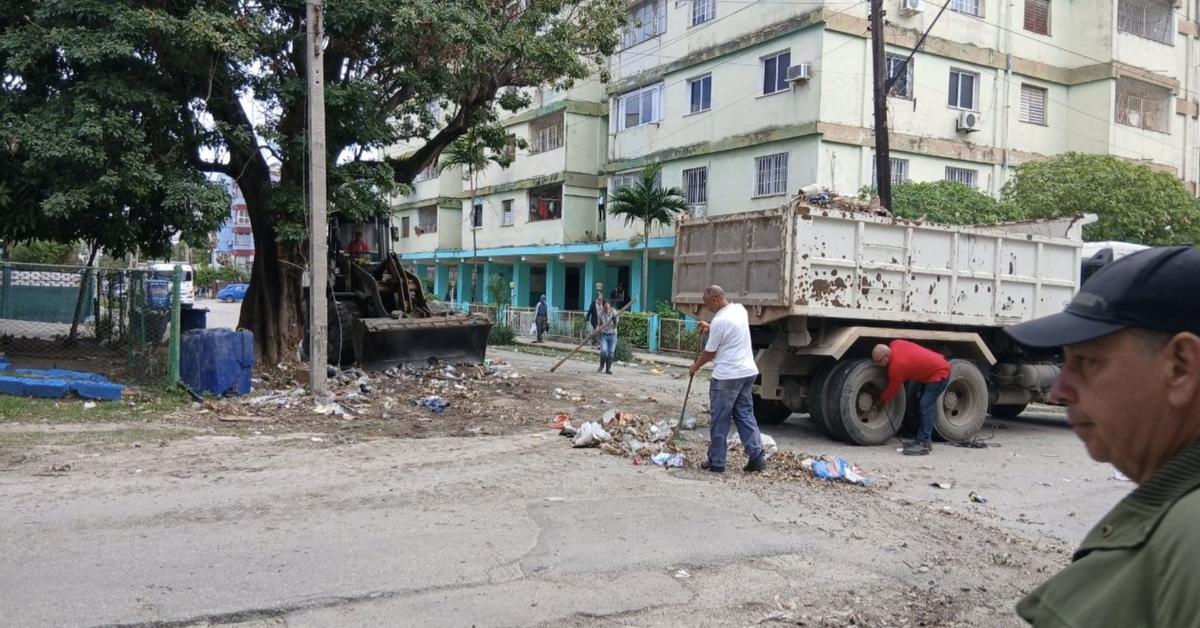
Havana/The photos don’t capture the smell. Fortunately. None of the dozens of images that each week capture the mountains of garbage, which spread across the Cuban capital, manages to convey the stench of waste. An accumulation of filth that far exceeds the available containers.
Havana has 10,000 garbage containers but it needs between 20,000 and 30,000 so that waste does not fall on the sidewalk, described the official media Cubadebate this Thursday. Furthermore, “currently, on average, between 16,000 and 17,000 cubic meters are collected daily, a figure lower than that of other stages, when statistically between 25,000 and 30,000 cubic meters were reached.”
Alexis González Inclán, Communal Services official, said that one of the main bottlenecks is the poor condition of the equipment. “We have 106 collection trucks on staff and today 44 are working. We are between 37% and 44% of technical availability, well below what is needed,” he said.
The trips are not efficient, nor is the timely provision of fuel and the lack of human resources, where a large part of the workforce are inmates who finish their day at five in the afternoon.
Although the fuel is assigned to the dump trucks, they barely carry out their daily tasks as they spend half the day waiting to be supplied at the service centers. Of five planned trips per day, they achieve 3.1 on average. “Many times our vehicles receive fuel between 10 in the morning and 12 noon, and from that moment on they go on the routes,” explained the provincial director.
Although fuel is allocated to dump trucks, they barely fulfill their daily tasks
Inclán informed Cubadebate that the last study that counted The amount of garbage generated by the capital was obsolete, dating back seven or eight years, and at the time it reached a figure between 20,000 and 24,000 cubic meters per day. Currently, with the garbage produced by new private businesses, managed by MSMEs, and the consumption of more imported and packaged foods, the number has increased.
Another “of the most visible deficits is that of containers,” the report states. Most of those available are in poor condition. The media reports that they tear off “the covers, galvanized screws and even wheels” to sell to producers of rustic toys or solve some domestic problem.
The wheels of garbage containers have been stolen, for decades, to build the necessary wheelbarrows with which water is carried to homes, in a city where the supply deficit hits a good part of the residents.
In a report of Cubadebate On the production of these containers in a military factory, a regular production cycle is shown over the last eight years. In odd-numbered years production exceeded 10,000 units, while in even-numbered years it did not reach 7,000. However, in 2025, during the first quarter and the sanitation fever due to the pandemic was over, production barely exceeded 1,000. In that year and in the current one, 2026, the Cuban economy has not emerged from one hot flash to enter another.
Furthermore, the lack of labor is severe. There is little interest in being a sweeper Well, the basic salary that they received, which a few years ago was attractive, today according to González Inclán, “is a little more than 2,000 pesos”, while a carton of 30 eggs costs between 2,000 and 3,000 pesos or 300 a pound of rice in the informal market,
At a meeting on the subject, to which Cubadebate It does not set a date or place, the ruler Miguel Díaz-Canel criticized his cadres for not having acted more quickly before the problem reached current levels.
The Havana government presented 49 measures to address the accumulated piles of garbage, but the media does not give details about them.