Havana/When a cyclone approaches, the streets of Havana take on another speed. The pace quickens, vendors offer their merchandise more insistently and small businesses hurry to close before the winds begin to blow. A hurricane is not expected this Friday, but the city I pass through seems to be waiting for a monster that exceeds any level on the Saffir-Simpson scale. The fear is not caused by possible gusts, but by the total paralysis of a country due to lack of fuel.
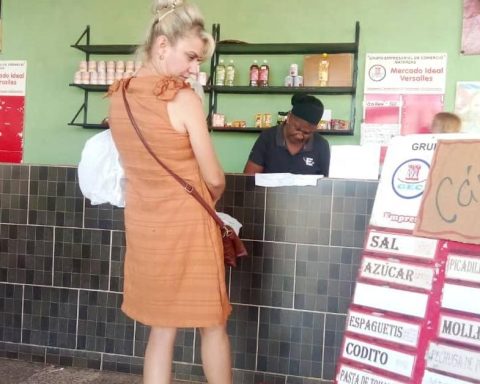
At the market on Tulipán Street, several stalls already closed due to the energy crisis await me. “I won’t be back tomorrow, we are in a critical condition,” shouts in a conversation, from his cell phone, a merchant with a pallet that until a few days ago was full of imported products. People prefer foods that do not need refrigeration due to the fear that the blackouts, which have already multiplied in recent hours, will continue to increase until the city is completely darkened.
I put two packages of peanut kernels in the bag. They do not need to be stored at low temperatures, they have enough nutrients and, in case the gas service does not work, it will not be a big sacrifice to eat them raw. I discard the eggs, even if I need them. They are only selling them by the carton, with 30 units at 3,200 pesos, and I fear that they will spoil if the power outages become longer. I add some onions and a bunch of cilantro. The little I have bought costs me more than 4,000 pesos, above an average monthly pension.
/ 14ymedio
A young man jokes that soon he will have to come to the market with a wheelbarrow because the Cuban peso continues to devalue and prices continue to rise. I imagine pushing bills in one of those improvised carts with which, as a child, I helped carry water to my house in Central Havana. Life has this way of returning us to a point we thought we had overcome and doing it in a way that makes us feel nostalgic for the times when we carried water and not useless papers to almost empty markets.
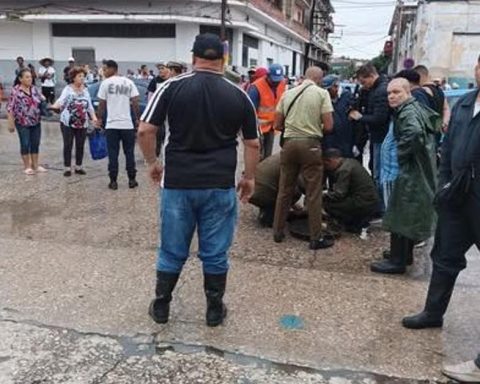
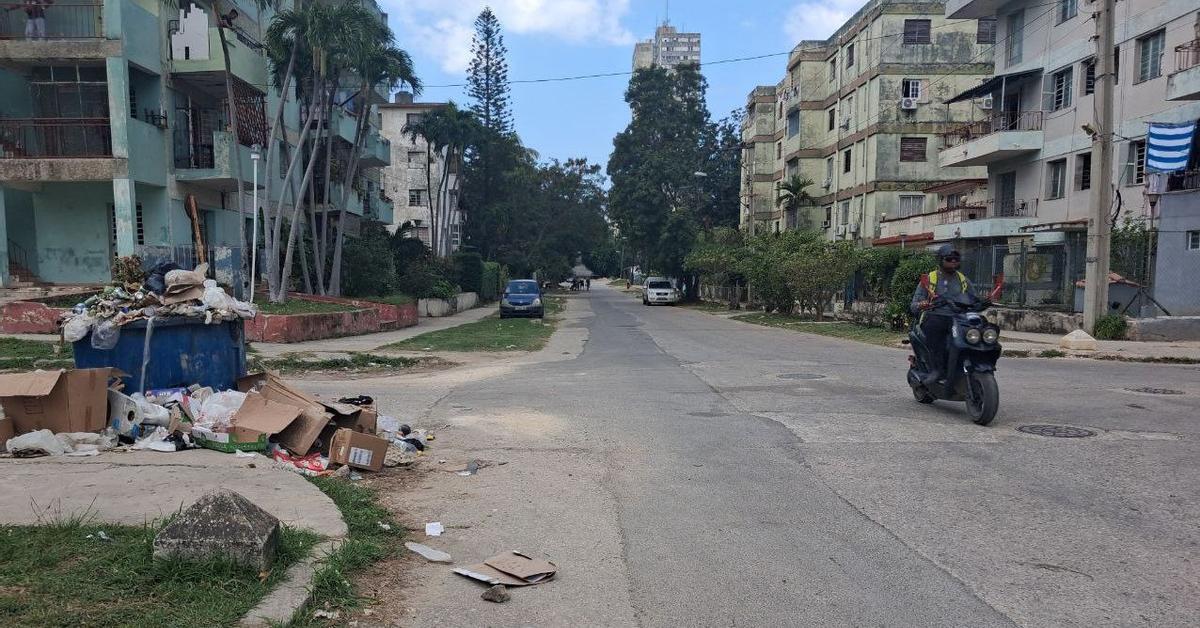
In the entire area through which I pass, it gives the impression that a hand, from the heavens, has overturned an immense garbage can. To the waste that accumulates in the corners, forming mountains of cardboard, bags and plastics, is added the waste that is everywhere. I can’t look over a single square meter where there isn’t some filth, breakage or gap. I feel a bit splintered myself. I have pain in my calves from going up and down 14 flights of stairs due to the lack of electricity to move the elevator. I bumped my elbow lifting some bags of soil to plant some spices on my terrace, facing the “zero option”, and at night I sleep little due to the shock of the electricity that comes and goes, generating hums, clicks and screams that erupt from the neighborhood.
Now, on the outskirts of the market, the rush is evident. “Grab your last garlic here before I leave,” shouts a man, shirtless, accompanied by a teenage girl. It’s only nine in the morning, so the threat of his departure has nothing to do with market hours. “I’m not coming anymore, take advantage now,” he emphasizes in case anyone didn’t understand that this is the last day he has transportation to get to Estancia Street, full of potholes and where traditionally, if the inspectors don’t break in, they range from stands with Chinese ointment, to disposable razors to liquefied gas cylinders.

/ 14ymedio
But today the film goes in even faster motion. Like those scenes recorded at the beginning of cinema, which were filmed with fewer frames per second and, when reproduced today, give the idea of wind-up dolls moving frantically from one side to the other, my neighbors and I also seem to be “out of revolutions”, never better said. The scene could not be more contrasting. Above is a tourist postcard blue sky that invites calm and, below, we move nervously between filth and despair.
A motorcycle passes me because I’m walking down the street. The sidewalks are devastated and are a danger to the ankles. But the driver doesn’t yell an insult at me or ask me ironically if I have a “plate.” A strange understanding of the other, a putting oneself in each other’s shoes in the face of the collapse we are experiencing seems to have spread around the market. In my dirty neighborhood, at least these days, “the nobleman and the villain, the great man and the worm dance and shake hands,” or, more realistically: they suffer together and avoid beating each other.
An old lady bumps into me when I’m buying some tiny carnations with more leaves than petals. “Give me something to eat,” he says quietly. The skin of his face is so close to his skull that I can see every tendon, every muscle that passes underneath. It is no longer known what amount becomes a decent gift. If I give her 50 pesos, will she feel insulted because it’s not even enough to buy an egg? I wonder. Is one hundred still too little for this old lady to eat something? Even being generous in times of monetary chaos is difficult. You don’t know when you’re going to help or denigrate someone with these useless colored papers that make up our national currency.
In addition, there is a gray dust that covers everything. It falls on our heads. They are the garbage dumps that have been set on fire. If I look out from the balcony I see them smoking here and there, dotting the Havana geography. The city smells like a medieval village where llamas try to do what in modern times is the work of communal services. A neighbor tells me that her asthma attacks have multiplied, that her eyes water all the time and that she locks herself in her room, under the sheet, to see if the plague and smoke don’t reach her.
/ 14ymedio
I quicken my pace near the mountain of waste closest to our building. Dominating the landscape, the sign above the Ministry of Transportation reads “until victory always.” There is a young man digging through the waste. I wait for it to finish so I can take a photo. If before poverty was seen more starkly among older people, now there is a sector of Cuban children and adolescents who bear the signs of hunger on their faces. They have that extreme thinness and yellowish color that only eats, from time to time, small portions of bad foods.
I return home and pass by a business managed by an MSME. We are in blackout. The old garage converted into a small winery looks like a dark cave. A customer complains that he cannot make his electronic payment because there is no electricity or data connection. The employee shrugs her shoulders and responds: “It’s good that we are open, because tomorrow we don’t know if we can.” An atmosphere of farewell pervades everything. No one is sure if the neighborhood store will open next week, if the driver of the electric tricycle that carries goods from one place to another will have been able to charge his battery, if the chronic patient in the nearby house will survive the lack of transportation to take him to a Guard Corps. We said goodbye to each other, too, in fast motion.
I reach the bottom of my concrete block. I joke with a neighbor who notices that this is the third time he has seen me going up the stairs today. “I’m training for a marathon,” I reply. Yes, I’m preparing for a long-distance race, although the stretch ahead requires more inner strength than firm knees. Finally, I reach the top. I look out. Smoke from another garbage dump has risen on the horizon. I think it comes from there, from the neighborhood where I carried water as a child.