During the 19th century and until well into the first half of the 20th century he pulque and aguamiel they moved in wineskins made from whole pig skinpreserving the anatomy of the animal except the head. The extremities—popularly known as handymen—remained part of the container.
When the liquid was completely emptied into this natural container, it was He said it was “full to the gills”. The phrase did not arise from popular metaphors or tavern exaggerations, but of a strict description: the content reached the physical limits of the interior of the leather.
This is documented by Enrique Gómez Lacort together with Manuel German Iglesias García in Boaters corambre crafts (Folklore Magazine, 1985), where they detail the process: the complete skinning of the animal, the cuts limited to the neck and legs, and the sealing of the extremities to contain the liquid.
As explained by Rafael Olea Franco in A literary pulque (El Colegio de México, 2022), this configuration allowed the image to be integrated into popular speech. It was first used to mark full containers; later, saturated spaces; and finally overextended people.
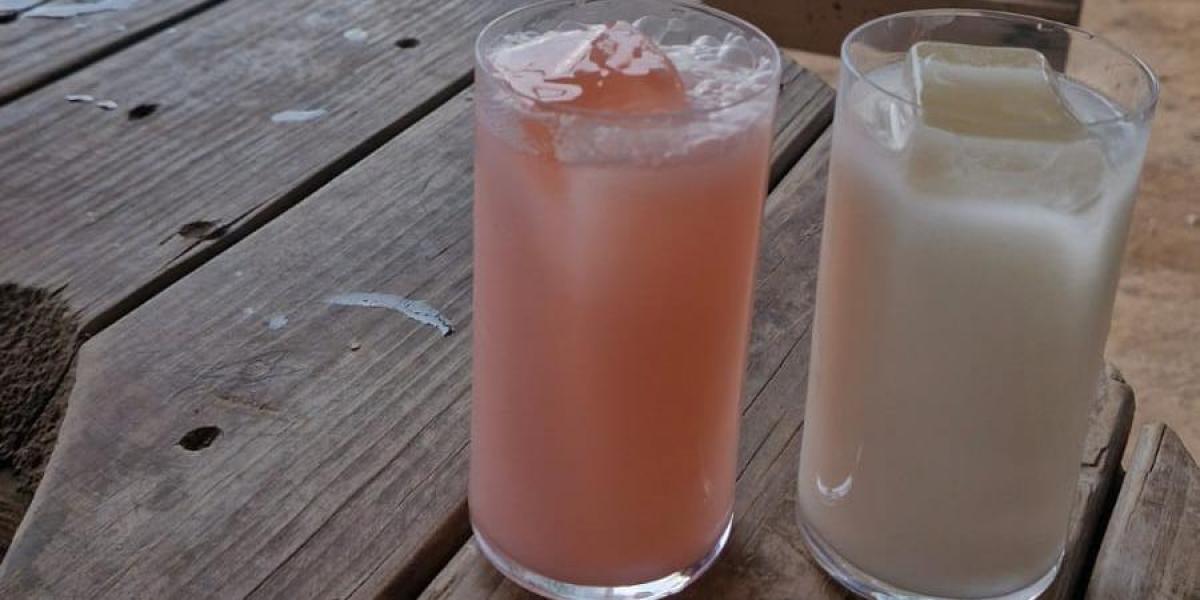
pulque
The Revolution and the consolidation of expression
Although the practice preceded the armed movement, during the Mexican Revolution the use of wineskins continued due to their resistance and ease of transport. The pulque was distributed in pack animals between haciendas and supply areas. In that period of constant displacement and coexistence between soldiers, peasants and residents, popular language adopted and propagated expressions linked to the consumption of this drink.
It was in this itinerant and mass circulation of pulque that the expression “until the hands” was consolidated, coinciding with the intense linguistic transformation derived from the Revolution. Not as an exaltation of collective intoxication, but as a technical derivation of a widely spread method of transportation.
Different cures
An expression that preserves a technique
The expression does not allude to lack of bodily control nor does it arise from scenes of drunkenness, as has been popularly suggested. It was born as a technical description of a container. Only later, when the wineskins were no longer used and pulque began to be transported in modern media, the phrase came off the leather to anchor itself in everyday speech.
When today someone claims to have put “even the little hands”reproduces—without knowing it— a vestige of the fermented beverage trade in Mexicoa lexical trace of rural transit and the conservation of liquids before industrialization. It is not a colloquial exaggeration: it is a historical unit.