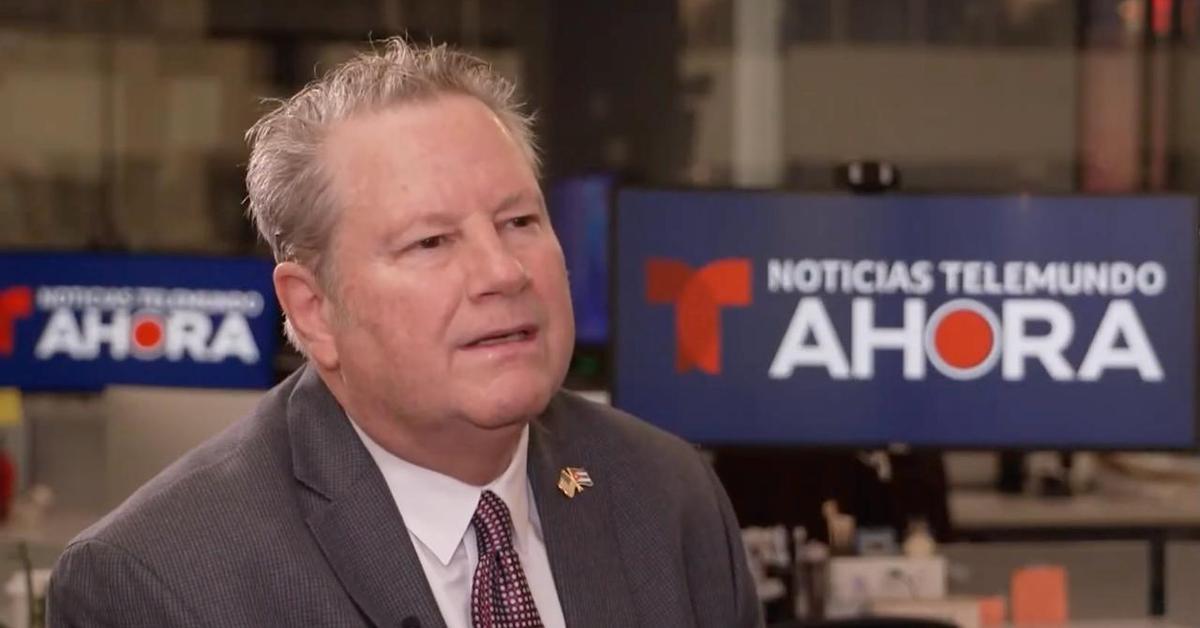
Madrid/The head of the US Diplomatic Mission, Mike Hammer, insisted this Tuesday in an interview with Telemundo, in Miami, in which there are conversations with representatives of the Cuban Government and he even let it slip that there are parts of the regime that ignore him. The diplomat went so far as to affirm that Washington already has a Delcy Rodriguez on the Island.
“There are obviously conversations with some very high up within the regime. Others will not be aware,” Hammer said. “There are some who come out and make a statement: ‘No, no, there is nothing.’ And suddenly, after a day or two, they say: ‘Well, I mean, this has to be done the way we are doing it.’ I will only give you the example of Venezuela,” he stressed.
The idea is in line with the insistence that the president of the United States himself, Donald Trump, has made on more than one occasion. In mid-January and just a few days ago, the president He maintained that the dialogue was underwayoh there would be news soon. On both occasions, the Cuban regime has responded to deny that we are talking about anything that are not the issues on which both nations usually maintain exchanges: migration and drug trafficking.
“Good question, I appreciate it. A good journalist, we’re not going to get into… Yes, there is a Delcy Rodríguez,” he said categorically.
The Vice Chancellor of the Island, Carlos Fernández de Cossíohas maintained in several interviews with international media that there is a willingness to talk, but with mutual respect, and has stated that Washington’s comments about possible negotiations are malicious, intended to generate distrust. “If you are thinking that there is fractionation within the Cuban Government (…) and a willingness of a small group to give up the sovereign rights of Cuba and give in to pressure (…) it is a wrong interpretation,” he told EFE last week. The Spanish newspaper ABC had just statedwith sources in Mexico, that the dialogue exists and that the intermediary is General Alejandro Castro Espín, son of Raúl Castro.
Hammer did not want to confirm any name, not even when Telemundo journalist Damià Bonmatí insisted on asking him who the Cuban Delcy Rodríguez was. “Good question, I appreciate it. A good journalist, we’re not going to get into… Yes, there is a Delcy Rodríguez,” he said categorically. “I’m not even going to touch on the issue in that sense, it’s just that anyone within the leadership, who sees that their children and grandchildren no longer want to be in Cuba because the situation is so miserable, that they are going to study abroad, that they are living the good life in other countries,… know that this is already ending,” he concluded.
Asked about the deadline for these talks and when he believes the Cuban regime has left to reach the end, Hammer avoided committing, although his reference to the Venezuelan case and the fact of setting – again – 2026 as a horizon, made it clear that the US has months. “If there is no progress in weeks, there will be a plan B,” he said. The diplomat recalled that last November Trump offered dialogue to Nicolás Maduro and there were conversations that led to nothing. “There is a call with Maduro and six weeks pass until it falls. We have to imagine similar dates,” he said.
The diplomat also did not want to specify what alternatives there could be if the supposed talks do not prosper, but said that the priority is to find a “peaceful solution. “No one wants to see bloodshed, but it is very important that a change is made and the rest of the world also has to wake up and help advance this process,” he asserted.
“No one wants to see bloodshed, but it is very important that a change is made and the rest of the world also has to wake up and help advance this process.”
Bonmatí also asked Hammer to what extent the US is responsible for Cuba’s extremely weak situation since it was prevented from acquiring oil, but the diplomat spoke of a previous deterioration and avoided any mention of recent weeks. The executive order signed by Trump on January 29 to impose tariffs on countries that deliver oil to the Island has led the Cuban regime to take exceptional measures.
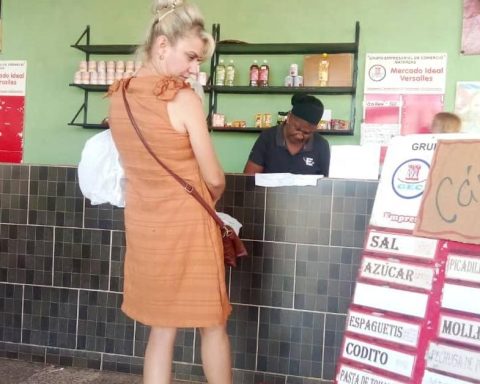
“The embargo does not place any restrictions on food. The embargo does not place any restrictions on medicine. Cuba can trade with any country in the world and does so. You go to any SME market, as small and medium-sized businesses say, and there you can buy whatever you want,” he insisted. However, these goods are beginning to become stranded in ports as there is no fuel to distribute them.
The diplomat insisted that the United States helps the population and cited the food shipments – valued at three and six million dollars – sent by Washington and distributed with Cáritas for those affected by Hurricane Melissa. The Cuban authorities have described as “hypocritical to apply coercive measures “draconian policies that deny basic economic conditions to millions of people and then advertise soup and cans for a few”
Hammer said that, in an eventual democracy, there could be reconstruction plans in Cuba with the help of emigrants and other foreign investors, plans that will cost a lot to finance, since the electrical energy system alone requires about 10,000 million and, as the interviewer reminded him, on the Island money does not spring from the ground like in Venezuela.
Finally, Hammer spoke about his personal situation and acts of repudiation that he has suffered from the ruling party, but also from the warmth of the population that welcomes him and tells him about their problems.