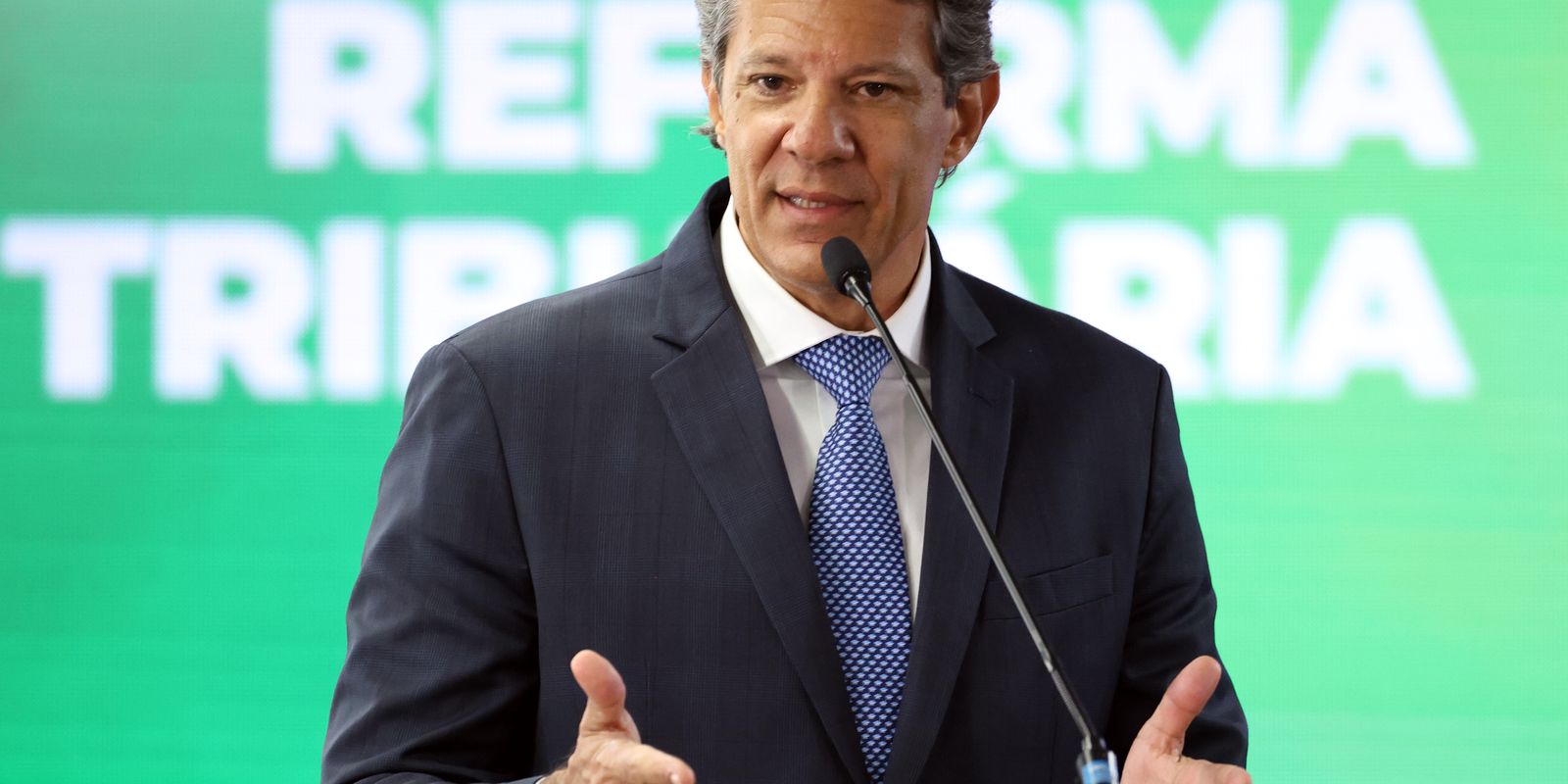
The Minister of Finance, Fernando Haddad, said this Tuesday morning (10), in the capital of São Paulo, that Brazil’s current economic situation already allows the country to start thinking about a new architecture for social expenses, suggesting a fusion of benefits. According to him, it is not yet a government project and has not even been submitted to President Luiz Inácio Lula da Silva, but it is a topic that is already becoming an object of study.
“Looking at the budget, perhaps Brazil is ripe for a more creative solution”, admitted the minister, in an interview during the CEO Conference Brasil 2026, promoted by BTG Pactual.
“Perhaps we are in a situation that allows for a new architecture from the point of view of expenditure, especially of an assistance nature. The discussion about basic income, for example, goes in that direction”, he assessed.
Haddad compared the idea of building a new architecture to the Bolsa Família project, launched by Lula in 2003, and which ended up uniting several other existing programs.
“Wouldn’t it be the case to do what President Lula did in 2003, when he was full of programs and Bolsa Família was born as the big umbrella, becoming a program that gained the world and reputation, including before all experts and international organizations?”, asked the minister.
According to Haddad, the idea of this new project is not to reduce spending, but to modernize and make social programs more effective and sustainable. “This is the type of discussion that is being held among technicians, including those from the Brazilian State, not necessarily linked to the government, and who see this situation [econômica] an opportunity to rethink this issue in a more modern way.”
>> Follow the channel Brazil Agency on WhatsApp
Central and Master Bank
The minister said it was important to “take care of the Central Bank”, because it “can actually contribute a lot, or harm a lot, to governments and the country”.
“I am very attentive to everything the Central Bank says and does”, highlighted Haddad.
According to the minister, when he criticizes the maintenance of high interest rates in the country, it is just a reflection on the subject and not a comment that could affect the reputation of the president of the Central Bank, Gabriel Galípolo.
“When I say that I don’t see much reason for the real interest rate to continue rising as it is, since inflation is falling and the nominal interest rate is stable at 15%, I’m not trying to tarnish the authority’s reputation, but I’m making a reflection. A reflection that anyone can make,” he explained.
Haddad even praised Galípolo’s performance in relation to the allegations involving Banco Master. “The concrete fact is that Banco Master, until 2024, had exponential growth that was stopped as soon as Galípolo took office. It was faced with a very worrying situation in relation to what was happening there”, he stated.
“Worst of all, a fraud worth R$12 billion was discovered. Given this, there wasn’t much that could be done, in light of not only the Master’s own assets but also the assets of the bank that purchased a fraudulent portfolio,” he added.
For the Minister of Finance, investigations by the competent bodies into the case should highlight responsibilities for fraudulent management. “How did this bank reach this size? Someone will answer how this thing reached this level.”
Tax reform
Still during the interview, the minister praised the tax reform, stating that after its approval the country will rank among the best tax systems in the world. According to him, this is the main legacy he will leave to the country through his role as Finance Minister.
“People still don’t have the means to understand the depth of the change that will happen in consumption taxes in Brazil. Today we have one of the worst tax systems in the world certified by the World Bank. The last evaluation placed us in position 184 out of 190 countries evaluated, a shameful position. But I believe that we will jump to one of the best tax systems in the world”, he assesses.
Haddad highlighted that the new assessment must occur because of the level of “digitization and transparency” that were given to the Brazilian tax reform.
“Tax reform will go down in history, and I believe that, from January 1st of next year, this will already be clear to all of us.”