“Clearly (these resources) will be embodied in the Federation Expenditure Budget (PEF), it is a very clear and transparent way to allocate this income for the different dependencies that have to do with the health policy,” explained the head of the Ministry of Finance and Public Credit (SHCP), Édgar Amador Zamora, today at a press conference, after presenting the proposal of economic package 2026 yesterday at night to the Congress of the Union.
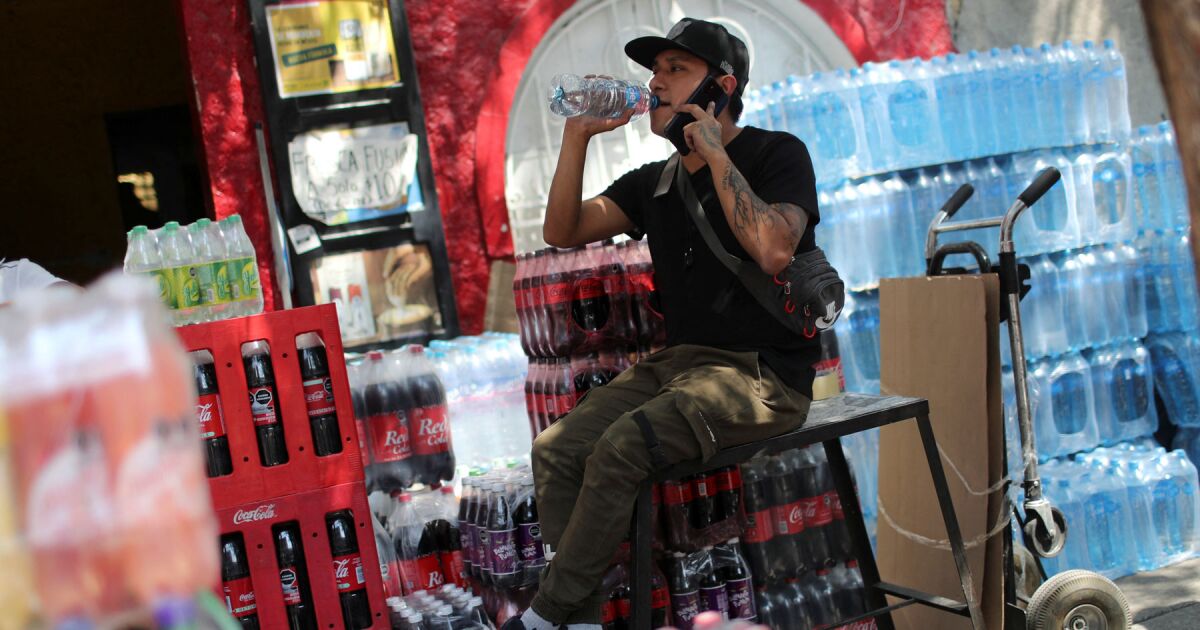
According to the project to modify the Law on Production and Services Tax (IEPS), it is proposed to raise the fee for flavored drinks such as soft drinks and juices, and even sweetened ones, from 1.64 pesos per liter to 3.08 pesos. For tobacco, the initiative lies in raising the rate AD VALEEM from 160% to 200%, and there will be gradual increases to the specific fee until 2030.
These changes will generate, according to estimates of the Tax Administration Service (SAT), 41,000 million extra pesos to the treasury, which are already contemplated in the income and spending part of the package.
“The issue is simple, the amount that is calculated by the collection of this tax is 41,000 million pesos, and we have it fully identified, as part of the budget that has been assigned to the health function, which will go from 881,460 million pesos to pesos to 965,663 million, that is, a nominal increase of 84,203 million, of which 41,000 Tax, ”explained the Undersecretary of Expenditures of the Treasury, Bertha Gómez Castro.
They must be labeled
However, in terms of public finance, so that the money collected is allocated to certain functions, it must be labeled, and this is achieved with modifications or reforms, which are not in the economic package.
“The task of these ‘healthy taxes’ is to discourage their consumption because they are harmful to health, then they have to be labeled for positive health issues, such as medical care or educational issues, which is not a reality, and it is a pending task of the government,” said Jorge Cano, coordinator of the Public Expenditure and Accountability Program of Mexico Evalua.
To label the resources that arrive in IEPS, specific modifications are needed, for example, to the General Health Law with the objective of linking this budget, in addition to the resolution of legal and technical questions about whether or not the resources can be labeled.
To say that these resources are going to health is very general, there should be modifications to stipulate that each weight that is collected by IEPS to soft drinks goes to educational campaigns to avoid the high consumption of these products, or for treatments of cardiovascular, respiratory, cancer and diabetes disease in charge of Found and Consumer power.
“Historically, for sugary drinks, food of high caloric density, it was always thought to combat noncommunicable diseases, however, this is not the case, they have served rather as a collection source rather than as a public health measure,” said Oscar Ocampo, direct economic development of the Mexican Institute for Competitiveness (IMCO).