Judicial auctions begin to decongest the sectionals full of seized vehicles
The police sectional of Cerro Largo and several departments of the country have lived for years a critical situation: the properties are filled with vehicles seized by customs infractions and other irregularities. The problem, which generated serious logistics difficulties and a strong deterioration of the retained vehicle park, begins to have an exit with the instrumentation of judicial auctions ordered by the National Customs Directorate.
The first of these auctions in Melo is set for September 18, at the headquarters located on Colón 569. There will be dozens of cars and trucks that remained mostly deposited in the offices of the 5th section and the 11th section, although the measure will progressively extend to other police stations in the department.
An unsustainable situation
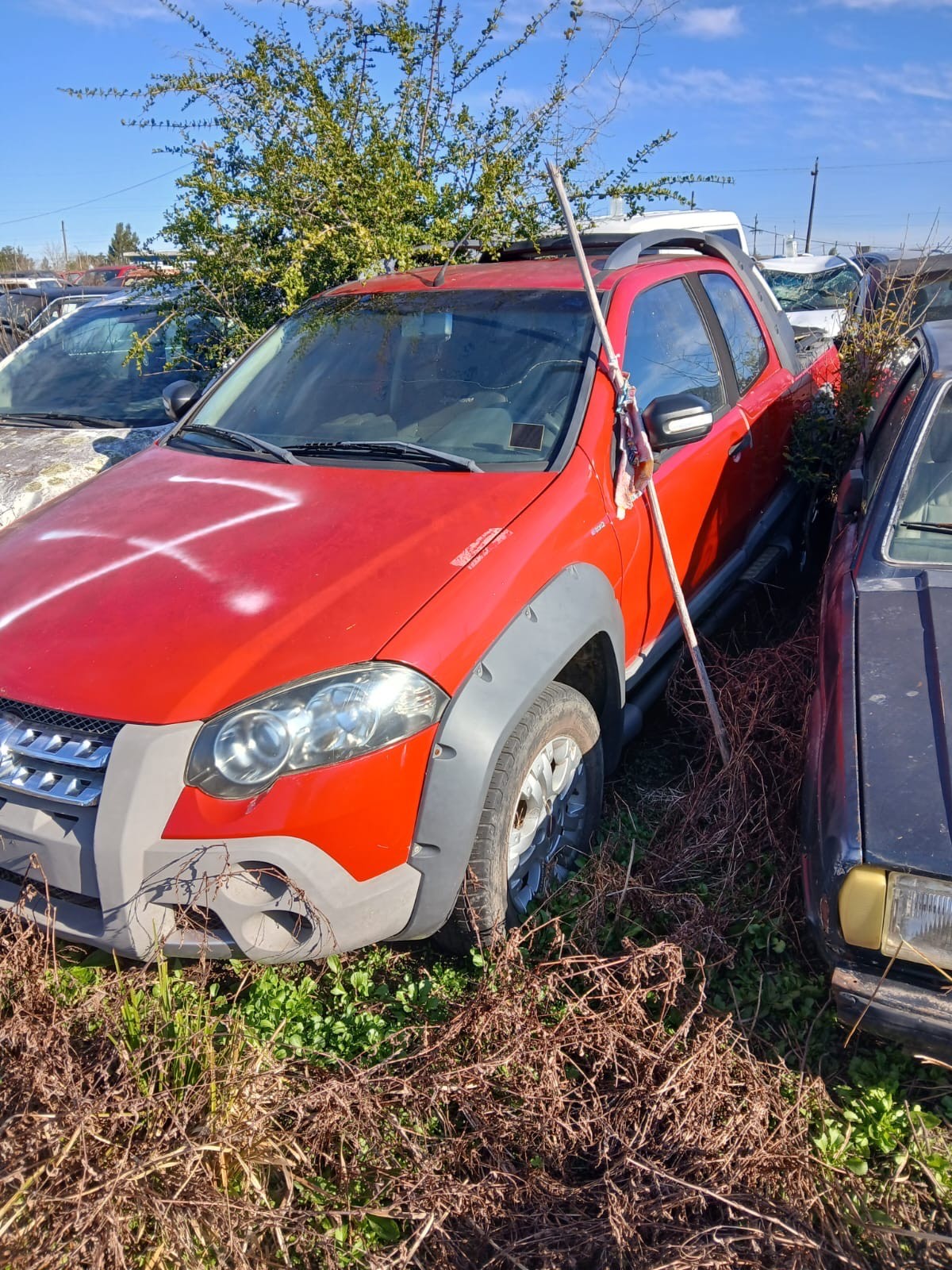
For a long time, the patios of the police stations function as improvised deposits of arrested cars. These are thousands of units, mostly Brazilian origin, seized for lacking customs documentation or breaking the regulations of entry to the country. The accumulation reached a limit point: there was no room to continue keeping vehicles, many of them exposed to the weather and in frank deterioration.
The rental of the public space used for the deposit is not free: the regulations establish that these costs must be paid later by the owner who recovers the vehicle through a judicial process or, in case of sale in auction, by the new acquirer.
Legal framework and role of the Prosecutor’s Office
During the last months, the Cerro Largo Prosecutor’s Office was dedicated to review the legal situation of hundreds of retained cars. The central point was to determine whether the crimes linked to each case had prescribed or not. Once those instances and with firm resolutions, customs enabled the way to judicial auctions.
These procedures are not a novelty, but they are an important step in a saturation moment. The objective is double: to release space in the police sectional and, at the same time, generate income for the State through the auction of goods that would otherwise be lost in abandonment.
Vehicles to circulate and for spare parts
Not all cars that will go to auction have the same characteristics. Some are in a position to be regularized and, if there is no customs impediment, they may be registered in Uruguayan territory, thus legitimately incorporating into the automotive park. Others, on the other hand, only serve as a source of spare parts due to the time of permanence in deposits, climate exposure or accumulated mechanical offenses.
The range of possibilities generates expectation between individuals, mechanics and merchants of the automotive item, which usually attend this type of auctions in search of recoverable units or pieces that would otherwise be very expensive to achieve.
Economic and social impact
Beyond the immediate relief that it supposes for the police and customs to release space in its land, the measure also has an economic impact. Judicial auctions usually attract a large audience, which boosts local trade and generates additional income for the State.
On the border, where the circulation of Brazilian vehicles is part of everyday life, the regularization of this automotive park through the auction can mean a relief for many families that need a means of transport and find at these auctions a more accessible alternative than the traditional market.
At the same time, it is a clear message towards those who incur customs infractions: vehicles will not remain indefinitely in police deposits, but will pass to auction, thus closing a judicial cycle that until now seemed endless.
The first step of a major process
The auction scheduled for September 18 in Melo will only be the beginning of a process that will continue in the coming months. The National Directorate of Customs and the Judiciary already handle listings of retained vehicles in other sectional and region, which will follow the same path.
In parallel, the authorities analyze mechanisms to prevent accumulation from reaching critical levels. One of the possibilities is to shorten the judicial resolution deadlines and more quickly arrange the final destination of the seized cars.
Population expectations
In the streets of Melo and in the nearby towns, the announcement of the auction generated comments and expectations. Many see at these auctions an opportunity to acquire a vehicle at a lower cost, although they are aware that most need repairs. For others, the measure is a way of ordering a situation that had become chaotic, with saturated police properties and vehicles that deteriorated without defined destination.
A long expected exit
The implementation of these judicial auctions represents, in short, a solution long claimed by the police itself, the prosecution and citizenship. The accumulation of seized vehicles not only generated a logistic problem, but also of security and public management.
With the first auction of September 18, a process is opened that will gradually decongest police deposits, give concrete use to retained cars and offer the population a legal route of access to units that, otherwise, would end up in the scrap.