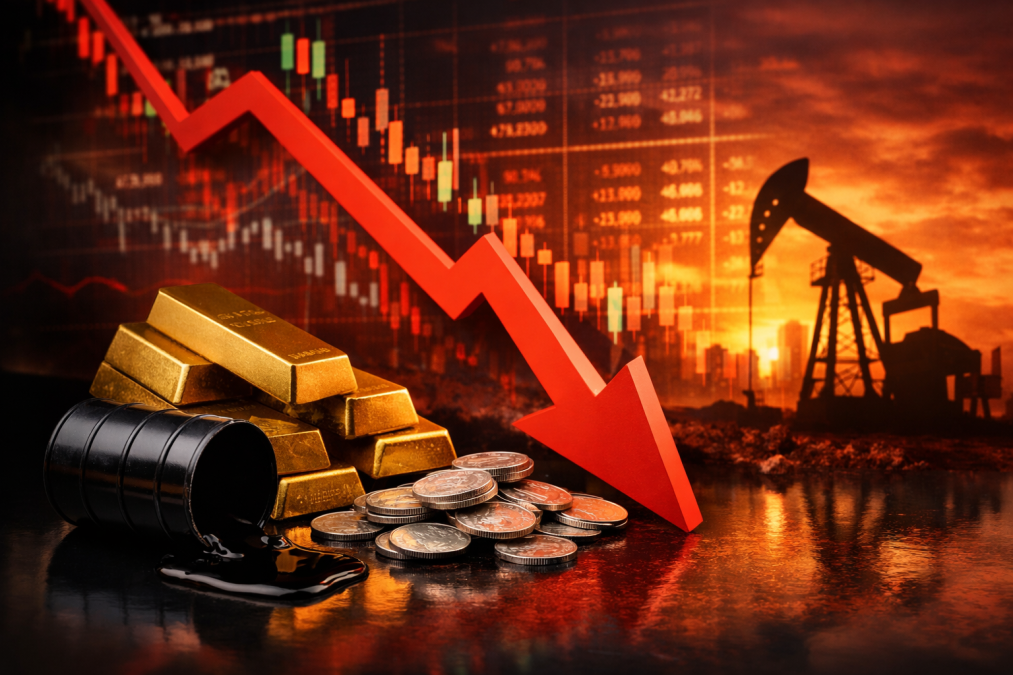
Precious metals markets are experiencing some of the greatest volatility in decades. The price of gold and silver, after a strong rise that led to historical highs, suffered abrupt falls that have tested investors’ conviction about the extent to which betting on these metals contributes to cushioning macroeconomic and geopolitical risks, in their role as safe haven assets, and when they are merely a speculative investment.
The worsening of the fall in metals coincides with a collapse in oil prices.
Over the past year, prices for both metals have soared unusually in commodity markets. Gold, having risen 64.6% in 2025, advanced 25.4% in just the first 28 days of this year, and then collapsed up to 13% in the last two days. Today, so far this year, the metal maintains gains of 8%.
Similarly, silver rose more than 140% last year, taking its price to highs near $72 per ounce, driven by inflation expectations, strong speculative demand and perceptions of scarcity. These led silver to increase its price by 63% until January 28 and then collapse 30% in the last two sessions.
This dynamic has generated value losses estimated at several trillion dollars combined for both metals on a global scale, although estimates vary depending on the source.
What prompted the rally?
Analysts point to several simultaneous causes that explain the rise in prices before the collapse:
1) Speculative demand and refuge narrative
Many investors bought gold and silver as a supposed hedge against geopolitical risks, inflation or dollar weakness, creating a “mania” around these assets.
2) Structural factors in silver
In addition to the investment component, silver has a considerable industrial role (solar panels, electronics), which has increased its physical demand.
3) Perceptions about monetary policy
Expectations of looser monetary policies and possible rate cuts during part of 2025-2026 fueled bets on non-yielding assets such as precious metals.
Important: None of these narratives alone explain the magnitude of the rally. The underlying analysis suggests that there was a mix of changing fundamentals and financial speculation.
What triggered the collapse?
The clearest turning point was the change in expectations about the US Federal Reserve’s monetary policy.
Trump named Kevin Warsh as Jerome Powell’s next successor as Fed chair, but since his term began, he has been constantly pressuring Jerome Powell to exert greater control over setting interest rates.
Trump even dared to call Powell “stupid” for turning a deaf ear to his calls to lower interest rates to counteract the impact on the US economy of his trade, immigration, fiscal and regulatory policies.
Trump said it would be inappropriate to ask Warsh whether he will cut interest rates, saying he wanted to keep his nominee “nice and pure.” However, the president said he is convinced that Warsh is inclined to reduce them.
Thus, the expectation of higher real yields and a stronger dollar tends to make non-yielding assets, such as gold and silver, less attractive.
Additionally, market mechanisms such as the increase in margin requirements by futures exchanges forced sales and deepened price declines.
Market interpretations
Despite the recent drop, analysts agree that the event does not necessarily mean the end of a long-term bull market, but rather a correction after an excessive rally.
Grace Peters, global investment strategist at JPMorgan Private Bank, told CNBC’s Squawk Box Europe program that they consider gold to be the best geopolitical hedge.
He stated that the justification for investors holding gold is the fact that the central banks of emerging markets such as Poland and Brazil do not yet have high positions in the metal as is the case in developed markets.
“I think a 5% to 10% allocation in portfolios is a level we could reasonably get to, and when we look at our own clients’ portfolios, they are not at that level yet in gold,” he added.
According to some strategists, volatility in metals may continue if macroeconomic and future monetary policy uncertainties persist.
Other analysts have argued that gold’s plunge is just a “healthy correction” rather than the start of a deeper decline, and warned that investors should be prepared for a few additional days of volatility.
For their part, Deutsche Bank analysts reiterated their projection that gold will rise to US$6,000 per ounce by the end of the year.
Perspectives
The rise and fall of gold and silver in recent months offers lessons for investors and portfolio managers. There is no single explanatory variable: macro factors, monetary policy expectations and speculation were intertwined.
Extreme volatility can present opportunities, but also significant risks for late entrants to the market.
Recent history underscores the importance of diversification and risk management, beyond simplistic “safe haven” narratives.
Peru needs us informed to make decisions. Subscribe for free to the Perú21 newsletter: THE TOP 5 NEWS YOU SHOULD KNOW TODAY. Click on the next link.
RECOMMENDED VIDEO