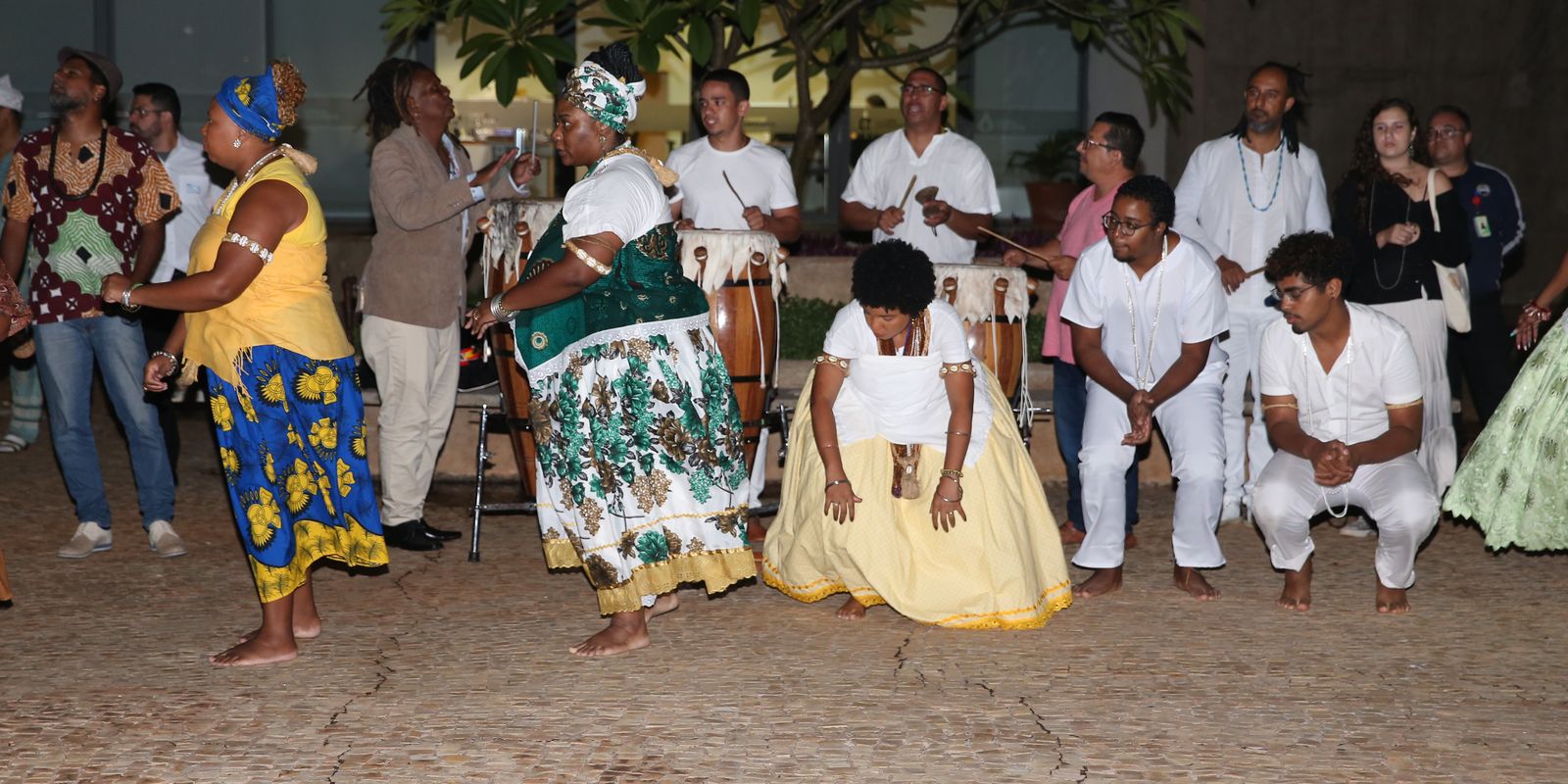
A guide, with more than 100 pages, promises to contribute to the fight against racial discrimination and religious intolerance towards people of African origin in the country, especially in the Federal District. The material is an initiative of the Secretariat for Combating Racism and Discrimination, together with the Black Slavery Truth Commission of the Brasília Bank Workers Union. The publication will be launched at the Teatro dos Bankários, in Brasília, on the evening of this Wednesday (21), National Day to Combat Religious Intolerance, in honor of Iyalorixá Mãe Gilda, from the Axé Abassá de Ogum terreiro, in Bahia, a victim of intolerance for being a practitioner of an African-based religion and will feature the participation of representatives from several terreiros in the region. 
Despite the Federal Constitution guaranteeing the “inviolable right to freedom of conscience and belief, the free exercise of religious worship and the protection of places of worship”, in 2025 the country recorded 4,424 violations of freedom of belief or worship.
This number shows a growth in religious intolerance and represents a 14% increase compared to the 3,853 cases registered in 2024, according to data from the Data Panel of the National Human Rights Ombudsman of the Ministry of Human Rights and Citizenship (MDHC).
Among the points highlighted in the publication is the debate on the rights guaranteed in the country’s legal system. In addition to freedom of belief, the Federal Constitution also guarantees, among other rights, the full exercise of cultural rights and access to sources of national culture, with the State being responsible for supporting and encouraging the appreciation and dissemination of cultural manifestations, with emphasis on manifestations of popular, indigenous and Afro-Brazilian cultures, as well as other groups participating in the national civilizing process.
The publication, titled Guide to the Rights of Peoples of African and Afro-Brazilian Originalso highlights the right to recognize the civil effects of religious marriage.
The Education Guidelines and Bases Law provides for the mandatory subject of Afro-Brazilian History and Culture in the official curriculum of the education network.
Another highlight is the right to memory and preservation of material and immaterial assets, which include forms of expression; the ways of creating, doing and living; works, objects, documents, buildings and other spaces intended for artistic-cultural manifestations; urban complexes and sites of historical, scenic, artistic, archaeological, paleontological, ecological and scientific value.
Union
The president of the Brasília Bank Workers’ Union, Eduardo Araújo, highlights that combating religious intolerance is still one of Brazil’s greatest challenges. In Araújo’s assessment, the union’s initiative helps combat this problem through access to knowledge and the consequent exercise of rights, through information.
“We have January 21st, the National Day to Combat Religious Intolerance, established in 2007, and yet, year after year, we still have violations of this right. That’s why, we decided, in the Black Slavery Truth Commission here at the Bank Workers’ Union, to publish the guide so that we can present more rights to this population made vulnerable by the process of racism and so that they can defend themselves adequately”, Araújo told Brazil Agency.
The banker also remembers that many terreiros are harmed because they do not have access to the necessary information on how they should act in certain situations and demand their rights.
For the union, access to information is essential for strengthening practitioners of African and Afro-Brazilian religions. One of these points is to recognize the importance of the ancestral legacy of this population in society, “with the necessary knowledge so that they can defend their rights and act assertively in different situations”.
“By making this guide available to the entire Brazilian society and, in particular, to communities of African and Afro-Brazilian origin, the union aims to enable these communities to take ownership of the content and empower themselves in defending their rights, constitutionally guaranteed and in a democratic way”, highlights the union.
Reports
Religious intolerance is a crime, equivalent to the crime of racism, being non-bailable and imprescriptible, with a prison sentence of 1 to 3 years and a fine. If the crime is committed through the media or publication of any nature, the penalty will be imprisonment for 2 to 5 years and a fine.
Dial 100, the Human Rights Hotline, is an anonymous channel that receives reports of this type of crime and human rights violations in general. The service has service in Brazilian Sign Language (Libras).
It is also possible to report via the WhatsApp messaging app to receive assistance or report it by sending a message to the number (61) 99611-0100. Using the Telegram app, simply type RightsHumanosBrasil in the app search.
Anyone who wants to report an act of intolerance or racism can also look for a regular or specialized police station, such as the Police Station for Racial Crimes and Intolerance Offenses (Decradi). Prejudiced, racist, xenophobic messages that violate human rights can be reported on the website www.humanizaredes.gov.br, of the National Human Rights Ombudsman (ONDH), which acts as a communication channel between society and the Ministry of Human Rights and Citizenship.