During the beginning of 2025, the economies of the south-southeast of the country registered opposite realities, some resinting the current situation and others, the term of the incentive of federal works that catapulted the construction industry.
On the one hand, the states that registered the greatest annual increase in their economic activity were Oaxaca and Guerrero, while the most pronounced falls were observed in Campeche, Tabasco and Quintana Roo.
Campeche’s economy faced a contraction of 16.8% year -on -year during the first quarter of 2025, according to unstacted figures of the quarterly indicator of state economic activity (ITAEE).
In magnitude of falling tabasco followed with 12.3% and Quintana Roo with 9.2%, the National Institute of Statistics and Geography (INEGI) reported.
For Campeche, the decrease in its Itaee meant four quarters with negative variations, behavior closely linked to the dynamics of the oil industry and the production of Petróleos Mexicanos (Pemex), told El Economista, Héctor Magaña, economic and financial analyst.
“Unlike Tabasco and Quintana Roo that showed destabilization after the temporal impulse of federal works such as the Mayan train and two mouths, what is observed in Campeche is a structural contraction linked to the oil cycle,” he deepened.
Campeche’s economy is closely linked to hydrocarbon extraction, “when Pemex adjusts its production levels or faces investment limitations, the effects are quickly reflected in the ITAEE,” he explained.
Meanwhile, Tabasco registered seven trimesters of contraction in its economy, a situation that reflects that it is no longer facing a “passenger adjustment, but before a deeper stagnation”. With the construction of the two mouth refinery the entity had extraordinary economic growth rates; As the construction entered its final phase, the activity slowed continuously.
“This behavior reveals the limitations of a model highly dependent on public works, once that engine has been exhausted, Tabasco faces difficulties in sustaining its dynamism, especially because the private sector does not yet consolidate investments capable of compensating the loss of inertia.
For its part, Quintana Roo, with three consecutive quarters of falls, shows signals of deceleration in tourism, attributed to a standardization in the arrival of visitors and a high comparison base compared to recent years.
In addition, factors such as the increase in tourism services and some saturation in the hotel infrastructure limit the expansion of the sector, added the specialist.
Public works as catalyst
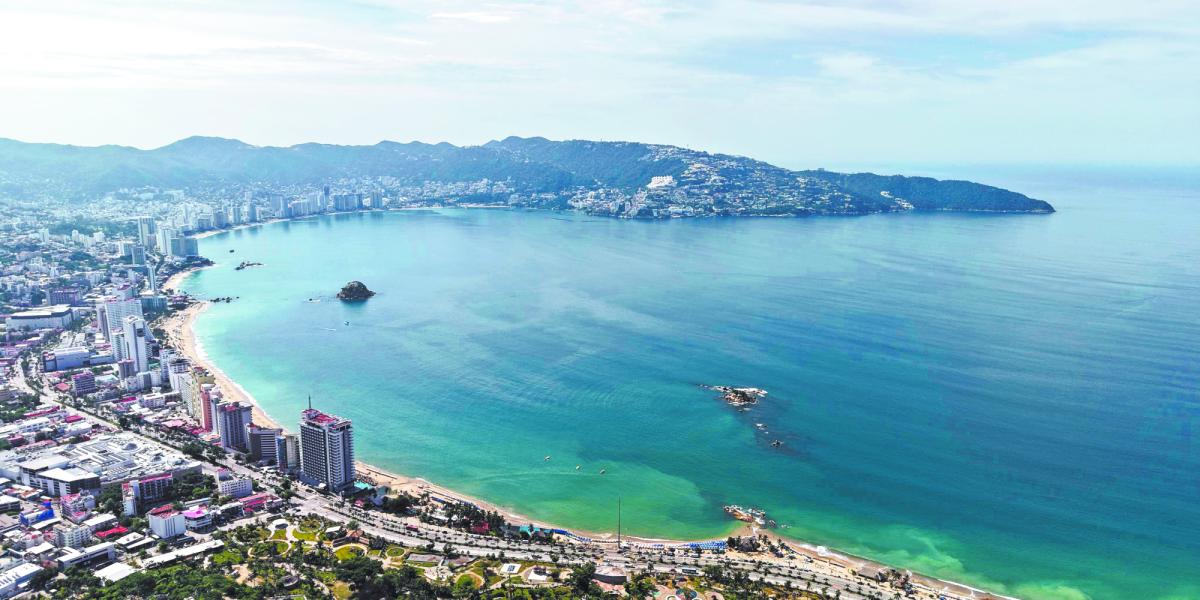
In the upper part, Guerrero was placed as the Federative Entity of Mexico with the greatest growth of the ITAEE during the first quarter of 2025, with a rate of 8.0% per year.
“This is related to the advertisements and beginnings of investment in public works for the renewal of the port of Acapulco and the reconstruction of infrastructure after the damage caused by Hurricane Otis at the end of 2023,” confirmed Héctor Magaña.
The arrival of federal resources energized construction and generates greater demand for inputs, transport and services, which positively impacts the secondary and tertiary sectors, he explained.
In second place was Oaxaca with a growth of 5.7% in its economic activity, while Nayarit completed the podium with a 4.7% rise; Both entities received an impulse in the secondary sector by housing airport extension works in Puerto Escondido and Tepic, respectively, as well as a higher road connectivity with their beach destinations.
Public works, said the analyst, has a positive effect by promoting growth in the short term, but the sustainability of this dynamism will depend on such investments for transforming infrastructure that enhance the economic activities of the entities, they translate into real productive diversification and more solid local value chains.