Etcheverry proposes expanding the spectrum of fines for overtaking and red crossings
The Ministry of Transport sent a report to Parliament where it indicated that 11% of the serious and fatal accidents recorded on routes occurred in 79 intersections with traffic lights analyzed in 2024.
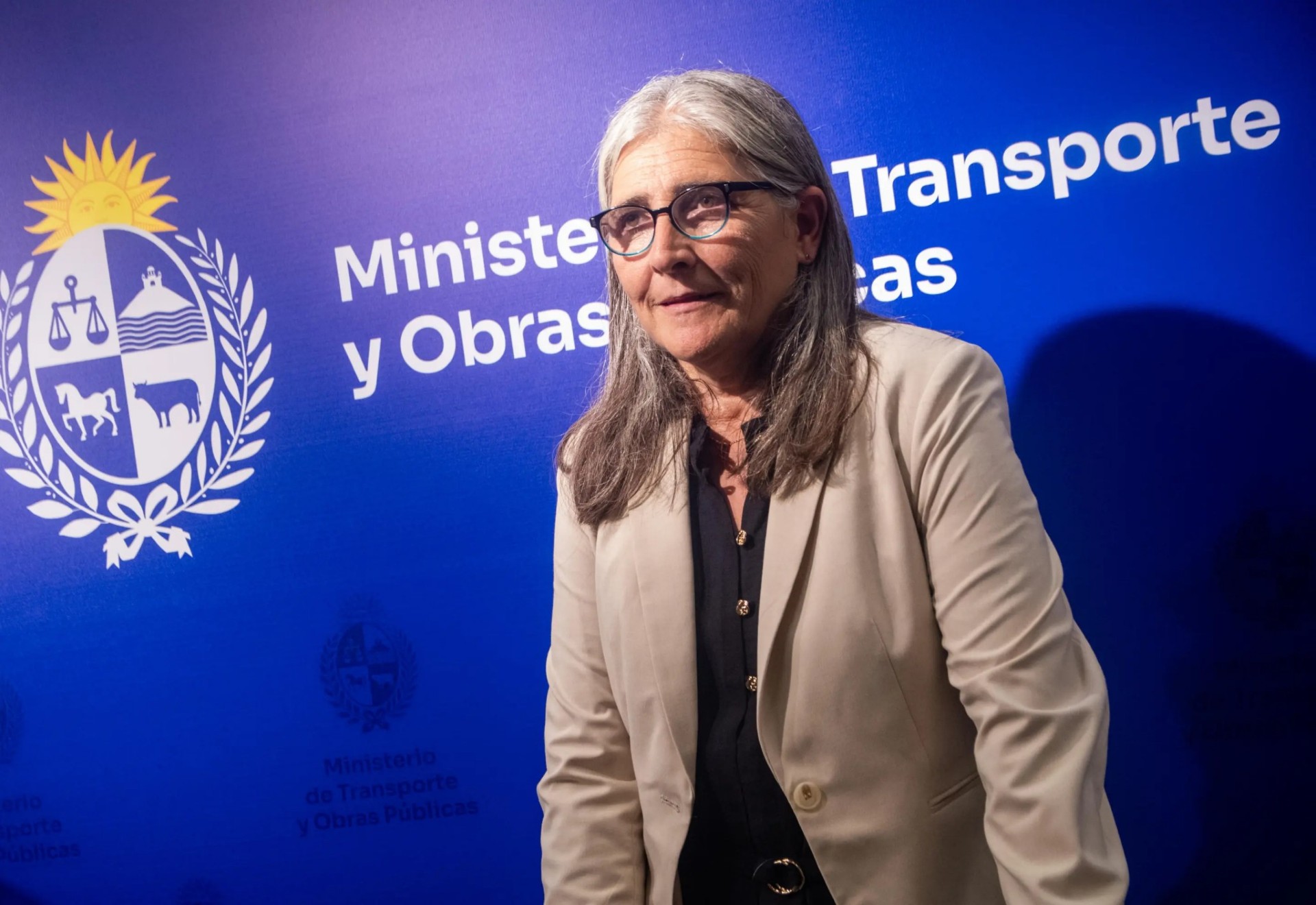
The Minister of Transport, Lucía Etcheverry, sent a report to Parliament where she indicated that “it is necessary to expand” the inspection spectrum incorporating other risk behaviors relevant to road safety, such as overtaking in prohibited areas and crossing red lights.
The document, which was sent on September 26 to the president of the Transportation Commission of Deputies, Mariano Tucci, and then distributed among the legislators of said advisor, indicates that these traffic violations are among the most severe because frontal and frontal-lateral accidents result in a high probability of deaths or serious injuries, especially of vulnerable users.
In 2024, according to the information provided by the Ministry of the Interior, frontal and front-side accidents on national routes constituted 31% of the total accidents with victims and 37% of the serious and fatal accidents.
According to Etcheverry, of 79 intersections with traffic lights analyzed in 2024, 11% of the serious and fatal accidents recorded throughout the national road network occurred.
At the international level, said the leader, the Insurance Institute for Highway Safety (IIHS) stated that the implementation of red light enforcement cameras is associated with a 21% reduction in fatal accidents caused by drivers crossing in violation and a 14% reduction in the total fatal accidents that occurred at traffic signalized intersections.
“There is evidence that the installation of this type of device reduced front-to-side accidents at intersections by 32%, and those with injuries by 68%,” Etcheverry pointed out.
The MTOP plan: two railway works linked to Ancap, more control on routes and improvement of the metropolitan area
In another section of the report, Etcheverry said that the National Road Directorate of the Ministry of Transportation will electronically monitor both violations indicated (overtaking and crossings with red lights) on routes.
He recalled that the Ministry of the Interior may supervise these same behaviors of drivers, but at different points of the National Road Network.
“Therefore, by coordinating efforts with the Ministry of the Interior, for the purposes of inspection at different points, there will be no violation of the non bis in idem principle (fining twice for the same act).” Etcheverry said.
Likewise, the implementation of the inspection of both types of traffic violations must be carried out in a coordinated manner with the Ministry of the Interior—Highway Police, in order to act in the most efficient way possible, stated the leader.
He immediately added that in the MTOP the inspection of infractions is carried out through the Center for Intelligent Transit Systems (CSIT), which has the location and technological infrastructure, as well as trained personnel that would allow the integration and adaptation of new inspection technologies.
Minister Etcheverry responded in Parliament to questions asked by deputies Juan José Olaizola (National Party), Conrado Rodríguez (Colorado Party), Pablo Abdala (National Party) and Gabriel Gurméndez (Colorado Party), in that order.
Olaizola asked the Ministry of Transportation about how the $57 million item will be distributed among the different metropolitan suburban transport operators, and what criteria will be applied to calculate the subsidy and guarantee that it effectively improves the service and covers operational deficits.
In the report, the minister responded that the distribution criterion between the companies will weight the sale of tickets and the participation of each one in the market.
“The level of indebtedness of the sector, its liquidity, the cash flow to meet salary and social security contribution obligations will be monitored,” he pointed out.
He immediately added: «This subsidy seeks to level the existing gap between the costs and income of the system, to restore economic balances that prevent the definancing of the sector. “Beyond the conversion of units to electric and change of onboard technology, we have the recently issued Financing Fund III.”
Meanwhile, Gurméndez asked the minister about the transportation agency that generates the creation of a new non-state public person.
«We do not fully understand if this agency will not generate more bureaucracy and more difficulties. “We understand that this could perfectly be handled by the National Directorate of Transportation, of the Ministry of Transportation and Public Works, without creating a new entity,” pointed out the Colorado deputy.
Etcheverry responded that, starting in 1959, in Paris, the first metropolitan transportation agency was created, and from then on, until the year 2000, there were already thirty throughout Europe.
«The latest are those in London, those in Copenhagen and those in Valencia. In all, in general, the results are positive. “We are not here to copy international experience,” expressed the head of Transportation.
He added that the creation of the agency with adequate legal powers is essential to develop projects on a metropolitan scale, the basis for the transformation of the system.
Etcheverry explained that for these projects to be successful and spread their benefits throughout the territory, the integration between the trunk and local lines of all the subsystems that are connected is key in order to ensure passenger accessibility and reasonable travel times.
He pointed out that dozens of urban and suburban lines must be restructured and “This can only be done” from a single entity that ensures the integrity of the service and the economic balance of the operating companies.”