They have been without electricity or drinking water for more than 14 days, with a shortage of food and medicine, and report that the opening of the Cauto el Paso dam worsened the damage after the hurricane.
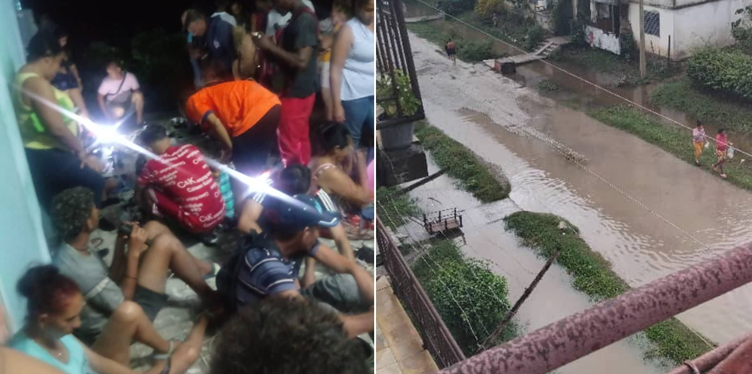
MADRID, Spain.- The families of the Grito de Yara town, in the Río Cauto municipality, Granma province, face an extremely precarious situation after the passage of Hurricane Melissa. According to one complaint published on social networks by activist José Díaz Silva, president of the Opposition Movement for a New Republic (MONR), residents have been without electricity service or drinking water supply for more than 14 days.
The publication points out that the neighbors do not have the means to cook or light inside their homes. Alternatively, families are forced to go to the local polyclinic to charge their mobile phones and get a few minutes of lighting, due to the lack of basic resources at home.
Silva affirms that what was distributed through state warehouses has been limited to “a single pound of rice per person,” and denounces the lack of response from the authorities to the crisis.
The shortage of food and medicine especially affects the most vulnerable groups. According to the testimony collected in the publication, a mother stated: “I have my child sick and I have no medicine. There is nothing in the polyclinic either. Yesterday, Sunday, a man died at 5 in the morning and at 3 in the afternoon his body was still there because there was no car to take him away.”
The lack of domestic fuel aggravates the situation, since “many families no longer have firewood or charcoal for cooking.”
Residents also claim that most of the damage was not directly due to the hurricane, but rather to the opening of the gates of the Cauto el Paso dam, which would have caused a flood that destroyed homes, crops and belongings in the town.
“Today, Grito de Yara cries out for help,” concludes the complaint, which states that the community feels “abandoned, without response, without resources and without hope that the authorities will act.”
As reported by the EFE agency this Monday, the UN System in Cuba raised “more than 90,000” homes damaged (partially or completely) and “about 100,000” hectares of crops affected by the Hurricane Melissaan increase of around 15% and 22%, respectively, compared to the latest data from the Cuban Government.
Preliminary official reports show damage to “about 600 state medical infrastructures” and “more than 2,000 educational centers”, as well as bridges, roads, railways, dams, telephone antennas and, in particular, the National Electric System (SEN).
To respond to the emergency, the United Nations system presented an initial Action Plan for 74.2 million dollars, intended to cover basic needs of around one million “severely affected” people within a universe of 3.5 million victims.
Cuba reaches this emergency after more than five years of crisis with shortages of food, medicine and fuel, high inflation and long daily blackouts, which conditions the speed of recovery.