Havana/This Friday, Havana once again displayed its political liturgy in response to the death of the 32 Cubans fallen in Caracas during the capture of Nicolás Maduro. In the Anti-imperialist Tribune, in front of the Malecón, the tribute act functioned as a platform for ideological reaffirmation and political warning, at a time of evident internal fragility of the regime.
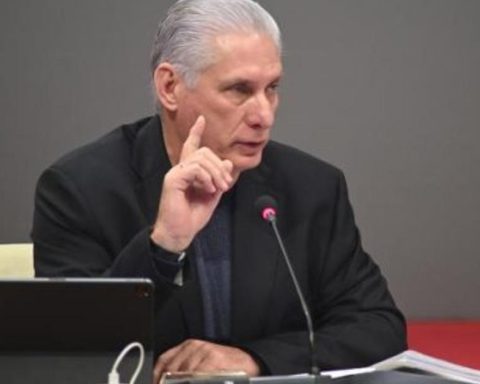
From the stage, the first secretary of the Communist Party, Miguel Díaz-Canel, insisted that there will be no negotiation with the United States “based on coercion.” Cuba, he said, is willing to dialogue, but only “on equal terms and on the basis of mutual respect.” The speech, collected in fragments by the official press, was supported by rhetoric of epic resistance, threats of external aggression and closed calls for unity.
According to the president, the January 3 operation opened “a new era of barbarism, dispossession and neo-fascism” and hit the Cuban Executive hard, which experienced “very bitter hours” of “indignation and impotence.” Venezuela, Havana’s main political ally and commercial partner for more than two decades, once again occupied the symbolic center of the official narrative, now under the figure of sacrifice.
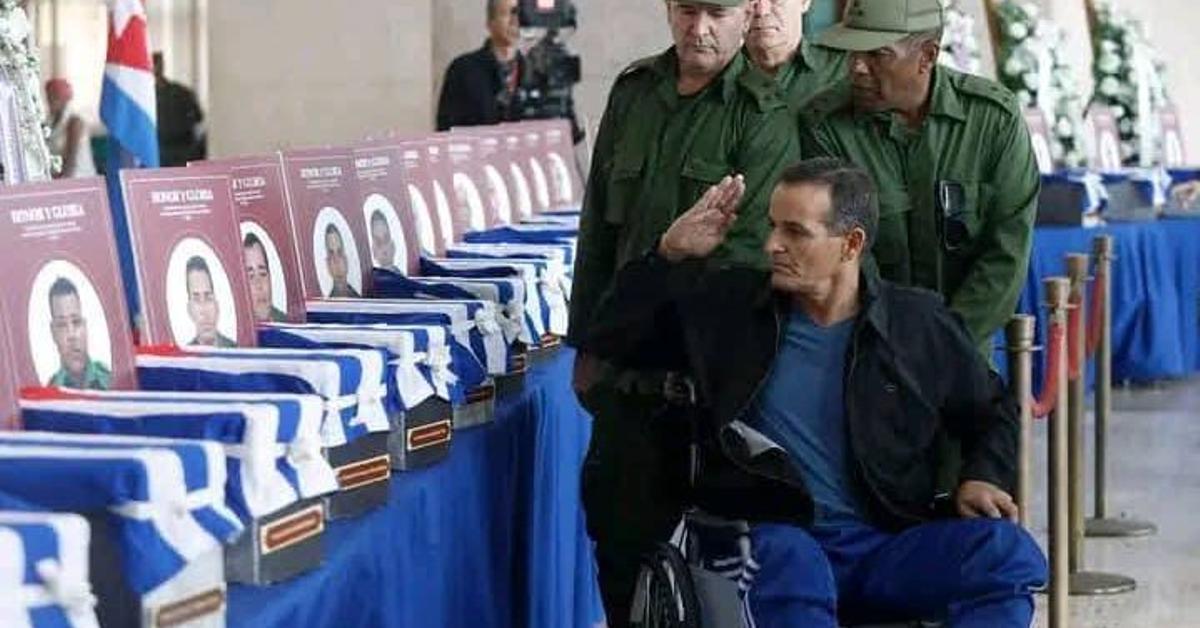
However, the martial tone of the event abruptly contrasted with one of the testimonies most cited by the state press itself. This is Colonel Pedro Yadín Domínguez, one of the survivors. His story, published by Granma and broadcast in a television interview, introduces fissures that are difficult to reconcile with the heroic version that the regime tries to impose.
The statement is uncomfortable for a story that insists that the 32 Cubans “got into a shooting fight” and died fighting
“We were sleeping, resting in the early morning,” the colonel declared before the cameras. “We barely had weapons,” he added, explaining that the group was supporting the security of the Venezuelan president and not in combat readiness. The attack, he assured, was “disproportionate,” with planes, bombs, drones and Apache helicopters, against a group that was not on alert or armed to resist.
The statement is uncomfortable for a story that insists that the 32 Cubans “got into a shooting fight” and died fighting, as they wrote in the first statement about his death, through which national mourning was declared. The image of heroic combat is diluted when the speaker is a senior official from the Ministry of the Revolutionary Armed Forces itself, sitting in a wheelchair, describing an early morning of rest interrupted by a bombing.
While Díaz-Canel evoked the Sierra Maestra, Africa and even Caracas as scenes of the same historical feat, the colonel’s testimony painted another picture, that of an opaque mission, without sufficient weapons, in foreign territory, and an attack that surprised the troops while they were sleeping.
The propaganda machine has tried to compensate for this void with overacting. At the Round Table, the official commentator Oliver Zamora raised the tone to the point of boasting. He assured that the United States “had to kill” the 32 Cubans with a “tremendous” display of brute force, and that it even took them hours to achieve it. For Zamora, the event demonstrated the impossibility of Washington to “interpret” a country like Cuba, hardened by decades of confrontation.
The profusion of images of the acts and ceremonies has also served to expose numerous repressors.
While the propagandist speaks of fierce resistance and enemies incapable of subduing the Cubans, the surviving colonel insists that they were practically defenseless and without adequate weapons. One sells epic; the other describes vulnerability.
The crack also moved to the digital space. On YouTube, under the interview with the colonel, a user identified as @Jcontre3000 wrote: “We saw that coward in the videos of the Venezuelan soldiers crying and fleeing, that’s why he is alive. A coward dies a thousand times and this is a coward.” The comment, far from being anecdotal, exposes the level of polarization and mistrust that surrounds even official testimonies.
The profusion of images of the events and ceremonies has also served to expose numerous repressors. Several Cuban activists have identified among the crowd State Security agents responsible for interrogations, harassment and episodes of direct repression. The data is relevant, because these are individuals who rarely show their faces on social networks or in official media.
Among those who have identified these officials is the activist Laura Vargaswho has documented and denounced episodes of surveillance and unauthorized access to their accounts as part of the digital repression exercised against critical voices. The artist has also done it Hamlet Lavastidaknown for his cultural and political opposition to the regime and for having been arrested and punished as a prisoner of conscience as a result of his works and public actions. In addition, former power figures who have fallen into disgrace have been recognized in the images, such as former chancellor Felipe Pérez Roque.
At the event, Díaz-Canel again asked to “close ranks” and warned that, if attacked, Cuba would defend itself “fiercely.” “They would have to kidnap millions or disappear this archipelago from the map,” he said. But beyond the slogans, the tribute revealed a tension that the regime cannot resolve: the distance between the rhetoric of permanent war and the reality of silent, poorly explained and deadly missions, whose details emerge only when a survivor goes off script.