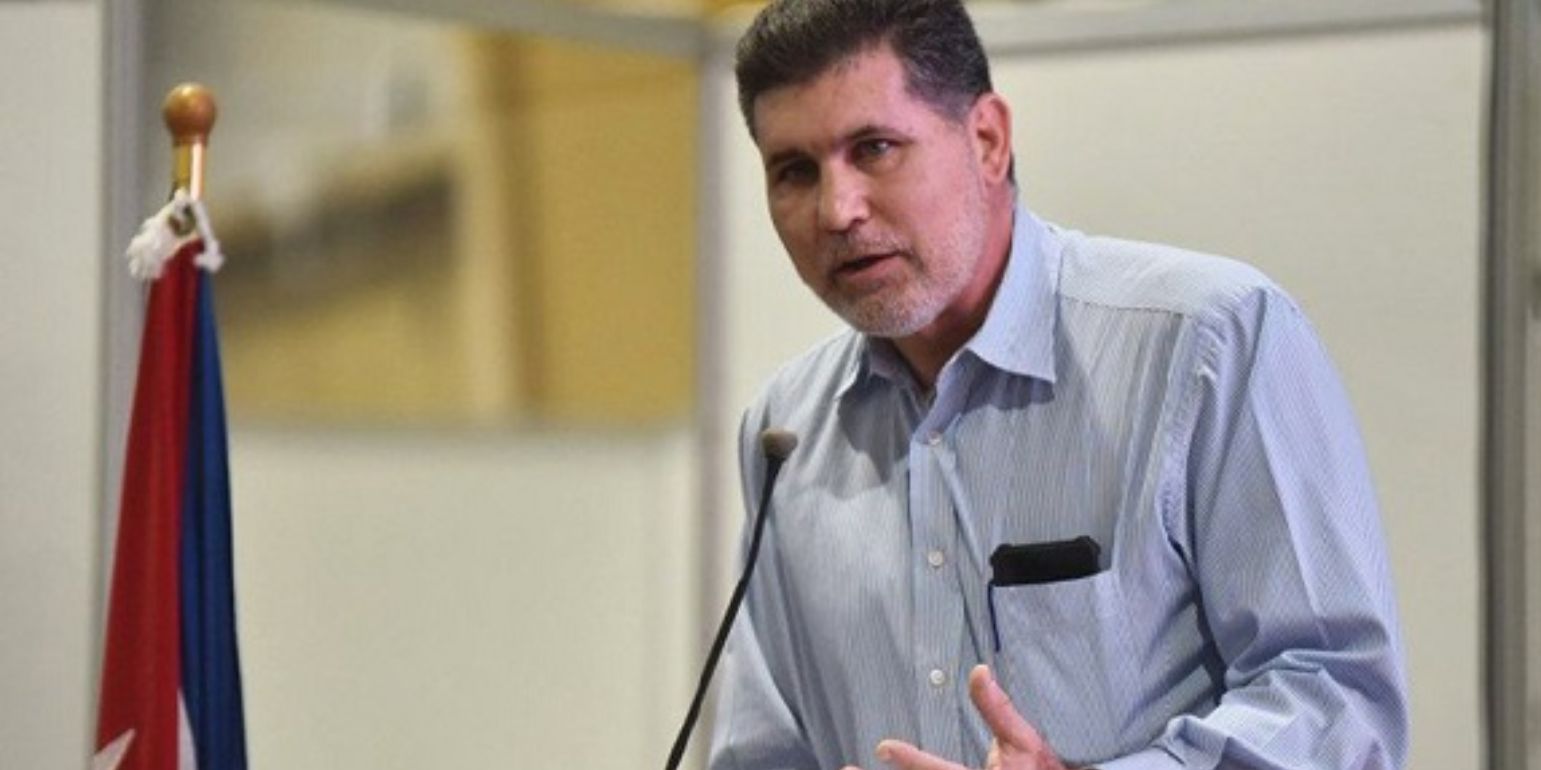
Esteban Lazo confirmed his entry as part of the election of vacant positions, along with the resignation of deputies Homero Acosta and Ulises Guilarte
MIAMI.- The National Assembly held an unusual session this Thursday – abbreviated and by videoconference – in which it announced a key move within the Cuban power: the incorporation as deputy of Óscar Pérez-Oliva Fragagrandnephew of Fidel and Raúl Castro. With this designation, the current deputy prime minister meets the only requirement he needed and is qualified to occupy the Presidency of the Republic.
Esteban Lazo, president of Parliament, confirmed his entry as part of the election of vacant seats, along with the resignation of deputies Homero Acosta and Ulises Guilarte. With the new members, the legislative body reaches 464 seats.
During the day, the change in the judicial leadership was also reported. Miguel Díaz-Canel announced the “release” of Rubén Remigio Ferro as president of the Supreme People’s Court – the court in charge of recently trying former minister Alejandro Gil for espionage and corruption.
A meteoric rise
Pérez-Oliva Fraga’s advance is not surprising within the power structure. On October 18, he was promoted to deputy prime minister, also accumulating the position of minister of Foreign Trade and Foreign Investment (MINCEX), a responsibility he assumed after the death of Ricardo Cabrisas in May 2024.
A 54-year-old electronic engineer, he has climbed positions linked to foreign investment. In January 2024, he was appointed vice minister of MINCEX and previously held management positions in Maquimport and the Mariel Special Development Zone.
Grandson of a sister of Fidel and Raúl Castro, his career was also linked to GAESA. At the head of Maquimport, one of the key companies of the Foreign Trade Business Group, he participated in strategic agreements such as the one signed with John Deere Financial in 2017 for the sale of agricultural machinery during the thaw with the United States.
The death of Luis Alberto Rodríguez López-Calleja, the man who controlled GAESA, changed the balance of forces within the military-business conglomerate and, with it, the fate of Fidel Castro’s great-nephew. His rise accelerated since then, despite having no military history or visible political career; factors that, until 2022, made it unthinkable to imagine him in the Government’s line of succession.
Today, with his entry into Parliament and his ministerial relevance, Pérez-Oliva Fraga is placed in a privileged position within the regime at a time of deep crisis and internal readjustment.