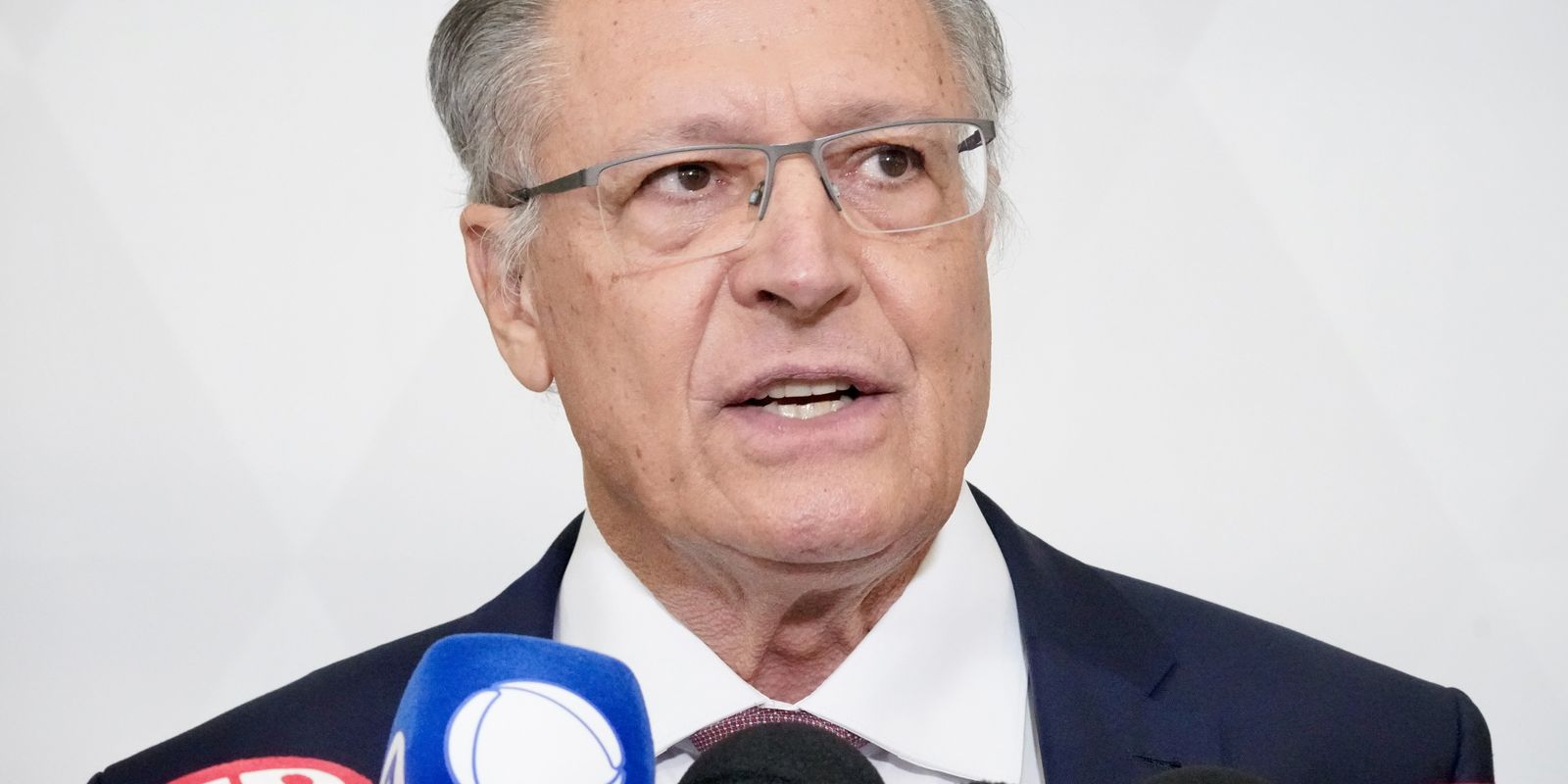
The vice-president and minister of Development, Industry, Commerce and Services, Geraldo Alckmin, announced that the federal government intends to increase the budget allocated to the Special Chemical Industry Regime (Reiq) for this year from R$1 billion to R$3 billion.
According to Alckmin, the measure will be formalized next week, through a Provisional Measure (MP) and a complementary bill that the Palácio do Planalto will forward to the National Congress, as a matter of urgency.
“Next week, the president [Luiz Inácio Lula da Silva] must do two important acts to strengthen the chemical industry and guarantee employment”, announced Alckmin when meeting with representatives of the sector, trade unionists and politicians, this Tuesday afternoon (3), in Brasília.
“With this, the regime, which already has R$ 1 billion foreseen in this year’s budget, will increase to R$ 3 billion”, added Alckmin, referring to the tax incentive program created to reduce production costs in the chemical industry through the reduction of federal tax rates such as Cofins (Contribution for the Financing of Social Security) and PIS/Pasep (Social Integration Program and the Public Servant Asset Formation Program).
“[O fortalecimento do Reiq] It is important, as it encourages the maintenance of jobs, growth and competitiveness of the chemical industry”, highlighted the minister, ensuring that the objective of the measure is to stimulate investments and boost national competitiveness in the sector, considered strategic.
>> Follow the channel Brazil Agency on WhatsApp
The expansion of tax incentives is a first response to the pleas of industrial, political and union leaders from industrial regions, such as Cubatão, in Baixada Santista, in São Paulo. According to Brazil Agency reportedin mid-January, the mayor of Cubatão, César Nascimento (PSD), made public that he would ask the federal government for help to try to contain the emptying of what was once one of the most important industrial hubs in the country.
The request was made after two factories that had operated in the city for decades closed part of their local operations.
For the Brazilian Association of the Chemical Industry (Abiquim), the loss of protagonism of an industrial hub of the importance of Cubatão “sparked a warning about the risk of permanent disruption of the sector’s industrial base”.
According to the entity, the federal commitment to reinforce the chemical industry regime occurs in the midst of a critical scenario for the sector, which operates with an average idle capacity of more than 35%; faces the accelerated growth of imports, the loss of share in the domestic market and the pressure resulting from production costs (energy, raw materials, etc.), considered high when compared to those of competitors.
Present at this Tuesday’s meeting, the mayor of Cubatão reported to the ministerial team the effects of closing factories on municipal public coffers, such as the loss of revenue and the closure of formal and qualified job vacancies. Later, on social media, the mayor celebrated the promise to strengthen the Reiq, classifying it as a “victory”.
“In this way, we will guarantee that there will be no more layoffs in the future, because there will be investments,” said the mayor.
Emergency measures
In Abiquim’s assessment, emergency and transitional measures represent a “relevant step in the attempt to avoid a structural loss for the national chemical industry”, but will require other actions, such as the effective implementation of the Special Sustainability Program for the Chemical Industry (Presiq), sanctioned at the end of last year.
“Presiq will guarantee incentives of R$3 billion per year for the sector, for five years, starting next year, but we had a ‘gap’ in this year 2026”, stated the executive president of Abiquim, André Passos Cordeiro, highlighting that the economic effects of Presiq would only be felt from 2027 onwards.
“But the vice-president was very understanding of the sector’s difficulties and impacts on the country and committed to the same R$3 billion in incentives for the chemical industry later this year”, he concluded, summarizing the importance of the tax relief that the federal contribution to Reiq will give to industries.
Defense
Also during Tuesday’s meeting, Alckmin highlighted that the federal government has been intensifying trade defense actions. According to him, there are currently 17 investigation processes for dumping ongoing.
The calling dumping This is when a foreign company and a country export their products at prices lower than the cost of production, with the aim of undercutting local competitors. The actions antidumping seek to prevent the entry of these foreign products into national territory, in order to protect local manufacturers.
“We are working for trade defense. We cannot accept dumping”, claimed Alckmin, ensuring that the protection measures follow the standards of the World Trade Organization (WTO) and are part of a strategy to guarantee the structural growth of the industrial sector in the country.