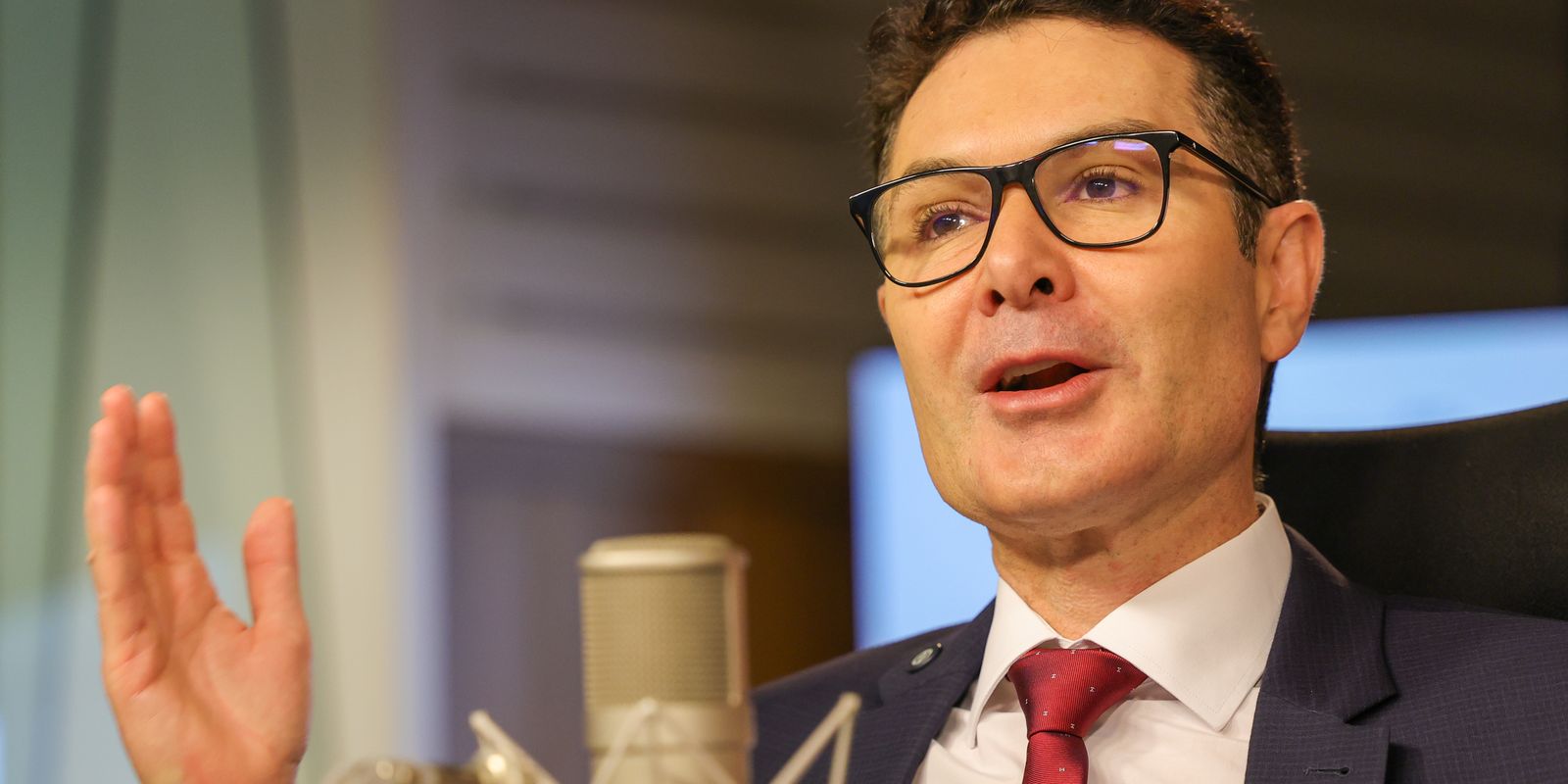
The Minister of Cities, Jader Filho, confirmed this Tuesday (24) that the federal government continues to study the feasibility of implementing the so-called Zero Fare in public transport throughout Brazil.
According to the minister, the measure could be a response to the crisis faced by most of the country’s public transport systems, based on a model according to which users and Public Authorities, together, pay bus companies a fare capable of covering operational costs and the expected profit margin.
“We have already debated and discussed different solutions to this topic, so that we can have a national discussion and reach an understanding and, with that, improve public transport in our cities”, said Filho.
He participated this morning in the program Good morning, Minister – a co-production between the Secretariat of Social Communication (Secom) of the Presidency of the Republic and Canal Gov, broadcast on the channels of Brazilian Communication Company (EBC).
According to the minister, as determined by President Luiz Inácio Lula da Silva, the Ministry of Finance is preparing an economic feasibility study in order to identify possibilities for changes in the public transport system, which, locally and regionally, are the responsibility of city halls and state governments.
“And if we are going [avaliar a implementação] zero tariff, we have to know where the resources will come from [financeiros públicos] for that; how big is this expense”, added Filho, admitting that any possible proposal will have to be discussed with municipalities and states.
“What is certain is that the model that is in place, in which the citizen has to pay for the entire fare [nos casos em que o sistema não recebe subsídio público]is bankrupt. This model no longer works. And not just in Brazil, in the world”, assured the minister, insisting on the need to wait for the study carried out by the Ministry of Finance to continue the debate.
In October last year, the Minister of Finance, Fernando Haddadcommented that the economic team was already carrying out “a comprehensive study of the public transport sector” to evaluate the possibility of implementing zero fares – already adopted, at the time, in 136 Brazilian cities, the majority of which were small and medium-sized.
“We know that public transport in Brazil, especially urban transport, is an important issue for workers. At this moment, we are carrying out an x-ray of the sector, at the request of the president. There are several studies that are being recovered by the Treasury to check if there are other more appropriate ways of financing the sector”, said Haddad, at the time.
Commission
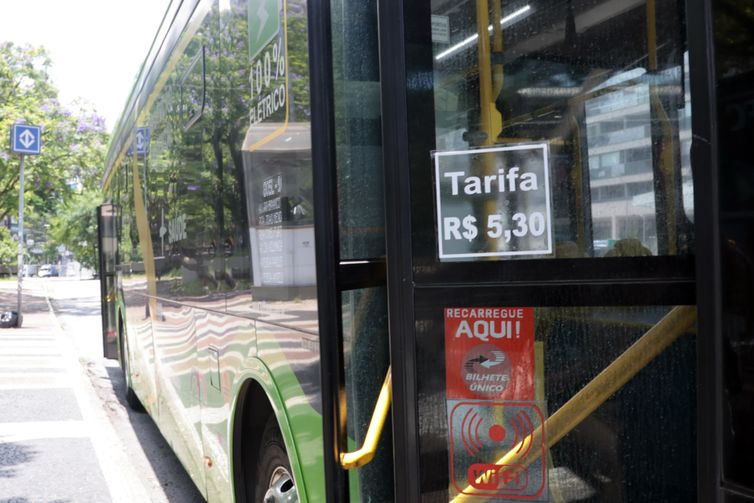
Value of fares in public transport in São Paulo. – Paulo Pinto/Agência Brasil
At the beginning of the month, the Chamber of Deputies approved the urgency regime in the analysis of Bill No. 3278/21, which establishes the legal framework for urban public transport, creating a single and integrated public transport network, involving the Union, states and municipalities.
Already approved in the Senate, the project is ready to be voted on in the Chamber Plenary, without the need to be approved by the House’s permanent committees.
Among the planned innovations, in addition to shared management between public entities, is the possibility of allocating budgetary resources to cover free costs and reduced tariffs, in addition to universalization and energy transition goals.
According to the rapporteur of the proposal in the Chamber, federal deputy José Priante (PMDB-PA), the proposal foresees that the fares charged to passengers will be separated from the remuneration paid to bus companies, which will have to meet performance and quality targets – thus preventing users from having to bear costs not directly related to the provision of the service.
* With information from Agência Câmara