Although the official discourse continues to place tourism as “the locomotive of the economy”, the data shows a frank setback.
Miami, United States. – The publication of new data from Statistical Yearbook of Cuba 2024 It reveals an alarming contradiction between the investment priorities of the Cuban government and the deterioration of strategic sectors for the economy and social welfare. So Cuban economist Mauricio de Miranda Parrondo warns itwho analyzed the chapters corresponding to Mining and energy, Construction and investmentsand Tourismrecently published by the National Office of Statistics and Information (ONEI).
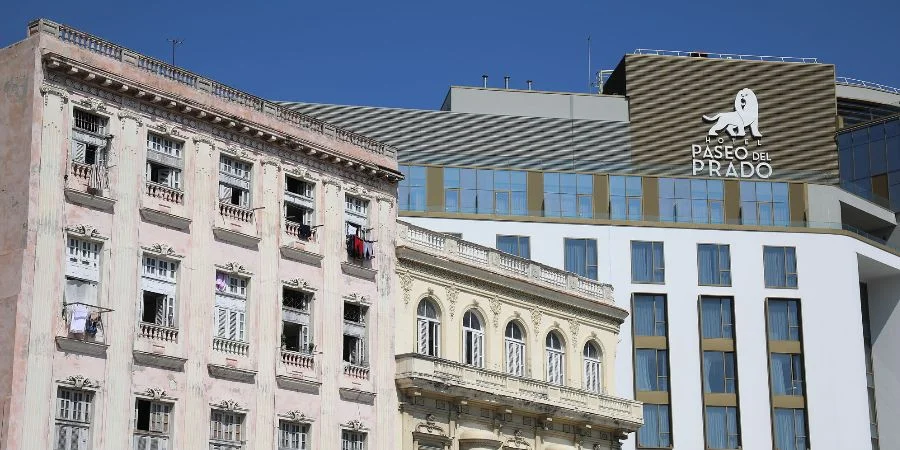
Although the official discourse continues to place the tourism As “the locomotive of the economy”, the data shows a frank setback. “Tourism’s foreign exchange revenues fell from 1,308.3 million dollars to 1,292.8 million,” says Miranda. Hotel occupation decreased from 31.7% to 27.0% and the arrival of international travelers decreased from 3,090,230 to 2,735,100.
Faced with this panorama, the economist questions: “Can anyone explain to me what is the magic of these figures that the most important part of the hotels and restaurants are collapsed and in the end the result of the sector grows at a fairly good rate?” Indeed, according to official statistics, the “hotels and restaurants” sector grew by 5.3% in 2024, a fact that for the expert is incongruous. “Or it is that people went ‘massively’ to eat at restaurants, as a reliable expression of a prosperity of income that we know is not such?”, Ironize.
As for investments, the report reveals a structure that, in Miranda’s words, represents an “inefficient assignment of the country’s very scarce resources.” Only in 2024, 12.0% of the total investments were allocated to “hotels and restaurants”, while 25.3% concentrated on real estate and business services. In contrast, vital sectors such as agriculture received only 3.1%; Mining, 3.5%; the sugar industry, 0.6%; Education, 1.1%; and health and social assistance, just 2.1%.
“The growth of this sector [servicios inmobiliarios y empresariales] In 2024 it was only 0.7%, ”warns the economist, who asks:“ Who decides the distribution of these investments in a centralized economy? ”His response is direct:“ The Government ”. And he adds:“ Assuming that the most important decisions in the country pass through the political bureau of the PCC, they are also responsible. Finally, so are the members of the central committee and the deputies to the National Assembly, and so far I have not heard any question the structure of state investments in the country. ”
One of the most worrying data of the Yearbook It refers to energy. Primary energy production “collapses”, according to Miranda. Although there is a slight improvement in the production of natural gas (from 955 million cubic meters to 970 million), other sources suffer important falls: hydroenergy went from 106.5 GWh to 91.4; The wood production dropped from 590,800 cubic meters to 538,500; and Bagazo fell from 1,556 million tons to 1,030. On this last point, the economist comments: “It is logical taking into account the disaster that is the sugar industry.”
As a result, electricity production also descended. In fact, it is now “24.8% less than the one produced in 2020,” he warns. This fall affects domestic consumption: between 2023 and 2024, the consumption of electricity in Cuban homes was reduced by 31.66%. “The energy situation impacts not only the lives of households, but of the entire productive system,” emphasizes Miranda.
Faced with the deterioration of economic indicators, the economist doubts the official contraction figure of the Gross Domestic Product (GDP), which reports a fall of just -1.1%. “The truth is that I would very much know how it is possible that in the face of this panorama, the economy only had a variation of -1.1%,” he says.
The data reflect, according to De Miranda’s analysis, not only a structural crisis, but also a disconnection between the investment priorities of the Cuban State and the real needs of the country. In his opinion, it is time to demand responsibilities: “I suggest taking note of this and I think it is time for those who direct the country to assume their responsibilities for their economic policies.”
The publication el Statistical Yearbook of Cuba 2024far from clearing doubts, it exposes deep inconsistencies in the economic management of the government, whose decisions – conscious in the communist party apparatus – continue to bet on sectors that do not report tangible results, while the investment is neglected in essential areas such as food production, health, education and energy.