MIAMI, United States. – The Government of Havana defended the creation of temporary collection points and the controlled incineration of urban solid waste (MSW) as a response to the fuel deficit that affects mechanized garbage collection in the capital, according to an official response published this Tuesday by the state media. Cubadebate.
The clarification was sent by Alexis González Inclán, coordinator of programs and objectives of the Communal Services, in response to an article in the Reader Opinion section titled “Inhabitants of Havana denounce the increase in garbage burning and its effects on health”also published by Cubadebate.
According to the official explanation, the creation of temporary collection points arises “as a contingency measure” due to the impossibility of maintaining the usual frequency and coverage of the collection service due to the lack of fuel for the collection trucks. “In this scenario, waste is accumulating on public roads, generating health, environmental and social risks,” the text states.
The note recognizes that, in contexts of energy crisis, municipalities have historically resorted to “transitional solutions” to avoid the dispersion of garbage in streets and open spaces. According to the Government, these points allow “the accumulation to be centralized in controlled places, reducing the dispersion of vectors and the visual and olfactory impact.”
The official justification maintains that the measure seeks to “have better health and environmental control to avoid disorderly accumulation of waste on the roads and thus reduce the proliferation of vectors and minimize the risk of environmental contamination.” In addition, he argues that it facilitates subsequent collection when the fuel supply is restored and reduces transportation costs by concentrating waste in strategic locations.
Regarding incineration, the document defines it as an alternative “given the impossibility of transferring waste to landfills.” He points out that “controlled incineration is proposed as a temporary solution,” since “burning under regulated conditions reduces the volume of waste and prevents prolonged accumulations.” Although he admits that “it is not the most sustainable option,” he considers it justifiable “in an emergency situation to in a certain way protect health from the transmission of diseases produced by vectors.”
The response details a set of organizational measures indicated to the municipal Administration Councils to confront the “progressive accumulation” of waste in the neighborhoods. Among them, the mayors are ordered to “hierarchize” the conduct of these indications through the creation of a Management Position with the participation of members of the Municipal Administration Council (CAM) and directorates involved in the RSU strategy.
It is also established that for the collection processes, “a CAM cadre will be designated per Popular Council responsible for the organization and control of the collection of MSW and the operation of each temporary collection and incineration point.” “A staff or official” must be assigned to each truck to control trips, fuel and final disposal of waste.
Likewise, at each temporary collection point a team will be designated with a work team from the community services companies in charge of executing and controlling the collection and controlled incineration process, “after coordination and approval of the fire department and consulting organizations.” The text indicates that “minimum working conditions” must be created that guarantee tools and means of protection for workers.
The authorities also ordered that the temporary collection points be guarded “24 hours a day” by the management of the municipal communal services companies to “prevent access by divers and arson.”
According to information published by Cubadebateinitially 122 temporary collection points were defined in the municipalities of the capital, of which 24 were certified for controlled incineration. These sites, according to the official response, were visited by specialists from CITMA, DPOTU, Environmental Health, INRH and the Fire Department, who issued specific considerations about each place intended for accumulation and incineration.
The document adds that, due to incidents in the Playa, Plaza and Cerro municipalities, it was decided not to approve incineration in those territories. Furthermore, remember that the ordinances approved by the Municipal Assemblies of People’s Power establish the prohibition of the incineration of MSW in the neighborhoods. If it is carried out exceptionally, it must have authorization from the corresponding authorities and be carried out in peripheral places that meet security conditions and guarantee “the minimum impact on the population.”
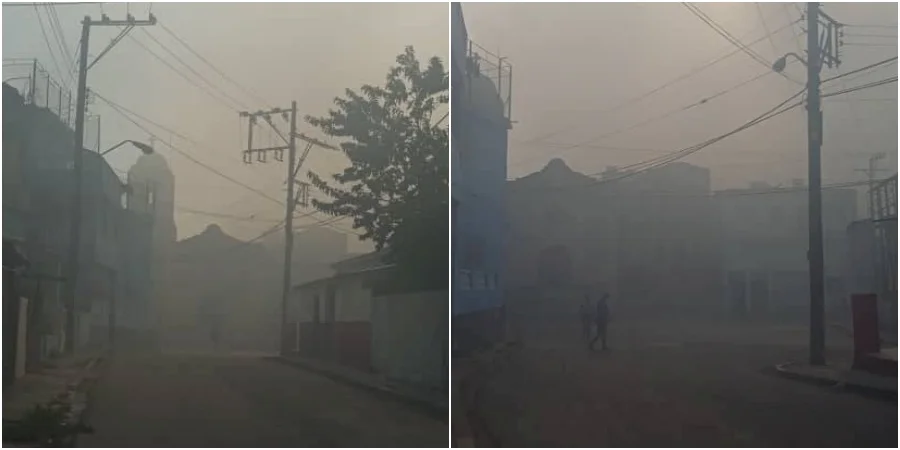
The explanation comes after citizen complaints collected by official media and independent about the increase in garbage burning in Havana and its effects on health.