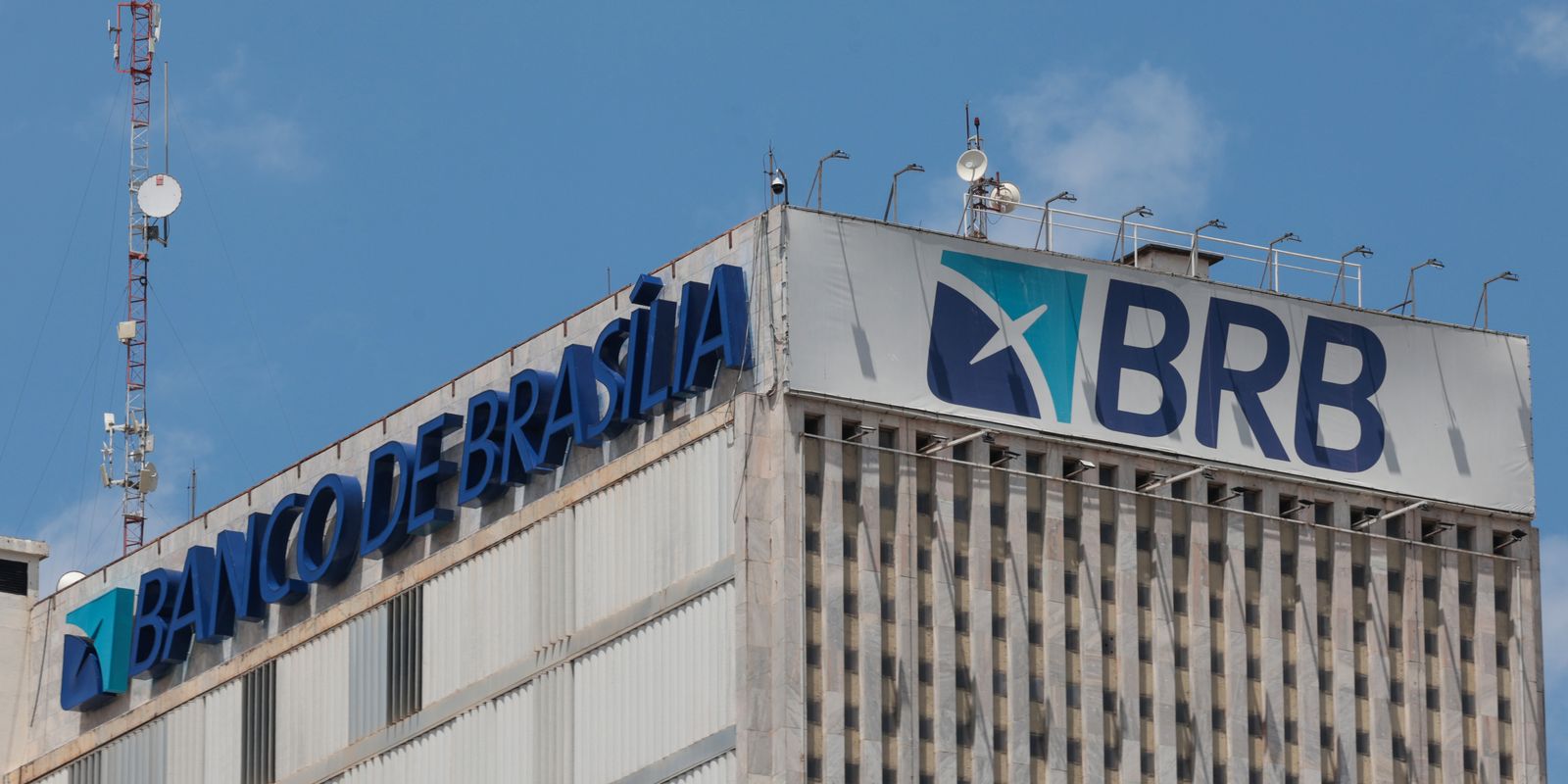
The Government of the Federal District (GDF) sent to the Legislative Chamber, on Friday night (20), a bill that authorizes the use of 12 public properties to reinforce the cash flow of the Bank of Brasília (BRB).
The proposal integrates the plan presented to the Central Bank at the beginning of the month to raise at least R$2.6 billion to compensate for losses with the acquisition of credit portfolios from Banco Master.
According to the government, the assets could serve as collateral for raising funds, mainly in a possible loan from the Credit Guarantee Fund (FGC).
The measure, according to the local Executive, does not necessarily imply the immediate sale of the assets. The properties would be used to reduce risks to creditors with possible defaults and reduce interest on loans to BRB.
Capitalization
The text authorizes three main actions: payment of capital with movable or immovable assets; disposal (sale) of assets with allocation of resources to the bank; and adoption of other measures permitted by the National Financial System.
If approved, the project will allow the GDF to transfer properties to the BRBstructure operations through real estate investment funds, create guarantees or make direct sales. Alternatives may be adopted individually or in combination.
The initiative takes place amid investigations and financial impacts related to operations between BRB and Banco Master, which keep the institution under the attention of the market and regulatory authorities.
Areas listed
Among the properties mentioned are the Administrative Center of the Federal District (Centrad), in Taguatinga, and land in the Industry and Supply Sector (SIA), in Parque do Guará, in Lago Sul, in Asa Norte and in the Tororó Housing Sector (area close to Papuda).
The areas belong to local state-owned companies such as Terracap and Novacap.
The project provides for prior assessment of assets, respect for the public interest and compliance with governance rules before any sale or constitution of guarantee.
Regulatory pressure
The need for investment gained strength after the Central Bank signaled that it may impose restrictions on BRB if there is no capital recovery until the release of the next balance sheet, on March 31st. Possible measures include operational limitations and impediments to business expansion.
In recent months, the bank began selling credit portfolios to private banks to recover liquidity. However, the strategy did not increase net worth, an essential factor to rebuild the Basel index, an indicator that measures the financial health of institutions.
Complications
The sale of assets has problems because, in practice, the BRB exchanges assets for money, without increasing net worth (difference between assets and liabilities). In the coming weeks, the Legislative Chamber will debate the bill.
An additional complication for obtaining loans from the Federal District is the recent decrease in the payment capacity score (Capag), an indicator published by the National Treasury.
Note C in 2025 prevents the GDF from obtaining credit guaranteed by the National Treasury, in which the Union would cover possible defaults and deduct the value of constitutional transfers to the Federation unit.