The Cuban Government denied this Sunday the existence of foreign bases and terrorist organizations on the island, and assured that it was willing to “reactivate” the cooperation with the US.
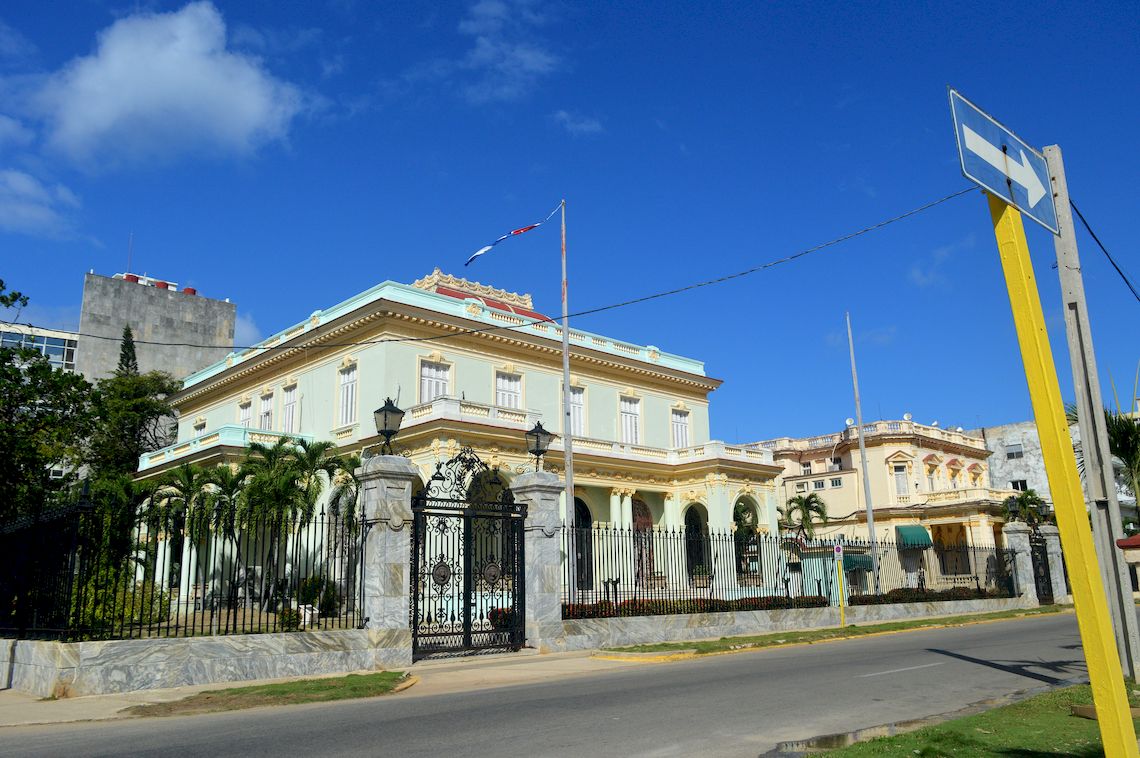
Such statements were made by the Ministry of Foreign Affairs (Minrex) in a statement issued this Sundayin the midst of growing bilateral tension and strong pressure from Washington on Havana after the events of January 3 in Venezuela.
In particular, the statement is a new response from the Cuban authorities to Donald Trump’s recent executive order that seeks to block the supply of oil to the island.
In that order, signed last Thursday, Trump declared Cuba an extraordinary risk to the national security of the United States. The measure provides for tariffs against countries that sell or supply oil to the island, which in practice threatens energy asphyxiation.
Among the White House’s arguments for adopting this draconian decision is the accusation that Cuba hosts “Russia’s largest foreign signals intelligence facilities,” in addition to alleged relations with terrorist organizations.
Analysts point out that these arguments from the Trump Administration revive narratives from the Cold War era and seek to justify new pressure measures against the island.
Minrex: neither foreign bases nor links to terrorism
In its statement, the Cuban Foreign Ministry categorically rejected Trump’s accusations.
“Cuba does not host foreign military or intelligence bases and rejects the characterization of being a threat to the security of the United States. Nor has it supported any hostile activity against that country nor will it allow our territory to be used against another nation,” the statement said.
Havana stressed that its foreign policy is based on respect for sovereignty and independence, and that there is no evidence to support Washington’s accusations.
In addition, the Minrex noted Cuba’s “unequivocal” condemnation of “terrorism in all its forms and manifestations” and declared “categorically” that the island “does not host, support, finance or allow terrorist or extremist organizations.”
“Our country maintains a policy of zero tolerance towards the financing of terrorism and money laundering, and is committed to the prevention, detection and confrontation of illicit financial activities, in line with international standards,” he stated.
Likewise, he clarified that “any past interaction” with people subsequently designated as terrorists “occurred only in limited humanitarian contexts, linked to internationally recognized peace processes, at the request of their respective governments, in a fully transparent manner,” in reference to the ELN guerrillas sheltered at the time.
Trump returns Cuba to the list of state sponsors of terrorism
Willingness to cooperate “without ever giving up” sovereignty
Through Minrex, the Cuban Government reiterated its willingness to dialogue and cooperate with the United States, although with sovereignty and independence as red lines.
“Cuba is willing to reactivate and expand bilateral cooperation with the United States to confront shared transnational threats, without ever giving up the defense of its sovereignty and independence,” says the official statement.
In particular, Havana proposes that Washington “renew technical cooperation” in areas such as “the fight against terrorism, the prevention of money laundering, the fight against drug trafficking, cybersecurity, human trafficking and financial crimes.”
Furthermore, the statement ensures that the island “will continue to strengthen its legal framework to support these efforts, aware that when there has been the will of the parties, progress has been made on these fronts.”
Finally, the Minrex considered that “the Cuban people and the American people benefit from constructive engagement, cooperation in accordance with the law and peaceful coexistence,” and reaffirmed Cuba’s willingness to “maintain a respectful and reciprocal dialogue” with the United States.
Such dialogue, he said, should be “oriented toward tangible results” and based “on mutual interest and international law.”
The Minrex statement comes after Other pronouncements from Havana that appealed to resistance against Washington’s measures, although without completely closing the door to dialogue, and also in the midst of rumors and information about possible meetings between both parties.
own Donald Trump has already said that contacts have been madealthough without offering details, and has urged the Cuban Government to “make a deal”, while Havana has not confirmed these alleged meetings.
The old base of Lourdes
Following Trump’s statements about Russian bases in Cuba, experts and media have recalled that the Lourdes base, located south of Havana, was closed in October 2001 by decision of President Vladimir Putin, after more than three decades of operations in Cuba.
The center, opened in 1962, was considered the largest signals intelligence facility outside Russia, capable of intercepting communications along much of the East Coast of the United States.
Putin announced the withdrawal of Russian troops and technicians in a meeting with his generals, in which he argued economic and strategic reasons, in a context of redefining military priorities after the collapse of the Soviet Union in 1991.
The closure of Lourdes marked the end of a symbol of the military alliance between Moscow and Havana, which had survived even the disappearance of the USSR. The decision was interpreted as a gesture of rapprochement by Russia towards Washington in the midst of the post-Cold War, although it meant for Cuba the loss of an important source of income and technological cooperation.
In 2002, the Cuban Government decided to take advantage of the existing infrastructure to found the University of Computer Sciences (UCI), conceived as a strategic project for the development of computing and information technologies on the island.
UCI officially opened in September 2002 and became one of the largest universities in Cuba, with capacity for tens of thousands of students.
The campus, built on the former facilities of the Soviet/Russian intelligence base, was transformed into classrooms, laboratories and student residences, marking a symbolic turn: from a military espionage center to a space for academic training and software production.
Among its architectural attributes is Niemeyer Plaza, inaugurated in January 2008. It is a monumental space of more than 20 thousand square meters with capacity for 13,500 people, conceived as a tribute by the famous Brazilian architect and urban planner Oscar Niemeyer to the Cuban people and his friendship with Fidel Castro.