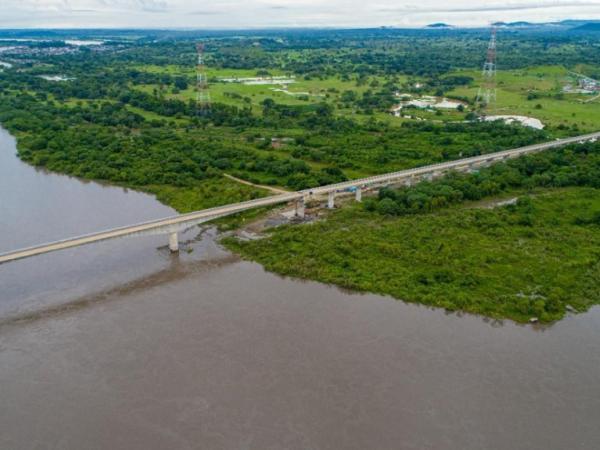
The National Government announced an investment of $248,633 million by 2026 in order to ensure the permanent navigability of the Magdalena River, maintain continuous dredging and guarantee the safe operation of this river corridor, considered strategic for the competitiveness, employment and economic development of the Caribbean region and the country.
You can read: From January to September, 42.2 million passengers moved through the country’s airports
Of the allocated resources, $206,596 million will be contributed by the Nation, equivalent to 83% of the total projected investment. According to the Ministry of Transportation, this financial effort seeks to strengthen river infrastructure, reduce the risks of port closures and support the economy of riverside communities connected by the main Colombian tributary.
The Minister of Transportation, Mafe Rojas, pointed out that the project represents a State commitment to the recovery of the river as a national economic axis. “ANDhe Magdalena River once again became a national priority. With this investment we ensure its navigability, protect port employment and support the competitiveness of the Caribbean. “Our commitment is to guarantee a living, useful and permanent river for the economy and the communities that depend on it,” he stated.
Destination of resources
The 2026 budget will be distributed among the main operating sections of the river. $116,257 million will be directed to the access channel to the port of Barranquilla, a critical area for the entry and exit of deep draft vessels. For its part, $40,853 million will be allocated to the navigable canal between Barrancabermeja and Barranquilla, with the objective of maintaining constant river freight traffic along the corridor.
You may be interested in: These are the new international air routes that will operate in December
Magdalena River Highway
Courtesy
In addition, $14.5 billion will be allocated to the Mompox Arm, an area of high environmental sensitivity and cultural and tourist importance for the country. Other items will cover environmental monitoring activities, river safety, dredging, equipment acquisition and continued operation of the system.
The Ministry of Transportation explained that these resources will allow maintaining adequate conditions of depth and stability in navigation, avoiding interruptions in the logistical flows of foreign trade and the productive sectors that depend on this route.
Logistical and economic impact
The Government highlighted that the measure aims to ensure permanent navigability and guarantee continuity in port operations, determining factors for the country’s logistical efficiency. Likewise, the investment seeks to generate employment, strengthen regional competitiveness and avoid impacts on foreign trade.
The Ministry stressed that the investment plan is part of a long-term strategy to modernize Colombian river infrastructure and once again position the Magdalena River as a key economic artery. The purpose is that its operation contributes to the reduction of costs in cargo transportation, the strengthening of the supply chain and the security of riverside communities.
According to the entity, permanent dredging will allow maintaining the depth levels required for the safe passage of vessels, reducing the risks of suspension of port activities in seasons of low depth or high levels of sedimentation.
Also read: Expansion works begin at the Simón Bolívar airport in Santa Marta

Magdalena River
Source: IStock
Government commitment and regional reach
The announcement was presented as part of the Government of Change’s policy of economic reactivation and regional competitiveness. The Ministry of Transportation indicated that the project reaffirms the will to promote a development model based on river connectivity and environmental sustainability.
According to the portfolio, the Magdalena River will be strengthened as a logistical and strategic corridor for the Caribbean, linking the productive areas of the interior with the main seaports of the country. This seeks to improve cargo mobility, reduce transportation times and offer alternatives to the road system, especially for sectors such as agroindustrial, energy and ports.
The investment also includes environmental monitoring and river safety programs in order to guarantee that operations are carried out under technical and sustainability standards. These actions seek to preserve the ecosystems associated with the river and protect the riverside communities that depend on its channel for productive and transportation activities.
PAULA GALEANO BALGUERA
Portfolio Journalist